Posted in History & Literature

Right And Wrong

Hwang Hee was one of the greatest scholars in Chosun (modern day Korea) and served as a minister for 18 years. There is one famous tale that shows his wisdom and character.
One day, two of Hwang Hee’s servants we’re fighting over who was right. They came to Hwang and asked him to judge who was right.
When one child stated his opinion, Hwang said: “You are right”.
Then, the other child retorted in a heated manner and Hwang said again: “You are right”.
His cousin who was observing this asked: “Surely one was wrong for the argument to have started. Why do you say that both are right?”.
Hwang smiled and replied to him: “You are right also”.

There is much to be learnt from Minister Hwang Hee’s broad-mindedness, benevolence and wisdom even now, over 500 years since his time. Arguments are destructive acts with no gain. Instead of debating the right and wrong of every little thing, it is far more effective to seek relative and absolute knowledge.

Posted in Science & Nature

Bleach

The most potent and frequently used household cleaning product is bleach. Bleach is a diluted solution of sodium hypochlorite (NaClO), which has powerful antimicrobial properties thanks to the element chlorine. This is also the reason chlorine is used to treat tap water and disinfect pools.

Although it is an extremely useful chemical, chlorine also has a very dark side. Chlorine gas is a highly toxic gas, which forms hydrochloric acid when breathed in and seriously burns the respiratory tract. Due to its toxicity, chlorine gas was used as a weapon of mass destruction in World War I. However, this terrifying gas can be made very simply at home. Unfortunately, this is often done accidentally (but sometimes on purpose) and causes significant damage.

The key warning for using bleach is that it must never be mixed with other cleaning products. If mixed with an acid cleaner, it causes a chemical reaction that produces chlorine gas, while mixing it with ammonia creates chloramine, another deadly gas (although dangerous in itself, chloramine can sublimate into chlorine gas too). Therefore, many people suffer a loss of smell, consciousness or their lives by accidentally mixing two cleaning products or cleaning up urine with bleach. A major problem is that these victims tend to be children who unknowingly mix the chemicals, creating a horrible accident. What is more unfortunate is that some people choose to end their lives using this method.
If you do find a person rendered unconscious by chlorine, it is imperative to quickly move them to a well-ventilated area, while not endangering yourself. An ambulance should be called right away.

As seen from above, simple chemicals found easily at home can produce toxic gases, which can cause irreversible damage. Thus, one must never mix bleach and cleaning products and should educate their children on the dangers of chlorine gas.

Posted in Science & Nature

Animal Hypnotism

Animals can be hypnotised just like humans. Strictly speaking, it is not hypnotism per se but more of a trance or putting the animal to “sleep”. An animal in trance is in a state of complete relaxation and is immobile, staying still as if it is sleeping as its heart rate and breathing slows. After a certain amount of time, the animal wakes up and acts as if nothing happened.

For example, flipping a rabbit on its back causes it to stay still. It merely twitches its nose but its limbs are completely stiffened. An alligator shows the same response when flipped.
A pheasant can be put into trance if its stomach is rubbed and an iguana falls asleep when stroked on the head as the heat sensing organs are activated and they feel relaxed.
When stroked on its most sensitive part, the nose, a shark freezes from the intense sensation (considering a shark dies if it stops swimming, this must be quite a pleasurable feeling for the shark).
If you turn a lizard on its back and rub its stomach, its diaphragm and respiratory organs are compressed and oxygen supply is limited. This causes the lizard to “turn off”, falling into a trance.

These strange responses are most likely a survival instinct. For example, if a rubber hose with a knot on the end is held in front of a mouse, it will stay absolutely still. This is because it mistakes it for a snake and is frozen from fear. Also, predators such as snakes focus their vision around movement sensing and thus are blind to immobile objects. Similarly, rabbits and alligators mentioned above are playing dead to avoid danger.

Unfortunately, this instinct produces the opposite effects sometimes. Chickens are a good example.
When you press a chicken’s head against the ground and draw straight lines in front of it, it suddenly goes quiet as if possessed. Even after taking off the hand, it stays still. This technique was devised to make the process of cutting off the chicken’s head an easier task. Also, a chicken can be put into trance by gently tucking its head under its wing and then swinging the whole chicken side to side about 10 times. A turkey can be put to sleep the same way.

Posted in Science & Nature

Stone Skipping

Stone skipping refers to the act of throwing a flat stone on a calm body of water to make it skim the surface and seemingly bounce. However, this is a technique that is hard to master and usually results in the stone simply sinking. Thus, a paper researched how one can improve their stone skipping skills.

According to the study, a stone that is 5cm in diameter, 2cm thick and about 100g in weight is ideal. But choosing your stone is only the first step.
This stone must enter the water at 20 degrees at a speed of over 90km/h to make sure the stone will skim. Furthermore, the stone needs to be lifted up about 20 degrees against the water.
Lastly, the stone needs to be spinning with enough force to drive it forwards while keeping it off the surface of the water. This is known as the gyroscope effect (the same reason why a top does not fall when spinning).

However, it is difficult calculating and throwing the perfect angle and speed unless you are a machine. Ergo, the only effective way to master the skill is through practice and effort.
A handy advice is to throw the stone as fast as possible from a low position, letting go of the stone just below your knee height-wise.

Posted in Science & Nature

Water Bear

A water bear, also called a tardigrade, is actually an insect and not a bear. The nickname is due to its slow, bear-like gait. It ranges in size from 0.1 to 1.5mm and resembles a short caterpillar with eight legs.
The reason for the water bear’s fame is its amazing survivability. In short, a water bear can live anywhere.

Water bears are capable of cryptobiosis. This can be seen as an extension of hibernation and it is an organism’s ability to lower its metabolism to near-death rates in order to survive a harsh environment. In this state, a water bear can survive for indefinite amounts of time.

Why is cryptobiosis useful? The answer can be found from the water bear’s natural habitats. The water bear is found on the highest point of the Himalayas, the deepest oceans, hot springs and virtually any location from the North Pole to the South Pole. It can survive temperatures from 151°C to minus 273°C, the intense pressures in deep seas and even vacuum states.
Furthermore, water bears can survive in space. A recent experiment by NASA on the International Space Station found that not only can they live in space, but they also mated and laid eggs that later hatched. They can even survive heavy doses of radiation and toxic chemicals.

Ergo, if a cockroach can survive a nuclear war, water bears can survive even if the Earth was split in two. If we took a leaf out of the water bear’s book and lead a slower life, could we live a longer and happier life?

Posted in Psychology & Medicine

ICU Syndrome

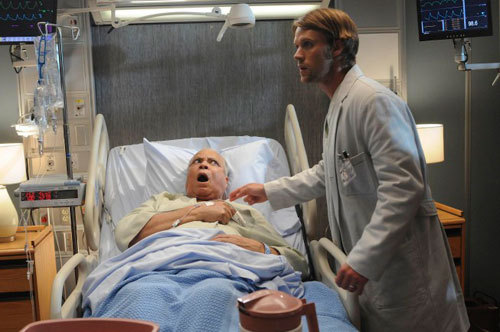
ICU stands for intensive care unit and is the place where patients are sent after an operation to stabilise and recover under supervision. ICU patients commonly have a very unique and strange post-operative experience.

ICU syndrome is a type of delirium where the patient experiences severe anxiety, fear, hallucinations or delusions. Although the cause has not been determined, it is likely related to post-op stress, the segregation and loneliness in the ICU room and confusion from coming out of anaesthesia. This is especially the case if an emergency situation led to the surgery being longer than expected or resulted in additional surgery, causing extreme confusion in the patient.

A patient suffering from ICU syndrome tends to be extremely excited and unstable. They may develop intense paranoia or distrust (especially against medical professionals), which can lead to fits or dangerous acts such as pulling out cannulas and lines. A friend or loved one talking calmly to the patient has a great effect in helping the patient overcome the delirium. Therefore, allowing the family to visit to keep the patient company and calm is an effective way to prevent ICU syndrome. However, if the situation spirals out of control, a sedative or anti-psychotic may need to be administered.

A study states that about 25% of patients admitted to the ICU suffer from ICU syndrome. It is one of the most common causes of delirium and any patient can get it (elderly patients are more likely to). Interestingly, there is a theory that medical professionals are more likely to suffer ICU syndrome after an operation.
Nowadays, the term ICU syndrome or ICU psychosis is discouraged and is instead grouped under delirium (which is an actual psychiatric disorder, not just a general term).

Posted in Psychology & Medicine

Dream

Deep within the rainforests of Malaysia, there lived a tribe called the Senoi. Because they centred their lives on dreams, they were also called the Tribe of Dreams.
Every morning as they ate breakfast around a fire, they discussed their own dreams from the previous night. All social activities within the tribe had a close connection with those dreams. If one dreamed of harming someone, they had to give the harmed person a present straight away. If one hit someone in a dream they had to ask for forgiveness from that person along with another present.

The Senoi tribe placed more importance in education regarding dreams over that of how to live in the real world. If a child dreamed of running away from a tiger, the tribe would tell the child to dream of the tiger again and then fight it until it was killed. The elders taught the children how to achieve this. If the child could not defeat the tiger, the tribe would scold him.
Placing such importance on dreams, the Senoi tribe thought reaching an orgasm in a dream involving sex was a must, followed by thanking the other person with a gift in reality. If they faced an enemy in a nightmare, they had to defeat him and later befriend him by exchanging gifts. The dream they wished for most was a dream about flying. If someone dreamed of flying, the tribe would congratulate him, and a child’s first dream about flying was almost like baptism in the Catholic church. People would bring many gifts to the child and then teach him how to fly to distant lands to bring back wonderful objects.

Western anthropologists were fascinated by the Senoi tribe. There was no violence, mental disease, stress or greed. Only enough work to survive was required.
The Senoi tribe disappeared in the 1970s when the forest they lived in was cleared. However, we can still utilise their knowledge.

In a dream, we can test our infinite potential. In a dream, everyone is omnipotent. The first hurdle in dream aviation is flight. Spread your arms, glide around, dive, turn again then rise. Anything is possible. You can do anything you want. As a dream is your own world, no one can bother you. If a monster appears, shoot it with a bazooka. If you face an opportunity to date, do not let it go and make full use of it. Since there are no sexually transmitted diseases or indecency in a dream, there is nothing stopping you.
Dream aviation requires an increasing degree of training. As your “flight” time lengthens, your confidence will grow and you will get the hang of it. Normally, children can control their dreams in any way they wish within 5 months of training, but adults can take much longer than this.

(from The Encyclopaedia of Relative and Absolute Knowledge by Bernard Werber)

Posted in Science & Nature

Caffeine

Coffee is a magical drink that can make a busy person’s morning. Coffee’s stimulant effect is due to the substance called caffeine. Caffeine can make the mind more alert and drives away sleepiness for about 3~4 hours. This is why students studying for an exam or people working late love to drink coffee.
There are many students who say they do not like coffee and drink energy drinks instead. These drinks tend to advertise that the substances guarana and taurine give energy, but an interesting fact is that guarana is just a plant where caffeine is extracted from. Taurine has many beneficial actions in the body, but has no effect as a stimulant. Therefore, an energy drink is simply made of caffeine and sugar and holds no advantage over coffee.

Although caffeine is beneficial in moderate amounts, excessive consumption leads to adverse effects. A normal adult can handle up to about 400mg of caffeine. Any more and they could suffer from anxiety, insomnia, headaches, dehydration, increased urination, fever, rising heart rate, stomach pain, nausea and many other symptoms. As everyone’s rate of caffeine metabolism is different, only they know how much caffeine they can consume. Furthermore, the more coffee or tea you drink, you build a tolerance towards caffeine and can consume much more without adverse effects.

The following is a list of the caffeine content in common drinks and foods:

  • Drip coffee(200ml): 150mg
  • Espresso(50ml): 100mg (this is because the cups are small, the concentration is about 3 times that of drip coffee)
  • Caffeine tablet: 100mg
  • Energy drink(250ml): 80mg
  • Coca-cola(600ml): 60mg
  • Chocolate(250g): 60mg
  • Black tea(170ml): 50mg
  • Green tea(170ml): 30mg
  • Decaffeinated coffee(200ml): 10mg

However, the best method to drive away sleepiness is by sleeping. If you are tired, the only way to recover is by taking a 30 minute to 2 hour nap, especially if you will be driving or have a night shift.

Posted in History & Literature

Charon’s Obol

According to ancient Greek mythology, a person’s soul must cross five rivers to enter Hades’ underworld after death. Charon ferries souls across the first river, Acheron, also known as the river of pain. To use Charon’s services, one had to pay a silver coin (obolus). If one could not pay the fee, one could not cross the river and would circle the Earth for eternity. Thus, the ancient Greeks had a custom of putting a coin in the deceased’s mouth for their journey.

Even for something as unavoidable as death, Charon asks for money. This not only shows that the ancient Greeks had a good understanding of market economies, but also teaches us something important about capitalism.
Just as the reaper takes a fee, nothing in the world is free. A market is the most effective economy system that man has devised and no other system (especially communism) has overcome it. But we have a tendency to denounce corporations for only taking advantage of poor, helpless citizens. Although there is corruption in reality, corporations are still subject to the invisible hand and bound by the basic principle of capitalism, supply and demand.

We only see the negative sides of capitalism and decry Charon’s greed. “How could you ask a helpless soul for money? Is that not robbery?”, we cry. But such words can only be said by someone who has devised a better system than the market, or found a way to keep Charon well-fed. Instead of criticising the economy or policies, it is far more efficient to think of a way to improve the market system. Blindly criticising and trying to destroy capitalism like Karl Marx did will only result in splitting the world in two and cause everyone to starve to death.
The reason being, money is an invention as important as fire to mankind.

Posted in Psychology & Medicine

Couvade Syndrome

A patient comes to a doctor complaining of the following symptoms: “I can’t sleep because my teeth have been aching for the past few weeks. My head is killing me and whenever I wake up in the morning my stomach hurts and I feel nauseous and want to vomit. Sometimes I have no appetite and sometimes I crave a certain food. My breasts have gotten bigger and my stomach is bulging quite a bit.”
The patient has been married for three years and in a few months will have a beautiful daughter.
What is the diagnosis?

Most people would immediately say “Pregnancy!”. But there is one small detail that was left out: the patient is a man.
It is common sense that men cannot be pregnant. So what is this man suffering from?

Couvade syndrome is also known as sympathetic pregnancy. In other words, the husband subconsciously copies his wife’s pregnancy and suffer the same symptoms. This syndrome can be severe enough to cause labour pains, nosebleeds and even post-partum depression.
The cause has not been established, but it is likely to be psychosomatic, where psychological symptoms are expressed through physical symptoms, or due to changes in hormone levels.