Posted in Psychology & Medicine

From Cell To Birth: A Man And A Woman

Organisms have the amazing ability to beget new life. In bacteria, this can be as simple as splitting itself in two. In humans, however, this process is much more complex.
As a sexually reproducing animal, both a man and a woman are required for the creation of a new person. The process, as complex as is it, is so intricately designed by nature that it could possibly be considered as one of the greatest abilities of the human body.

A man contributes sperm, providing half of the genetic material the future baby. The sperm also decides the sex, depending on whether it carries the X or Y chromosome. Note that gametes only carry half the number of chromosomes (which are usually paired) of a normal cell.
Sperm is made in the testes. Here, under the guidance of hormones such as testosterone and nurturing cells, they grow from a small stem cell, into a plump, round spermatocyte, until it is streamlined to become the sleek spermatozoa that people are more familiar with. All of this occurs as the cell journeys from the outside of the seminiferous tubule to the centre where it is released altogether with its fellow batch.
The sperm is still immature, the equivalent of a high-school graduate. It is expelled into the epididymis, a 4-metre-long tube packed full of concentrated sperm, acting as the “boot camp”. Here, the sperm is drained of extra baggage it is carrying, while learning how to swim effectively. It is stored until the time comes.

image

A woman contributes an egg, carrying the other half of the genetic material required. It is significantly bigger than a sperm, and as such is produced in much fewer numbers. A woman, unlike a man, has a limit to how many eggs she can produce, and the moment her reservoir runs out is called menopause. Until then, she produces one (or more sometimes) egg every month according to her menstrual cycle.
An egg is developed within a follicle, that acts as a house and oestrogen factory until the egg is released. To get to this stage, it needs to defeat its competitors first. To prevent multiple pregnancies, the ovaries kill all secondary follicles except one dominant follicle. The follicle then ovulates, wherein the oocyte (egg) is expelled almost explosively, caught by the finger-like fimbriae, and then transported towards the uterus via the fallopian tube.
If the egg is not fertilised within a day, it dies and is later expelled with the endometrium, in what every woman knows as a period.

This is only the beginning of the long journey until the miraculous birth of a child.

(Full series here: https://jineralknowledge.com/tag/arkrepro/?order=asc)

Posted in Philosophy

An Opinion On The Senses

There are five physical senses and five mental senses.

The physical senses are sight, hearing, touch, taste and smell.

The mental senses are emotions, imagination, intuition, understanding and inspiration.

If a person only uses their five physical senses to live, that is like using the five fingers on their left hand only.

(Die fünf Sinne (The Five Senses) by Hans Makart, 1840-1884)

Posted in Philosophy

Formula Of Love

Einstein, considered to be the greatest genius in history, once faced this situation while giving a guest lecture at a university.
A student asked Einstein, who had just finished giving a physics lecture, the following:
“Professor, you have discovered the theory of relativity and managed to formularise it. Could you express love as an algebraic formula?”

Einstein thought for a while, then smiled as he wrote this equation on the board:

LOVE = 2△ + 2□ + 2~ + 4/

The students were confused and asked him to explain it further. He then solved it as shown below:

“The sorrow of having to take a path you must take, yet not being able to resist looking back over and over! The frustration of wanting to follow a path you cannot take! That is love.”

(Sourcehttp://xkcd.com/55/)

Posted in Philosophy

Cheshire Cat

As an important character in the book Alice in Wonderland, the Cheshire Cat is infamous for his non-sensical and strange questions and answers. But his words also carry a very strong philosophical message.
For example, when asked by Alice, “Would you tell me, please, which way I ought to go from here?” he replies:

“That depends a good deal on where you want to get to,” said the Cat. 
“I don’t much care where-” said Alice. 
“Then it doesn’t matter which way you go,” said the Cat. 
“-so long as I get SOMEWHERE,” Alice added as an explanation. 
“Oh, you’re sure to do that,” said the Cat, “if you only walk long enough.”

This directly applies to life: if you keep walking without giving up, you will eventually end up somewhere. Even if you are lost and without direction, life will, without a doubt, take you somewhere as long as there is hope. However, it also points out how it’s much more useful and time-conserving to know the destination you want to reach, also known as a “goal”.

Additionally, the Cat is well-known for his ear-to-ear grin, thus the term “grinning like a Cheshire Cat”. The origin of this cat is most likely from Cheshire, England, where cheese made from there were molded into the shape of a grinning cat.

Posted in Life & Happiness

Priority

This scenario psychoanalyses how you prioritise your life and what you place the most importance in.

You are out camping, but end up lost in the woods. It has become dark but luckily you find an empty cabin. Under the dim light, you discover the cabin is equipped with a fireplace, a stove, a lamp and a candlestick. In your backpack you only have one match.

What would you light first?

(Source: http://browse.deviantart.com/?q=match%20girl&order=9&offset=24#/d1dzl83)

Continue reading “Priority”

Posted in Psychology & Medicine

CPR

CPR stands for cardiopulmonary resuscitation – or in plain English, artificially (and partially) restoring the function of the heart and lungs of an unconscious, pulseless person. As blood flow (perfusion) is critical in the survival of major organs such as the brain, this procedure can save lives by prolonging a victim’s life until the paramedics arrive to provide professional medical care.

When the heart stops beating, or becomes inefficient due to erratic beating, blood flow stops. In the case of the brain, this means that the cells will start dying after 4~5 minutes if perfusion is not restored. CPR can restore about 30% of perfusion, delaying the onset of brain death.

This may be critical when someone suffers a heart attack (myocardial infarction) and paramedics will not arrive for over 10 minutes. Ergo, this is one of the most important emergency skills one should know to help people in need as soon as possible.

There are different guidelines for CPR in many countries, but here is a standard procedure guideline (NZ).
It is summarised into the acronym: DR’S ABCD (doctor’s ABCD), and is a flowchart that goes from one step to the next (detailed explanation after summary).

  1. Danger: check that area is safe and risk-free
  2. Response: check for patient response by shouting, shaking, pain
  3. Send for help: pick one person to call emergency services
  4. Airway: check airway, remove obstruction, tilt head back and lift chin
  5. Breathing: check for breathing, go to CPR if no breathing
  6. Circulation: check for pulse if breathing, if no pulse, start CPR (30 chest compressions : 2 breaths)
  7. (Defibrillation): follow AED instructions

The first rule of first aid is that you must not put yourself in danger. For example, if the patient is on the road, pull them to a safe area to minimise the risk to your own health.

Then, check for a response. The easiest way is to call loudly to them such as “Can you hear me”, and inflicting pain (such as rapping on their chest or shaking their shoulders) and see if they become conscious.

If they remain unconscious, immediately designate a person around you by pointing to them (otherwise they will be less likely to be responsible) to call the emergency service (111, 911, 119 etc.), alerting them the location and state of the patient.

This is the point when clinical skills come in.

Airway: An unconscious person may have their airway obstructed by vomit or their own tongue (which falls back by gravity into the throat). You must secure the airway by scooping out any material, and clearing the tongue out of the way. This is done by tilting the head back far (as if they are looking up), then using one hand to pull their chin out. This opens the airway up so that mouth-to-mouth becomes effective.

Breathing: Put one ear right next to the person’s nose and mouth and check for any breathing sounds or air flow. If they are breathing, check the pulse to see if they are pumping blood. If not, go straight to CPR.

Circulation: It is best to check the central pulses such as the carotid (side of neck, next to the Adam’s apple), brachial (squeeze inner side of biceps) or femoral pulses. The carotid is often the easiest as most people know how to take it. If you feel a pulse, put the patient in recovery position as they are just unconscious, breathing and has blood flowing. If not, proceed to CPR (as you do with when the patient is not breathing).

CPR is composed of two actions: chest compressions and mouth-to-mouth breathing. The former is the strong compression of the chest wall to squeeze blood in and out of the heart; the latter is breathing air into the patient’s lungs and letting exhalation come out naturally.

Chest compressions are often misrepresented in medical dramas, and is extremely important that you do it correctly. First find where the sternum is (centre of ribcage, between the nipples) and place the heel of your left palm on it, then spread your fingers out. Put your right hand over your left and close your fingers around it for a good grip. If the patient is lying flat on the ground (with head tilted back), kneel beside them and stoop over their chest with straight, locked arms (bent arms exert much less pressure).

You are now ready to begin chest compressions. Press down hard, until the chest wall is compressed to about 1/3~½ depth (the chest wall is a springy structure, and do not worry about broken ribs, as being alive is more important for the person), then ease pressure to let it bounce back up. Ideally the time pushing and the time letting it bounce back should be the same, giving a good rhythm. Repeat this 30 times at the beat of 100/min, or in easier terms: to the beats of the Bee Gee’s song Stayin’ Alive (scientifically proven).

After 30 compressions, tilt the patient’s head back, lift their chin up, and lock your mouth over their mouth and nose to make an airtight seal. It is crucial that you use a face shield to prevent the spread of disease. Be aware that breaths are less important than the compressions, so if you do not have a face shield, let someone else do the breathing and focus on chest compressions. Pinch the nose closed to ensure air does not escape.
Forcefully breathe into them and look for the chest rising. Let go of the nose and pull away so that they can breathe out. Repeat once, then return to chest compressions.

After 2 minutes of CPR (30 compressions : 2 breaths, repeat 4 times), change places with another person capable of CPR, as otherwise you will tire out and become inefficient.

Defibrillation is only possible if you are near an AED (automated external defibrillator). Nowadays, AEDs are designed to be completely user-friendly so simply follow the instructions on the machine.

It is important to note that not all abnormal heart rhythms are “shockable” (see Flatline). Follow the AED’s instruction, as it will state whether shock is advised or not. Make sure that CPR is still happening continuously.

Repeat until help arrives.

As a final note, remember that the patient is dead whether you do CPR or not, so there is nothing to lose. Believe it or not, this will be of incredible help in calming your mind when struck with such an emergency. Even with CPR, there is a maximum 30% chance the patient will survive, 10% if it occurs outside the hospital. But if you do nothing, their survival chance will be 0%, so put all your energy into resuscitating them, and you may just save a life.
Posted in Science & Nature

Urban Paradox

A few years ago, a theoretical physicist studied population growth in cities to find the mechanism of how cities operate. What he found was an astonishing law.
Wherever the city, as the population doubled in size, the average income, number of patents, number of educational and research facilities and other important numbers all increased around 15 percent. Although it is normal for such statistics to increase as a city grows, it is interesting to see that almost all of them increasing at a similar rate, despite being so different sometimes.
More fascinating is the fact that not only do the above “good” statistics increase equally, but so do crime rates, pollution, smog occurrence, stomach flu and AIDS prevalence all increase approximately 15 percent.
Therefore, a city can be seen as a double-edge sword that is both the source of fast growth, wealth and ideas, but also waste, pollution, stress and disease.

Biologically speaking, an organism has a tendency to have slower growth and pace of life as it gets larger. For instance, an elephant’s heart beats slower than a mouse, and its cells do less work on average too. However, a city exhibits a snowball effect where it grows faster as it gets larger. To achieve this extremely high rate of growth, it must consume an immense amount of resources, which ultimately ends up as large quantities of waste and pollution. Also, as people get busier, the overall “quality” of the society falls, leading to increased stress and disease prevalence.

If so, should we abandon our current productivity and live a slow, village life and ignore our potential as a species? Or should we continue our exponential growth at the cost of using up nature’s well-maintained resources like no tomorrow?

Posted in Philosophy

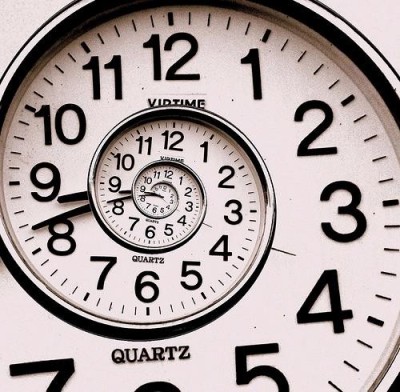
Two Clocks

There are two clocks: a still clock and a clock that is always a minute late.
Which clock is more accurate?

The answer is the still clock – it tells the correct time twice every day, but the other clock is always wrong despite the fact that it constantly ticks.
Sometimes when life gets you down, it is better to stop and rest instead of trudging on forever, always out of sync.

Posted in Psychology & Medicine

Cognitive Dissonance

When two conflicting ideas exist at the same time in the human mind, it causes uneasiness and discomfort. Human beings instinctively tried to reduce the dissonance, most easily achieved by adaptation and blaming. For example, when a person wants something strongly but cannot attain it, they choose to believe that they do not want it any longer, discarding one idea to dissolve the dissonance.

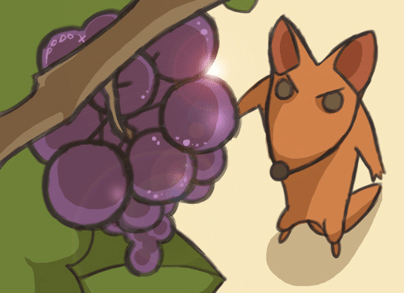
A famous portrayal of this condition is Aesop’s fable The Fox and the Grapes, which goes as following:

A fox sees a grape on a tree and wants to eat it. However, the grape is too high up, so the fox says “That grape is surely sour.” and turns away.

This fable shows the classic pattern of: Wants something -> finds it unattainable
-> criticises it to reduce their want, and ultimately the dissonance caused by it.

This effect is quite powerful and explains many of mankind’s unique behaviours. As stated above, people try to reduce the dissonance by justification, denial and even blaming a third party to ease their mind.
Interestingly, the act of “justification” is brought on by another human feature: arrogance. Most people consider themselves intelligent and always making the right decisions, ergo when they make a mistake it conflicts with their self-image. Instead of accepting that they made a mistake (thus altering their image), they instead believe that they intended that action. This belief is so strong that they do not even know the justification happened subconsciously.

For example, there is a phenomenon called buyer’s remorse, where a buyer finds a flaw or a better product after buying something, feeling remorse (which is due to the discomfort caused by cognitive dissonance). Instead of blaming themselves, people will justify their reasons for buying that product, and paradoxically value that item even more. This shows how cognitive dissonance can be seen everywhere in everyday life.

In short, people cannot accept paradoxes, believe they always make the right decisions, and twist reality and make excuses when it does not fit what they desire. People are fascinating.

Posted in Philosophy

Evidence

When a person dies, what do they leave in the world? As an old proverb states, tigers leave their hide after death and people leave their name after death. Little is left after death: bodies slowly decay and return to the ground, wealth is split up and taken by others. If you think about it, the only thing that remains as evidence that the person existed is their name, and people’s memories regarding that name. Official records or photos can be lost among time and forgotten about, but a strong bond between people is hard to forget.

But as even memories fade away, a person who you met once or twice will be forgotten eventually. Therefore, a person who never was close to people or make an impact in someone’s life would “not have existed” to anyone other than a select few, such as family. Therefore, his or her life would have had no meaning, as it may have never existed. Although some may argue that there would have been meaning while the person was alive, there is no greater meaning outside of the past and present, with no impact in the future.

However, if one is close to many people and actively leaves some mark in someone’s life, they will be remembered for those “marks”. In other words, the way people see you is how you will be remembered after death, and by extension, it will define who you were. If you were generous and kind, you become a “good person” forever, but if you did not interact with people or treated them with little respect, you are then defined as a “not so good person”, or even worse, not defined at all. This is regardless of what kind of person you are on the inside, as that would be completely destroyed after death.

The main point of this thought process is that if you do not leave some evidence that you existed, more specifically a good mark, whatever you did in your life will be meaningless. One could accomplish a great feat and have their name known across the world, or leave a work of art or literature that will be seen and read, or even just befriend many people and leave an everlasting impression of yourself in their mind. 

But if you do not want your life to have any impact on the future, there is the option of simply enjoying the present and disappear as Andersen’s Little Mermaid did.
Ergo, it is ultimately your choice whether you want to leave a mark in the world or not.