Posted in Psychology & Medicine

Stendhal Syndrome

There have been recorded cases of people gazing upon a beautiful panorama of Florence or an exquisite painting and suddenly collapsing. The condition is known as Stendhal syndrome, alternatively called Florence syndrome or hyperkulturaemia (excess culture in blood). It has been described as causing tachycardia (rapid heartbeat), dizziness, confusion and fainting after being exposed to a particularly beautiful piece of art or scenery. It is named after French author Stendhal (penname of Henri-Marie Beyle), who upon visiting Florence in 1817 experienced the very condition.

Stendhal syndrome is most likely related to a very common phenomenon known as vasovagal syncope, where extreme emotions overwhelm the brain, induce a massive parasympathetic nervous response, causing the person to faint. There are two major nervous systems: the sympathetic and parasympathetic. The sympathetic nervous system is responsible for the fight-or-flight response and essentially prepares the body for physical activity. The parasympathetic nervous system does the complete opposite and is activated when you are resting or digesting food. Thus, a burst of parasympathetic nervous activity causes a sudden fall in heart rate and blood pressure, causing the brain to lose the oxygen supply needed to maintain consciousness. When the person faints, they collapse and blood flow is restored to the brain. Vasovagal syncope can be caused by anything from standing up very quickly, extreme emotions (e.g. stress, seeing blood or needles) and fatigue. It is the most common cause of collapse and is (usually) completely harmless.

When a person looks at a breathtaking view or a stunning work of art, their brain is overwhelmed by intense emotions of excitement and joy. In the case of Stendhal syndrome, this effect is so great the person is literally blown away by the sight.

The people of Florence have noted that this phenomenon is rather common in tourists visiting the beautiful city.

Posted in Psychology & Medicine

The Three Christs Of Ypsilanti

On July 1, 1959, a social psychologist named Milton Rokeach began an experiment in Ypsilanti State Hospital in Michigan to explore the nature of delusions. He gathered three paranoid schizophrenics who each believed they were Jesus Christ and put them in one room. Technically, there can only be one Jesus Christ. So how did the three schizophrenics respond to each other’s claims that they were Jesus?

The experiment ran for two years, with the three patients meeting regularly with Rokeach (under the guise that it was a support group). The initial meetings were far from peaceful. One “Christ” would yell out that the other two were fakes, while another would decry that he would not worship the other Christ as he was the real Jesus. The third reasoned that there cannot be more than one Jesus, and that he was the Good Lord. The arguments escalated to the point of physical violence in many cases. No one would budge and accept that the other person could be Jesus, as they themselves were Jesus. It was the ultimate paradox and cognitive dissonance, as there can be only one Jesus.

Rokeach hoped that the patients would soon see the error of their delusions. He even went as far as sending each of them fake letters from the patient’s “wife” and “the hospital boss” to see if they would alter their routine as the letter advised. But instead of breaking down and accepting that they were deluded, the three patients each found an explanation to resolve the cognitive dissonance.

One patient declared that his fellow patients were actually dead but being controlled by “machines”, thus their arguments were not credible. The other two explained that the other patients were “crazy” people with mental health issues, thus they should not be believed.

This is not a surprising ending to the story, as the definition of a delusion is that it is a “fixed, false belief not amenable to reason”. By definition, a delusion cannot be “reasoned” or broken with logic. Even if you blatantly show the patient proof that their delusion is not real, the patient will not yield. Instead, they will find creative ways to work around the inconvenient truth. Ergo, no matter what evidence you put forward, those three patients would always, in their mind, be the one and only Jesus Christ.

Now let us assume that you met a doppelgänger who states that they are the real “you”, challenging your identity. How would you respond? Challenging one’s identity is the most vicious attack possible, as no person is secure enough with their own identity to be unaffected by the attack. Because people define themselves with a set identity, changing even a small portion of their identity causes extreme confusion and panic. To avoid such emotional turmoil, the brain does everything in its power to protect the identity it believes in. This is why people will respond with fury and anger when their identity is challenged.

People say that “I know myself the best”. But if we construct our identities around flimsy, false foundations, we would still cling to the idea that that is our true identity. If people were to suggest that we are not who we think we are, our brain would defend its identity at all costs. In that case, are our identities delusional? How do we know whether our identity is the real us, or a delusion our brain is clinging to?

Better yet, imagine that everyone around you claimed that you are a duck. Even though you know for sure that you are not a duck, everyone else sees you as a duck and defines you as a duck. An interesting thing about delusions is that the definition includes the phrase: “…and not in keeping with that person’s subculture”. This means that if everyone in your subculture were to say that your belief and your identity were wrong, you could be labelled “delusional”. In that case, are you crazy or is everyone else crazy?

image

Posted in Psychology & Medicine

Sweet Tooth

It is interesting to see how people tend to use taste-related metaphors to describe other people. If a person is hostile or spiteful, we describe them as “bitter”. If a person is sullen and gloomy, we say they are “sour”. Perhaps the most extensively used taste is “sweetness”. People have a tendency of calling their loved ones sweet-related names, such as “honey”, “sweetie”, “sugar” or “sweetheart”. This is directly reflected in the tradition of giving chocolate to a loved one on Valentine’s Day. Quite obviously, this is because we find sweetness the most palatable taste and something that is nice. On a related note, could there be a relationship between sweetness and personalities?

A group of psychologists decided to study whether people who like sweet foods, or “sweet tooth”s, have a certain personality trait or not. They did a survey where participants were asked what foods they liked most out of a list of 50 foods covering five tastes (sweet, sour, bitter, salty, spicy). They also answered questions that gave an indication of their agreeableness (one of the five components of OCEAN personality traits). The psychologists then analysed whether there was an association between sweet tooths and agreeableness. Interestingly, a direct correlation was found between a liking of sweets and higher levels of agreeableness. This suggested that people who like sweet things tend to be more friendly, cooperative and compassionate.

But is the cause-and-effect relationship so simple? Could it be that sweet things cause people to be nicer? In a separate experiment, participants were randomly given a sweet food (chocolate), a not-sweet food (cracker) or no food. They were then asked to volunteer their time to help someone. It was found that those who were given something sweet were more willing to help another person compared to the other two groups.

This makes logical sense as eating sweets such as chocolate causes your brain to release a flood of hormones such as endorphin and serotonin from the absolute pleasure of the experience. These hormones make us feel happy, blissful and in love, which in turn make us more agreeable and willing to cooperate.

Although sweetness has numerous negative effects on the body such as weight gain and diabetes, there is no doubt that it is greatly beneficial for your mental health. If there is a bitter person around you, give them a good dose of chocolate to help them develop a sweeter personality. Or perhaps all they need is a sweet romance.

(Image source: http://fc04.deviantart.net/fs71/f/2010/138/c/e/Day_4___Sweets_by_Valandill.jpg)

Posted in Psychology & Medicine

Reverse Psychology

If you tell a child not to do something, chances are he or she will do it. This is a simple rule of parenting that everyone has experienced at some point in their lives. People (especially children and teenagers) are wired in a certain way so that if they are told they cannot do or have something, they react by wanting it more. They then rebel by reasserting their freedom and express anger towards the person restricting their freedom. This is a natural response for a person that is beginning to develop a sense of self and ego, as they feel an instinctive desire to protect their right to free will. This psychological phenomenon is known as reactance.

Although reactance can be very troublesome and annoying to deal with, you can easily turn it around to your advantage if you understand the basic principles behind the effect. Under the assumption that a child will always react to your commands and advice by doing the opposite, we can deduce that if you say the opposite of what you want, they will end up doing what you want. This is reverse psychology. It is a surprisingly effective method of manipulation, especially in those with high reactance (usually children or those who are as immature and stubborn as children).

It has been scientifically proven that reverse psychology is extremely effective in children, as they would rather protect their (perceived) free will than avoiding study or not eating their greens. An example of reverse psychology would be telling a child to stay home when they actually want them to go out and play. However, reverse psychology is not the most ideal way of parenting as it reinforces the idea that it is okay to do the opposite of what you ask, thus undermining your authority.

Reverse psychology works just as well in adults when used right. For example, using a strong imperative tone against a person effectively assaults their ego, which provokes their natural instinct of reactance. If you are not in a position of authority and the person has the option to defy you, it is likely that they will revert to an irrational teenager and do the opposite of what you commanded. However, repetitive use of reverse psychology may lead the person to think that they are being manipulated, causing them to nullify it by reverse reverse psychology. Reverse psychology can be a double-edged sword if this happens, so it is important to know when it is most likely to be effective.

Psychological reactance is more likely to arise if the restricted option appears more attractive and important. The greater the restriction of freedom, the greater the psychological reactance. Also, arbitrary threats produce high reactance as they do not make sense, making people more rebellious. It is important that reverse psychology be used subtly and sparingly on people who are resistant to direct requests. Mastery of the above skills will help you manipulate a person into doing your bidding under the illusion that they are acting on their free will.

Posted in Psychology & Medicine

Flow

Have you ever had a moment of pure passion, where you are so immersed in what you are doing that everything around you does not matter and you are in a state of total bliss? In that moment, you feel fully alive, present and completely engaged with what you are doing. When the happiness and creativity expert Mihaly Csíkszentmihályi was studying how painters work, he noticed an odd thing. When their painting was going well, they did not care about getting tired, hungry or uncomfortable. They just carried on. But when the painting was finished, they rapidly lost interest in it.

Csíkszentmihályi described this state of mind as a flow state: the experience of being fully engaged with what you are currently doing. When in a flow state, an hour can pass in the blink of an eye, action and awareness merges and the experience is intrinsically rewarding. You feel that what you are doing is important, in full control and not self-conscious. Flow state does not just involve ultimate concentration. It is a complex state of mind where you are solely driven by focused motivation, operating at your peak level of mental and emotional engagement. Essentially, your mind uses 100% of its capacity for the task at hand, rather than wondering what is for dinner or peeking at the beautiful girl across the road. Because of this, a person in flow state not only works with great efficiency and creativity, but they also feel positive, energised and happy. In fact, the intense spontaneous joy brought on by flow state can almost be considered the mental equivalent of an orgasm.

So how can you achieve flow state? Flow state is not something that one chooses to go into. It is only attained when certain criteria are met.

  • Flow state can happen with any activity, but it is more likely to occur if you are internally motivated (i.e. you are doing the activity mainly for its own sake).
  • You should have clear short-term goals for what you are trying to achieve. This adds direction and structure to the task.
  • An important aspect of flow is that the activity must be challenging enough to stretch your skills almost to the limits, but not more. If it is not challenging enough, you will get bored. If it demands more skill than what you are capable of, you will become anxious. That being said, the balance only has to be between “perceived” challenge and skill. In other words, all you need is confidence that you can take on the challenge.
  • The activity should provide immediate feedback on how you are doing (e.g. seeing how a painting is turning out, hearing yourself sing). This allows you to adjust your performance in order to maintain flow state.

Flow is an incredibly useful thing. Through flow, you can forget about your worries and your strife, reach a state of pure happiness and inner peace and produce something truly great. The key to happiness is knowing what allows you to reach flow state and routinely entering flow state. For example, I know that the three things that give me flow are: music, humour and obsessions. Ergo, I play my guitar and sing, watch television shows that make me laugh and write an entry for the Encyclopaedia of Absolute and Relative Knowledge every day. All of these activities allow me to be truly happy, no matter what the situation may be.

image

Posted in Psychology & Medicine

Reaction

If you were walking along the street and found a bird lying on the ground, how would you react? You would probably poke the bird to see if it is alive. We have a peculiar habit since we are children of poking living things that we see for the first time. Through poking, we discover whether it is alive or dead, soft or hard, slimy or furry, docile or aggressive.

Prompting a reaction and observing the reaction is a surprisingly useful way of learning. In chemistry, we react an unknown substance with other chemicals to discover its identity. In medicine, we stimulate parts of the brain with electricity to discover what each part does. In physics, we build giant accelerator to crash particles together to find out their constituents and properties. If you fell into a cave so dark you cannot see even one foot ahead of you, the best way to find out if there is a wall or a hole or water ahead of you is throwing a rock in that direction.

This principle can be applied to psychology. To learn how people around you behave, provoke them. Human beings are extremely sensitive to stimuli and even when they consciously try to hide it, they will subconsciously react. If you keep (subtly) poking the person, you will soon be able to predict how they will react to something, what actions they will take, and you may even discover what is on their mind.

We cannot see the wind, but we can infer that it exists because the leaves blow. The best way to prove something that you cannot see inducing and looking for reactions.

Posted in Psychology & Medicine

Overpopulation

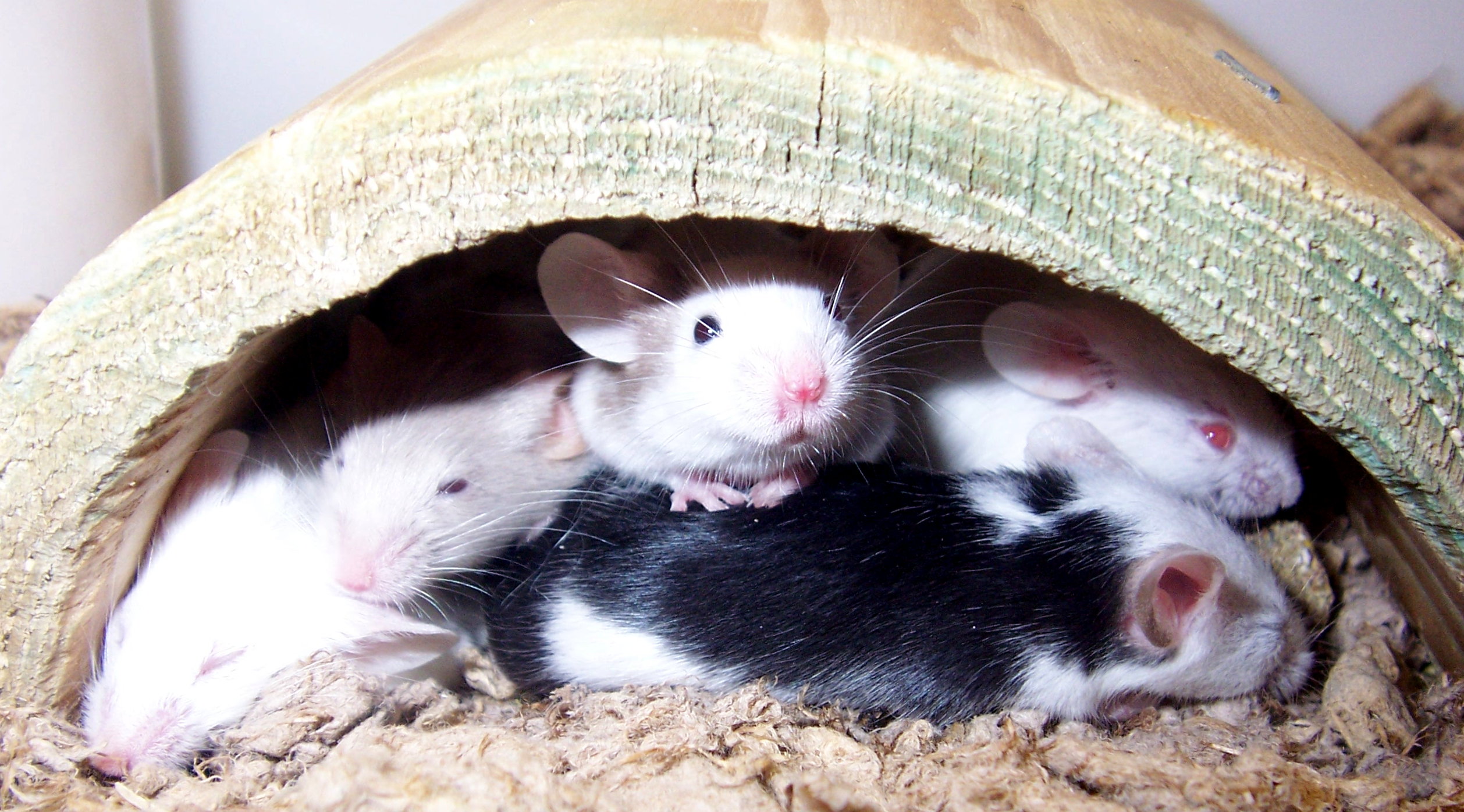
In 1972, John B. Calhoun designed a very specific mice cage called Universe 25, also known as the Mortality-Inhibiting Environment for Mice. Universe 25 was designed as a practical utopia for mice. It was constantly replenished with food and water, each wall had an intricate grid of nesting boxes connected by mesh tunnels and stairwells (like an apartment) and the cage was cleaned periodically. There were no predators, the temperature was set at a comfortable level and all mice resident were disease-free. In all ways, Universe 25 was an idyllic home for the mice.

Calhoun’s aim of this experiment was the same as the countless experiments before Universe 25: to see the effects of abundance on a population, and the consequences of that. Biologically speaking, a population only grows to the point that the environment can sustain it and then plateaus. So if the environment is completely abundant, the population will grow and grow without limitations (other than space). Thus, Calhoun’s main focus was overpopulation in societies. What did he find?

At the start of the experiment, four breeding pairs of mice were introduced to Universe 25. They began reproducing after 104 days of familiarisation and the population increased exponentially. The mice flourished in the prosperous environment. Around day 315, population growth slowed. By this stage, the mice population had grown to over 600, which made Universe 25 very crowded. Although there were still plenty of resources, the problem of overpopulation still remained. As the population grew and space became limited, male mice found it too difficult to defend their territory and eventually gave up doing so. The mice began losing their ability to form social bonds and these mice (“failures”) began congregating at the centre of the cage. This group of mice gave up on all normal social behaviour, leading to constant violence. The violence soon spread throughout the cage, with the mice society descending into chaos. The females, stressed and confused by the violence, attacked and cannibalised their own young, after which they retreated to the highest nest boxes where they isolated themselves. Certain males (termed “the beautiful ones” by Calhoun) did not show violence or any interest in females, choosing only to eat, sleep and groom themselves, wrapped in narcissistic introspection. Because of these two isolated groups, procreation slumped and population growth slowed. Elsewhere, in the “inner city” group at the middle of the cage, cannibalism, pansexualism and violence became common. The entire society had collapsed.

On day 560, the population ceased to grow at a peak population of 2200. After this, the number of pregnancies dwindled to nothing and no young survived past infancy. Adult mice were also affected, with mortality rates skyrocketing at all ages and increased rates of diseases. It was clear that the population was headed towards extinction. Even after the population dwindled down to a much more sustainable number, the mice were incapable of (or chose not to) reproducing to regenerate the population. Not only did mice society die, but the mice themselves met a grim fate as well.

This result was repeated in all of Calhoun’s experiments, conclusively showing that overpopulation leads to the demise of a society. Calhoun described this as “crowding into the behavioural sink”. He explained that the mice served as a warning to what human societies are headed towards if we do not solve the problem of overpopulation. We can already see the effect overpopulation has on societies. It is a known fact that people living in the inner areas of a city are more prone to poverty, crime, violence and a lower quality of life. However, Calhoun was not a nihilist. Instead of saying “humanity is doomed”, he explored different ways of resolving the problem. The most effective idea he came up with was space colonisation.

Posted in Psychology & Medicine

Sleeping Sickness

A woman travelling in Africa is bitten by what appears to be a mosquito. She swats the insect and keeps on going about her journey. The next week, she finds that she has a small nodule where she was bit. She is also feeling slightly unwell, with fever and fatigue. Over the following two weeks, her fever worsens (coming and going intermittently) and she notices large lumps along the back of her neck. By this stage, she is experiencing muscle and joint pain as well. After returning home from her trip, she finds that her symptoms have not resolved. On top of her fever and pains, she begins experiencing headaches, mood swings, lethargy, confusion, clumsiness, delayed response to pain, sleepiness during the day and insomnia at night. She begins to worry that something is wrong, but she believes that it is a bad flu and does not see a doctor. Her symptoms worsen with time (sleeping up to 15 hours a day), until one day, she falls asleep and does not wake up. She is taken to a hospital, where it is discovered she is in a coma. She dies within a week.

This is the typical presentation of sleeping sickness, also known as human African trypanosomiasis. It is an infectious disease caused by a protozoan parasite called Trypanosoma brucei (comes in two types: T. brucei rhodesiense (East African type) and T. brucei gambiense (West African type)), which is transmitted by tsetse flies – a bloodsucking fly endemic to sub-Saharan Africa (there are also case reports of sexual transmission between people). When infected, the parasite rapidly proliferates in the patient’s bloodstream. It is not detected by the host immune system, thanks to a surface protein called VSG. This allows it to spread through the patient swiftly and silently via the circulatory and lymphatic systems. The early symptoms (intermittent fever, rash, lymph node enlargement), typically presenting about a week or two after infection, are due to the parasite spreading through the blood and lymph. As the infection spreads, the parasites begin to invade the central nervous system (although in the West African type of the disease, patients often die from the toxic effects of the parasite replicating in the blood before they reach this stage).

As the infection spreads through the CNS, it causes the neurological symptoms described in the case. The sleepiness (from where the disease gets its name from) worsens as the disease progresses, with patients finding it difficult to wake up in the morning, even sleeping for over 20 hours. The sleepiness is caused by a chemical called tryptophol, which is produced by the parasite. Essentially, the neurological symptoms appear as if the person’s brain is slowing down, until they fall into a coma, resulting in death without treatment (usually within 2~3 years since the infection).

Sleeping sickness is invariably fatal unless treated early. Once the patient reaches the second stage (neurological phase), treatment becomes very difficult. The current first line treatment is a drug called melarsoprol, which is a form of arsenic. Because of its toxic nature, it is extremely dangerous and there is around an 8% chance of the patient dying from side effects. Fortunately, there are less dangerous and more effective treatments such as eflornithine (which only works for the West African type) being developed.

Posted in Psychology & Medicine

Hanging

Hanging is one of the most popular methods of execution and suicide throughout the ages. It is typically performed by fashioning a noose (most commonly with the eponymous hangman’s knot), placing it around the victim’s (or own) neck. The person then falls from a short height (e.g. dropped from a stand or stepping off a stool), upon which the force of the body pulling down causes the noose to tighten. This can kill a person via two ways. Firstly, if the force of the drop and the knot is strong enough, the sheer force of the noose tightening and the person being suspended by their neck will cause their neck to break. This causes spinal cord injury at the cervical level, where the brainstem lies. When the brainstem is damaged, the person loses control of autonomic processes such as breathing, causing instant death. Secondly, if the neck does not break, the person will be strangulated by the noose. This will kill the person through either choking (from airway obstruction) or brain ischaemia (as the carotid arteries are cut off). Pressure on the carotid artery may also cause something called a carotid reflex, where powerful nervous signals cause the heart to beat so slowly that it stops.

It is said that whether a person dies a quick, clean death via neck fracture or a slow, painful death via strangulation depends on how good the knot is. A hangman’s knot is made up of a loop with a series of coils above it. The more coils there are, the more friction it adds to the knot, making the noose harder to pull closed. A true hangman’s knot is defined as thirteen coils, which provides enough resistance to cause a neck fracture when a person falls. If there are fewer knots than that, the knot will tighten too quickly around the neck and not provide enough resistance to cause a neck fracture. This leads to strangulation, which is far more excruciating and a very inhumane way to die. If there are too many knots, there will be too much resistance and there is a risk of decapitation, leading to a very messy situation.

In forensic medicine, there are certain signs that reveal a victim was hung. For example, the C2 spine (second vertebrae in the neck) will exhibit a hangman’s fracture, where there is fractures on both sides. Fracture of the hyoid bone (a small bone below the chin) is also a classic sign of hanging. There will also be bruises along where the noose was and every sphincter would be open (which leads to immediate voiding of the bowels and bladder at the time of death). If the person died of strangulation rather than neck fracture, they will show signs of asphyxiation, such as blue lips (cyanosis). Another interesting result of hanging is something called a death erection. As the name suggests, it is when a corpse is found with an erection, most likely due to hanging. This is probably caused by the noose crushing the cerebellum, causing a reflex erection. The same phenomenon has been observed in women as well.

Posted in Psychology & Medicine

Five Stages Of Grief

Dr. Elisabeth Kübler-Ross was a psychiatrist who was greatly interested in the field of death and dying. She believed that medical students and doctors should be aware of how important the topic was. One of her major contributions to the field of medicine was a theory inspired by her work with terminally ill patients. Dr. Kübler-Ross discovered that patients who were given bad news often reacted in a rather predictable pattern of five “stages”. She also found that these theoretical stages of coping with dying also applied to other grieving processes, such as a child going through a divorce or grieving a break-up. It is important to note that these stages are not absolutely complete or chronological, but only a general theory of how people react to grief.

  1. Denial: A person’s initial response to any bad news or trauma is usually denial. Denial is a hardwired defence mechanism of the brain to protect the mind from trauma. However, it may hinder the process of coping, with some people being perpetually stuck in this stage while never fully coping with their grief. An example thought during this stage is “This can’t be happening to me”.
  2. Anger: Once the person overcomes their denial and recognises reality, they respond with anger. This is an externalisation response where the mind tries to deal with the bad news by lashing out. It can be seen as the mind’s response to the confusion that arises from receiving the bad news, which may be caused by cognitive dissonance arising from the conflict between denial and reality. Because people at this stage often lash out with rage and verbal abuse (sometimes even physical), they may be difficult to deal with. Thus, it is important to recognise that this is a natural response to grief and try to support them even though they are acting abusive. An example thought during this stage is “It’s unfair that this is happening to me”.
  3. Bargaining: When the anger settles down, a person attempts to deal with the grief with logic instead of emotions. They will try to negotiate with a higher power to delay their death, such as through praying. This stage shows how desperate and vulnerable the person is while trying to deal with the bad news. They will try to do anything to make the grief go away, or at least reduce it. However, this stage rarely produces any viable solutions. An example thought during this stage is “If I can have a few more years, I will do anything”.
  4. Depression: With both emotions and logic failing to protect them from the grief, the person will fall into a state of depression. Hope is lost and the person understands that resistance is futile (an example of learned helplessness). By this stage, the person has become quiet and withdrawn, often detaching themselves from family and friends. Ironically, trying to cheer a person up during this stage is ill-advised. It is more beneficial if the person can pull through the depression and process it to make it to the last stage of grief. An example thought during this stage is “Why bother, I’m going to die anyway”.
  5. Acceptance: The last stage of grief is not only accepting that death is unavoidable, but also recognising that there is still time before that. The person reaches a state of clarity and comes to term with the grief, achieving some inner peace. The time taken to reach this state varies and some people may never reach it at all. It is also important to note that just because the person receiving the bad news has accepted it, others around them may not have processed the grief. An example thought during this stage is “Everything is going to be okay”.