Posted in Psychology & Medicine

The Two Faces Of A Baby

A baby appears to have a pure and innocent image, but they also have a side we don’t know about.

image

Firstly, babies (including infants) know how to lie and steal.
They fake crying to fool an adult, and put on an innocent face on purpose.
During times when they are strongly possessive, they grab what they want and not let go. An adult pities that the baby does not know better and gives it what it wants, but this is actually meticulously planned by the baby.

Furthermore, research has shown that babies show racism and judge people based on looks. Babies, in almost all cases, prefer to be held by the prettier woman. Also, they can perfectly recognise and differentiate faces yet cannot tell the differences in faces from another ethnicity.

Lastly, babies experience euphoria and pleasure through self-harm (banging their heads against a wall produces a similar effect to taking drugs) and can murder their twin inside the womb by (stealing nutrients).

Posted in Psychology & Medicine

Stranger Danger

Babies first show “stranger anxiety” at between 8 to 10 months of age. As their brains develop rapidly, they also learn social-emotional skills and recognise the identity of “parents”. Thus, they do not trust any other adults that are not “parents”. This phenomenon usually disappears after two years, but they then receive education from adults that they should not trust strangers, or Stranger Danger.
Interestingly, most kidnapping cases are committed by an adult the child knows well.

image

Another fact related to stranger anxiety is that it is dependent on how close the baby is to its parents. Take the Strange Situation Test developed by Ainsworth as an example:

Put a baby under the age of 12 months and its parent in the same room, then separate the two. Next, send in an adult the baby has never seen before, then after a short while exchange the adult back with the parent.

Normal babies become anxious and agitated when a stranger enters the room, but then they calm down almost immediately as the parent returns. Also, when the parent returns the baby requests to be held, as physical contact represents safety for a baby.
However, a baby that has spent less time with its parents, or a baby with unresponsive parents exhibit a different behaviour. In fact, they become more agitated when the parent returns, and often show avoidance. This is because there has been insufficient bonding between the two.
A more extreme case is of a baby that has been abused. These babies become extremely disorganised and disoriented upon the parent’s return. This is also due to improper socio-emotional development. Babies like these that were not intimately bonded with their parents tend to have trust issues even after development, which may lead to social problems in adulthood.

Posted in Psychology & Medicine

Tattoo

The history of tattoos is as long as the history of civilisation itself. From the priests of ancient Egypt to the modern Maori’s moko, people have always inscribed something on their skin. Even in modern society, tattoos are quite popular (especially among the youth and gangs).

There are many types of tattoos, but all carry the same message: “I own my body and can do what I want to it”. Reason being, people believe that the only thing they truly have full control over and exert total freedom on is their own body. This results in teenagers and young adults to get tattoos as a sign of rebellion, which sometimes stays even in adulthood.

However, there are other reasons for having a tattoo. For example, one can have something precious to them, something they never want to forget, or some ultimate life goal or purpose etched into their skin to remind themselves every day of it.
Also, in a religious sense, it could be done as a way to announce that “my body belongs to my god”. This seems like an archaic ideology, but many people still carry tattoos with such a meaning.
Furthermore, some tattoos mean that “I belong to this group”, which is analogous to branding a cow. For instance, many indigenous tribes in South America and the Pacific Islands give a child who has passed initiation a tattoo to prove that he/she is an adult.

Lastly, tattoos can be simply aesthetic, but they often carry the previously mentioned “ownership of the body” meaning also (a common example is the “tramp stamp”).

Posted in Psychology & Medicine

Habit

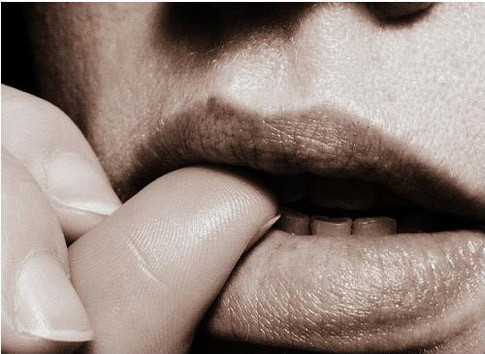
A habit is the automation of behaviour after many repeats. For example, if one fries an egg every morning, eventually frying egg becomes routine and can be done without even thinking. This is the most primitive form of learning.
image

“Automation” suggests that a habit comes from the subconscious mind. Because of this reason, people often do not know they have certain habits, as they do not think about the behaviours that are already habits.
In psychology, habits are defined as “the reduction of sensitivity following repeated stimulation”.

The system of habituation played a crucial role in the evolution of life. Habits saved an organism time by using the subconscious mind to behave more efficiently and more quickly.
For instance, an animal that is faced by a predator usually flees before it can think about the situation. This is the result of practical experience that the animal had gained throughout its life, knowing that running is the best way to avoid being eaten. And because of the repeated behaviour, it has become habituated, subconsciously fleeing when the same scenario comes along. This way, the animal maximises its chance of survival.

However, in modern society this primitive system often causes harm rather than doing good. This is seen in cases of procrastinating students, impulsive consumers and businessmen who smoke every lunchtime (addictions are strengthened by habits). These phenomenon tend to be caused by stress brought on by life and the person’s desire to relieve that stress or resolve their discomfort. This is why having hobbies and interests to relieve stress regularly is a good way to prevent bad habits from forming.

Bad habits form quickly, but good habits seem to take longer. But this only appears so because of the short-term rewards. Bad habits tend to bring satisfaction and stress relief almost instantly, but the advantages of good habits only become apparent slowly (but also steadily). So, what is a way to develop good habits easier? Giving yourself a small reward (such as chocolate) after a desired behaviour is effective in reinforcing such behaviour, leading to habituation.
According to a research, the average time that takes for a habit to fully form is 66 days.