Posted in Psychology & Medicine

Stendhal Syndrome

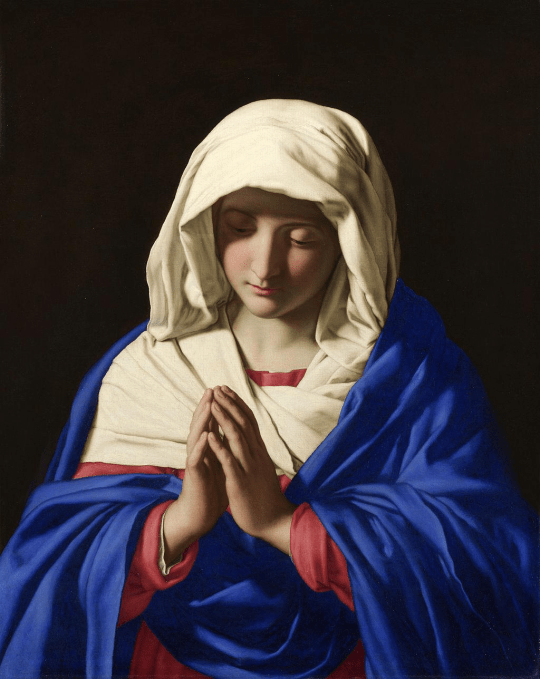
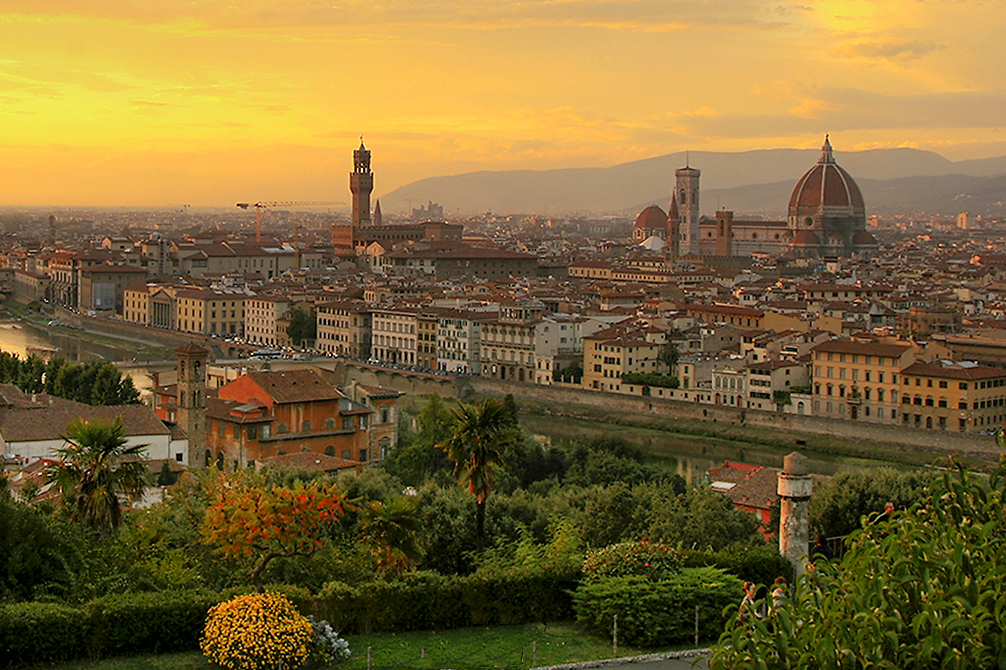
There have been recorded cases of people gazing upon a beautiful panorama of Florence or an exquisite painting and suddenly collapsing. The condition is known as Stendhal syndrome, alternatively called Florence syndrome or hyperkulturaemia (excess culture in blood). It has been described as causing tachycardia (rapid heartbeat), dizziness, confusion and fainting after being exposed to a particularly beautiful piece of art or scenery. It is named after French author Stendhal (penname of Henri-Marie Beyle), who upon visiting Florence in 1817 experienced the very condition.

Stendhal syndrome is most likely related to a very common phenomenon known as vasovagal syncope, where extreme emotions overwhelm the brain, induce a massive parasympathetic nervous response, causing the person to faint. There are two major nervous systems: the sympathetic and parasympathetic. The sympathetic nervous system is responsible for the fight-or-flight response and essentially prepares the body for physical activity. The parasympathetic nervous system does the complete opposite and is activated when you are resting or digesting food. Thus, a burst of parasympathetic nervous activity causes a sudden fall in heart rate and blood pressure, causing the brain to lose the oxygen supply needed to maintain consciousness. When the person faints, they collapse and blood flow is restored to the brain. Vasovagal syncope can be caused by anything from standing up very quickly, extreme emotions (e.g. stress, seeing blood or needles) and fatigue. It is the most common cause of collapse and is (usually) completely harmless.

When a person looks at a breathtaking view or a stunning work of art, their brain is overwhelmed by intense emotions of excitement and joy. In the case of Stendhal syndrome, this effect is so great the person is literally blown away by the sight.

The people of Florence have noted that this phenomenon is rather common in tourists visiting the beautiful city.
Posted in Psychology & Medicine

The Three Christs Of Ypsilanti

On July 1, 1959, a social psychologist named Milton Rokeach began an experiment in Ypsilanti State Hospital in Michigan to explore the nature of delusions. He gathered three paranoid schizophrenics who each believed they were Jesus Christ and put them in one room. Technically, there can only be one Jesus Christ. So how did the three schizophrenics respond to each other’s claims that they were Jesus?

The experiment ran for two years, with the three patients meeting regularly with Rokeach (under the guise that it was a support group). The initial meetings were far from peaceful. One “Christ” would yell out that the other two were fakes, while another would decry that he would not worship the other Christ as he was the real Jesus. The third reasoned that there cannot be more than one Jesus, and that he was the Good Lord. The arguments escalated to the point of physical violence in many cases. No one would budge and accept that the other person could be Jesus, as they themselves were Jesus. It was the ultimate paradox and cognitive dissonance, as there can be only one Jesus.

Rokeach hoped that the patients would soon see the error of their delusions. He even went as far as sending each of them fake letters from the patient’s “wife” and “the hospital boss” to see if they would alter their routine as the letter advised. But instead of breaking down and accepting that they were deluded, the three patients each found an explanation to resolve the cognitive dissonance.

One patient declared that his fellow patients were actually dead but being controlled by “machines”, thus their arguments were not credible. The other two explained that the other patients were “crazy” people with mental health issues, thus they should not be believed.

This is not a surprising ending to the story, as the definition of a delusion is that it is a “fixed, false belief not amenable to reason”. By definition, a delusion cannot be “reasoned” or broken with logic. Even if you blatantly show the patient proof that their delusion is not real, the patient will not yield. Instead, they will find creative ways to work around the inconvenient truth. Ergo, no matter what evidence you put forward, those three patients would always, in their mind, be the one and only Jesus Christ.

Now let us assume that you met a doppelgänger who states that they are the real “you”, challenging your identity. How would you respond? Challenging one’s identity is the most vicious attack possible, as no person is secure enough with their own identity to be unaffected by the attack. Because people define themselves with a set identity, changing even a small portion of their identity causes extreme confusion and panic. To avoid such emotional turmoil, the brain does everything in its power to protect the identity it believes in. This is why people will respond with fury and anger when their identity is challenged.

People say that “I know myself the best”. But if we construct our identities around flimsy, false foundations, we would still cling to the idea that that is our true identity. If people were to suggest that we are not who we think we are, our brain would defend its identity at all costs. In that case, are our identities delusional? How do we know whether our identity is the real us, or a delusion our brain is clinging to?

Better yet, imagine that everyone around you claimed that you are a duck. Even though you know for sure that you are not a duck, everyone else sees you as a duck and defines you as a duck. An interesting thing about delusions is that the definition includes the phrase: “…and not in keeping with that person’s subculture”. This means that if everyone in your subculture were to say that your belief and your identity were wrong, you could be labelled “delusional”. In that case, are you crazy or is everyone else crazy?

image

Posted in Life & Happiness

Delicacy

A delicacy is a food considered highly desirable due to its unique taste and rarity. Every culture has a different delicacy, ranging from commonly found but peculiar foods such as raw oysters, to very rare foods such as flamingo tongue (a highly prized dish in ancient Rome). Some examples of culture-specific delicacies include: beondaegi in Korea (steamed silkworm pupae), fugu in Japan (blowfish, very poisonous if not prepared correctly), bird’s nest soup in China (made out of swiftlet nests which are made of various fish) and escamoles in Mexico (ant larvae). In the Western hemisphere, three foods have classically been called the “three great delicacies”. These are: foie gras, truffle and caviar.

Foie gras is French for “fatty liver” and it is the liver of a goose that has been fattened up. Because of the rich fat content, foie gras is extremely smooth, buttery and delicate and is highly sought after in gourmet cooking. However, there is much controversy around the preparation of the dish. To fatten the liver, geese are tied up and force-fed large amounts of feed via a funnel and tube. This method is known as “gavage”. Because the geese are held still and force-fed so much food, there is a risk of the oesophagus rupturing and killing the geese. But this death could almost be considered merciful given the horrendous gavage process that can only be considered as torturous.

Truffle is a type of mushroom that lives underground. It is difficult to find and cultivate, making it a rare and valuable ingredient. In fact, it is considered “diamond of the earth” because of that reason. Truffles come in black truffles and white truffles. Black truffles are more commonly used in French dishes, along with simple-tasting foods such as soup and veal. It is also eaten alongside foie gras sometimes. The white version is more common in Italian foods. It is eaten raw and grated over a dish or salad.

Caviar is a Russian delicacy consisting of salted sturgeon roe (fish egg). It is considered one of the most luxurious foods on the planet, with some connoisseurs describing it as the culinary equivalent of an orgasm. Because the roe is not cooked, it retains its unique fishy taste which might make it unpalatable at first. But then people become hooked on the unique, addictive taste that cannot be copied. The price of $8000~16000 per kilogram shows just how much people are willing to pay for the ultimate taste.

Posted in Science & Nature

Vision

Consider this: if you see something that is not there, or not see something correctly, is that due to a problem in your eyes or your brain? An interesting anatomical fact is that the eyes are part of the brain. They originally evolved from the brain and drifted further and further forwards, connected to the brain by the optic nerves. If you lift a brain out from the skull, the eyes would be pulled backwards too. But technically speaking, eyes are distinct organs by themselves that have merely originated from a portion of the brain. It does not think or make decisions by itself. Just like a camera, an eye records things as it sees it and transmits it to the brain via the optic nerve via electrical signals. The brain then processes the signals in the occipital lobe, located at the back of the head (this is why you “see stars” when you bang the back of your head).

This means that vision can be altered anywhere along the pathway. If you have cataracts, where the lens of the eye becomes clouded, you lose portions of your visual field. If you have a large pituitary gland tumour, it presses on the optic nerve and causes double vision (diplopia) or vision loss. If you have a stroke in the occipital lobe, you can lose your vision. The brain’s role in producing vision can easily be demonstrated in the form of optical illusions. The eye merely records and transmits what it sees, but the brain becomes confused by what information it receives and tries to make sense of it. In the process, we experience bizarre illusions such as static images moving by themselves.

Because of this intricate pathway, some pathologies present with fascinating symptoms. A condition called Anton’s blindness (or Anton-Babinski syndrome) causes a patient to “see” despite being blind. Patients with Anton’s blindness are adamant that they can see perfectly clearly, and will even describe what they are seeing. However, what they “see” is completely different to what the object actually looks like. For example, if the patient looked at a blonde woman wearing a yellow blouse and a red skirt, they may describe her as a brunette woman wearing a blue shirt and black jeans.

The reason for their blindness is that their occipital lobe was damaged (usually by a stroke), leading to an inability to process the information from the eyes. Although the eyes are pristine and record what they see in perfect detail, the brain is incapable of interpreting the signals. The brain then goes on to confabulate, where the brain fills the gap by conjuring up false information. This makes Anton’s blindness quite hard to pick up on as the patient will not complain of it. It is only found when someone pays close attention to the patient and notices subtle cues like the patient bumping into furniture or talking in the direction where they think a person is at (even after they move). Ergo, the patient adamantly believes that they can see as their brain thinks it is seeing things (even though it is not receiving the information from the eyes properly).

Seeing is not believing. You see what you believe.

Posted in History & Literature

Demand And Supply

How does the economy function? On the surface, economics seems extremely complex and intricate, changing dynamically due to what appear to be insignificant factors. For example, one can predict a recession from the increasing attractiveness of waitresses. But economics relies largely on two simple laws: the law of demand and the law of supply.

The law of demand states that as the price of a good goes up, people demand less quantities of that good. This makes logical sense as (rational) consumers want to spend the least amount of money possible for something. When plotted on a graph with price (P) as the y-axis and quantity (Q) as the x-asis, we can show that demand (D) is a downward-sloping curve.

The law of supply states that as the price of a good goes up, people supply more quantities of that good. This makes logical sense as (rational) producers want to sell something for as much money as they can. When plotted on a graph with price (P) as the y-axis and quantity (Q) as the x-asis, we can show that demand (S) is a upward-sloping curve.

When we superimpose these two laws on the same graph, we get a nice X-shape as the two lines cross over. The point where they cross is called the market equilibrium and this is where the consumers demand exactly the right amount of goods that the producers are willing to supply at a given price. If a good is being sold at a price higher than the equilibrium price, consumers demand less of the good and producers are left with an excess. If the price is lower, then there is a shortage as demand exceeds supply. Over time, the price is pushed towards the market equilibrium. Thus, thanks to the laws of supply and demand, the market automatically adjusts to the price to accurately reflect the value of the good.

Adam Smith, the father of economics, called this the invisible hand – a force driven by the individual ambitions of consumers and producers to balance the market. This force is not found in centrally planned economies of communist states, as the price and quantity supplied is fixed by the government. A pure free market is only driven by the invisible hand. Most modern countries’ economies are mixed economies, usually in the form of free markets with some government intervention.

Although economics appears complicated, it essentially boils down to the laws of supply and demand. By understanding the principles of demand and supply, one can begin to understand more complicated economic theories such as aggregate demand and supply, elasticity, foreign currency exchange and trade. Real economic situations such as oil cartels, trade embargos and taxation can be broken down and modelled using PQ-diagrams (depicting the demand and supply curves).

The laws of supply and demand are two crucial laws of economics that everyone should have some understanding of, as it can be extremely useful in everyday life. Not only do they apply in obvious situations such as running a store or a business, or understanding how the economy works, but it can be applied to negotiating too. One of the fundamental principles of negotiating is finding the balance between what one person wants (demand) and what the other person is willing to do (supply). It is amazing how useful knowing that simply being slightly flexible is in negotiations.

Posted in Science & Nature

Virgin Birth

Although the concept of virgin birth (i.e. conception without intercourse) is common in many religions, there is no conclusive evidence of actual human virgin birth in recorded history. Except in one medical article written in 1874 by a Dr Capers.

In this article, Dr Capers describes a case study of a miraculous conception during the Battle of Raymond during the US Civil War. A soldier was shot in the testicles and the musket ball carried the non-musket ball (read: testicle) into the uterus of a girl working in a nearby field. The doctor attended to the girl who was shot and treated the wound in her abdomen. The bullet was not found.

Over the following nine months, the doctor realised the girl was pregnant, although she claimed to be a virgin. After nine months, a healthy boy was born. Stranger yet, the doctor realised the boy’s scrotum was unusually swollen and upon examination, found that he was carrying the musket ball that impregnated the girl in the first place. He thus concluded that the testicle that was carried by the musket ball was lodged inside her uterus and sperm leaked out. The soldier was eventually found and was told about this bizarre story and the two were married.

This case study has become a famous story told by doctors around the world. Unfortunately, it is completely false and the doctor who wrote the article admitted to faking it to amuse himself. Ergo, there are still no recorded cases of a virgin birth in humans.

The closest to a virgin birth that was recorded is a case study of a young woman who was performing oral sex on a man. She was found by her boyfriend during the act and the boyfriend stabbed her and her lover with a knife. The knife injured her oesophagus, causing the sperm in it to track down the abdomen and down to her reproductive organs. By a stroke of luck, an egg was misplaced during ovulation, causing it to drift into the abdomen instead of the fallopian tube (ectopic pregnancy), and met with the sperm. The egg was then fertilised and the girl presented to the hospital three months later with excruciating abdominal pain. The ectopic fetus was removed.

Posted in Philosophy

Black Cat

Philosophy is like being in a dark room and looking for a black cat.

Metaphysics is like being in a dark room and looking for a black cat that is not there.

Theology is like being in a dark room and looking for a black cat that is not there and shouting “I found it!”

Science is like being in a dark room and looking for a black cat using a flashlight.

Posted in History & Literature

Surgeon

In many cultures (especially in Asian countries), the public conception of doctors has changed where surgeons are considered the “real doctors”. This is particularly evident in Asian dramas where main characters tend to be surgeons, saving the patient’s life with dramatic operations and charisma. The idea that surgeons are superior to physicians may go as far as some adults advising medical students to become surgeons for a higher status (again, more evident in Asia). However, as the root of surgery is completely different from that of medicine, technically it is a misnomer to call a surgeon a “doctor”.

This is reflected in the relatively unknown fact that a fully-trained surgeon is referred to as “mister”, not “doctor”. To understand why surgeons call themselves Mr., we must look into the origin of the surgical discipline.

In ancient times, surgery was limited to treating flesh wounds and setting bones (with some exceptions such as trepanation), such as those sustained during battles. Other than the odd few cases of specialised surgeons such as Galen of ancient Greece and Hua Tuo of ancient China, it is hard to find records of doctors employing surgery as a form of treatment. This was mainly due to two reasons: that surgery was considered a “dirty, unrefined” form of treatment, and that surgery was too risky.

For a long time, especially in the Western world, surgery was considered to be of a lower status compared to medicine. It was considered more of a craft tradition – something which physicians believed was beneath them. Because of this, surgeries were mainly performed by barbers in medieval Europe. One can still find evidence of a barber’s alternative historical role on the barber’s pole, which has white, red and blue stripes. The white stripe symbolises bandages, the red symbolises arterial blood and the blue symbolises venous blood. This originates from the practice of bloodletting, where white bandages wrapped around a pole would get dyed red from the blood, giving the appearance of the barber’s pole. The profession of “surgeon” did not formally appear until around the 18th century when a Guild of Surgeons was formed in England. However, physicians refused to accept surgeons as equals for a further century. When they did come to accept that surgery was a legitimate form of medical treatment, the surgeons decided that they did not want to be assimilated as doctors, so they chose to keep their title of “mister” to distinguish themselves from physicians.

The reason why surgery was considered an unrefined art in the past mainly focuses on three issues: bleeding, pain and infections. Before modern surgical developments, uncontrolled bleeding was a real issue in surgery. This not only made surgeries extremely messy, but it was also dangerous for the patient as patients would often die from shock (dangerously low blood pressure). On top of this, anaesthetics was only introduced in the late 19th century, meaning before that, patients had to suffer the pain of their flesh being cut and stitched with no relief. Of course, this meant that surgeries were almost always a brutal scene, with the agonising screams of the patients filling the room, while they sprayed blood everywhere. Lastly, even if the patient somehow survived the surgery without bleeding out or dying from the stress and pain, there still remained a high risk of post-operative infection. Thus, surgeries were most often unsuccessful and were considered a barbaric form of treatment with no promise.

Thanks to medical advancements, surgery has become an important aspect of medicine, where one cannot live without the other. However, the tension still remains between physicians and surgeons, with each profession jokingly mocking the other whenever a chance arises.

Posted in Psychology & Medicine

Sweet Tooth

It is interesting to see how people tend to use taste-related metaphors to describe other people. If a person is hostile or spiteful, we describe them as “bitter”. If a person is sullen and gloomy, we say they are “sour”. Perhaps the most extensively used taste is “sweetness”. People have a tendency of calling their loved ones sweet-related names, such as “honey”, “sweetie”, “sugar” or “sweetheart”. This is directly reflected in the tradition of giving chocolate to a loved one on Valentine’s Day. Quite obviously, this is because we find sweetness the most palatable taste and something that is nice. On a related note, could there be a relationship between sweetness and personalities?

A group of psychologists decided to study whether people who like sweet foods, or “sweet tooth”s, have a certain personality trait or not. They did a survey where participants were asked what foods they liked most out of a list of 50 foods covering five tastes (sweet, sour, bitter, salty, spicy). They also answered questions that gave an indication of their agreeableness (one of the five components of OCEAN personality traits). The psychologists then analysed whether there was an association between sweet tooths and agreeableness. Interestingly, a direct correlation was found between a liking of sweets and higher levels of agreeableness. This suggested that people who like sweet things tend to be more friendly, cooperative and compassionate.

But is the cause-and-effect relationship so simple? Could it be that sweet things cause people to be nicer? In a separate experiment, participants were randomly given a sweet food (chocolate), a not-sweet food (cracker) or no food. They were then asked to volunteer their time to help someone. It was found that those who were given something sweet were more willing to help another person compared to the other two groups.

This makes logical sense as eating sweets such as chocolate causes your brain to release a flood of hormones such as endorphin and serotonin from the absolute pleasure of the experience. These hormones make us feel happy, blissful and in love, which in turn make us more agreeable and willing to cooperate.

Although sweetness has numerous negative effects on the body such as weight gain and diabetes, there is no doubt that it is greatly beneficial for your mental health. If there is a bitter person around you, give them a good dose of chocolate to help them develop a sweeter personality. Or perhaps all they need is a sweet romance.

(Image source: http://fc04.deviantart.net/fs71/f/2010/138/c/e/Day_4___Sweets_by_Valandill.jpg)

Posted in Science & Nature

Honeybee Dance

How do honeybees share the location of a food source, such as a flower, to other bees of their colony? An Austrian biologist named Karl Von Frisch devised an experiment to learn how the honeybees communicated with each other. He set up two different food sources and tagged every bee that came to pot A green and bees that came to pot B red. He then studied the behaviour of these bees back at the hive. What he discovered was fascinating.

For millennia, beekeepers have noticed that some honeybees have a tendency of moving in a peculiar yet methodical way once they returned to their hive after foraging for flowers. The bees would move in a straight line while waggling their bottom (moving side-to-side), then walk in a semicircle back to where they started. They would then waggle in the same direction, then move in a semicircle on the opposite side, completing a figure-eight path. This is called a waggle dance.

image

Frisch noticed that bees with green spots and the bees with red spots both did the waggle dance once they returned to the hive, but in different directions. All bees with green spots danced so that the straight line pointed a certain direction, while the bees with red spots danced the same dance except pointing another direction. Amazingly, the angle between these two directions was exactly the same as the angle separating pot A and B (with the hive as a point of origin). Frisch deduced that the waggle dance was the language of honeybees.

Through further experimentation, Frisch was able to tease out the details of this “language”.

  • Honeybees’ eyes can see ultraviolet and polarised light, which allows them to see where the sun is in the sky at all times. This is because sunlight polarises so that it points towards the sun and honeybees can see this direction. Therefore, the bee’s eyes act as a solar compass that tracks the exact location of the sun in real-time.
  • Bees have a finely-tuned internal clock that allows them to predict exactly where the sun should be depending on time, season and latitude, as the sun moves through the sky.
  • Another point of reference that is used in the bees’ language is gravity. Gravity is a constant that does not change, meaning all bees know which direction is “up” and which is “down”. This also means they can use a vertical, perpendicular line as a standard zero-point.

By pairing the two global constants, gravity and the location of the sun, the bees can accurately signal to other bees the direction they should fly in to find the food source. If a bee does a waggle dance that points 60° right from the vertical “up” direction (as defined by gravity), it signals that the bees should fly 60° right from the direction of the sun. If the angle is 0°, the bees should fly directly towards the sun, and if the angle is 180°, the bees should fly directly away from the sun. The bees use their internal clock to calibrate the direction depending on the time of the day.

The straight line “waggle” part of the dance gives the information of distance. The longer the duration of the straight line, the further away the flower is. As a general rule of thumb, the duration of the straight line increases by 1 second for every 1 kilometre. When the food is within about 60m of the hive, the 8-shape waggle dance turns into an O-shape round dance. The bee deduces the distance by the energy required to fly to the location.

By encoding the two variables “direction” and “distance”, a bee can effectively use the waggle dance to accurately pinpoint the location of a food source. It is amazing to see that animals that we consider “primitive” such as bees have such an intricate method of communication.

image

(Image source: http://aireona93.deviantart.com/art/YAY-Waggle-Dance-146361214?q=boost%3Apopular%20waggle%20dance&qo=1)