There is a farmer who is unhappy with the milk production from his dairy farm. To rectify this, he writes to the local university asking for advice. A theoretical physicist responds to the request and visits the farm. He then takes many measurements such as the size of the cow and proceeds to do some calculations. After finishing all of this, he tells the farmer: “I have a solution, but it only works for spherical cows in a vacuum.”
The point of the joke is that in science, models are frequently used to simplify reality. Because there are infinite amounts of variables, it is impossible to predict anything unless the scenario is simplified through certain assumptions and removal of factors. For example, many physics principles make assumptions such as not accounting for air resistance. Occam’s razor states that if you shave away all the complex details, the simplest answer remains. But perhaps we oversimplify some things?
Have you ever noticed that when a car or train speed past you, the sound it makes changes in pitch depending on where it is? For example, imagine a train loaded with a marching band. You watch the train come closer and closer to the station where you wait, while the band plays a single note. As the train approaches, the pitch of the note gets higher and higher. The train does not see you and races past the station. As it gets further from you, the note played by the band becomes lower and lower in pitch again. If you cannot imagine this, the next time you see a police car or ambulance racing past you, carefully listen to the sound of the siren.
This change in pitch is called the Doppler effect. The Doppler effect is defined as the change in frequency of a wave (such as sound) for an observer moving relative to the source. It occurs because of the nature of waves. When the source of the sound is still, sound waves ripple out in all directions at a uniform speed. But when the source begins to move, the waves in front of the source begins to bunch up as the source moves with the wave, shortening the distance between each successive wave. As the waves bunch up, the frequency of the sound wave increases, causing a stationary observer to hear it as a higher pitch. This is essentially the same as the waves in the front of a moving boat being bunched up.
The Doppler effect is very useful as it lets the observer measure the speed of the moving object from the amount of “shift” that occurred in the measured wave. This is how speed guns work. Astronomists can use the shift in colour of a star to measure the speed at which it is moving away from or towards us (known as a blue or red shift respectively). In medicine, the Doppler effect is used to visualise the flow of blood in the heart or through vessels on an ultrasound.
In modern society, life gets extremely busy and we have to move quite fast to catch up with it. But like with the Doppler effect, sometimes moving too fast can distort things. You might lose track of what your hopes, dreams and priorities are. People might see a distorted version of who you really are and say that you have “changed”. So no matter how busy you are and how fast the world spins on, remember that it is okay to slow down every now and then just to get a clear picture of where you are, who you are or what you are doing. For in the wise words of Ferris Bueller: “Life moves pretty fast. If you don’t stop and look around once in a while, you could miss it”.
Mirrors are perhaps one of the most useful yet underrated inventions that we use every day. From shaving in the morning to fixing make-up during lunch, the modern man or woman will use a mirror (or some other reflective surface) at least once a day. Mirrors show us an accurate reflection of the world that we cannot see. We can only look forwards and need a mirror to reflect light going the opposite way to see behind us or – more importantly – ourselves. To do this, a mirror must directly reflect every photon (particles that make up light) at exactly the right angle so the image is not distorted. If the mirror is not completely flat or perfectly polished, light will not be reflected at the exact angle and we will see a distorted image – much like looking into a mirror at the circus. Therefore, one could say that a perfectly flat, clean mirror is absolutely honest, as it will reflect exactly as it sees.
However, this statement is not entirely true as what you see in the mirror is a mirror image of reality. This may seem trivial, but it has significant consequences. This is most obvious when you hold a book up to a mirror. Without training, it is very difficult to read something that is mirrored. This is why Leonardo da Vinci wrote his notes in mirror image. This phenomenon of something becoming completely different is also seen in chemistry. Because of the way molecules are arranged, it is possible to have a property called chirality – where two molecules with the same elemental composition are built in the mirror image of one another. Essentially, it is as if the molecule can be either left- or right-handed. It turns out that even if the composition is the same, two molecules of different chirality (called enantiomers) can act completely differently. This effect may be as simple as changing the way a liquid polarises light to making a drug completely inert or even toxic. For example, the amino acid carvone that gives the spearmint taste only tastes like spearmint if it is L-carvone (“left-handed”), whereas D-carvone (“right-handed”) is tasteless despite having the same molecular formula.
Since the topic of chirality is rather technical and hard to understand, let us move on to the field of literature. One of the best examples of how mirrors can completely change something is seen in Lewis Carroll’s novel Through the Looking-Glass and What Alice Found There. Lewis Carroll understood the significance of mirror images in chemistry and wrote this novel to portray how quirky and strange a “mirror world” may be. Through the Looking Glass is a sequel to the famous book Alice in Wonderland and describes a world that is the mirror image of Wonderland. Carroll cleverly wrote the first book so that it would be the opposite of the first book. The first book starts outdoors, is set in the summer, uses changes in size as a plot device and focuses on the theme of trump cards. The second book starts indoors, is set in the winter, uses changes in direction as a plot device and draws on the theme of chess. There are even characters such as Hatta and Haigha who are the mirror images of the Mad Hatter and the March Hare from the previous book. Although they are very similar, they are just not the same and hence Alice does not recognise them. Perhaps the line that best shows Carroll’s understanding of the dangers of mirror worlds is this: “Perhaps Looking-glass milk isn’t good to drink”.
The field of psychology is also heavily interested in mirrors. It is a well-known fact that our brains recognise the purpose of mirrors. If you put a mirror in front of someone, you know that the person will examine themselves, groom themselves or simply make funny poses. A simple experiment shows how used to mirrors we are. If you angle two mirrors at right angles and fit a transparent sheet of glass in front of the two to make a prism shape, the image you see through the glass is a reflection that is not mirrored. Because it is not mirrored, you can hold up a book to it and still read it fine. This is known as a non-reflecting mirror. An interesting experiment shows that if you make people use this kind of mirror, they become incredibly confused as they are too used to using a mirror image to see themselves. Even though the reflection they see is a “truer” image, because their brain automatically flips the mirrored image, they become uncoordinated and keep moving their hands in the opposite direction.
As mentioned at the start, mirrors are a human invention. Although reflection occurs in nature, such as on a clear surface of water, animals generally are incapable of using mirrors. This is such a universal fact that animal psychologists use a mirror test to determine whether a specie of animal is self-aware or not. The test is done by showing an animal a mirror. Most animals will see their reflection and automatically believe that it is another animal, as they are incapable of thinking that it is a reflection of themselves. Hence, they will try to threaten, attack or flee from the image they see. But if you show a higher-order animal such as an ape or dolphin a mirror, they will start to groom themselves as they realize that the mirror is simply showing themselves.
This is what sets us apart from animals. Not only are we capable of recognizing ourselves in a mirror, but we have the ability to go one step further and reflect on ourselves using the mirror of our minds. Some people may take a look at the person in this mirror and be content with who they are. But some will gaze into the mirror and, much like the animals in the mirror test experiments, see a completely different person they do not recognise. This may cause disappointment, frustration or even disgust as we realize that we are not who we think we are or aspire to be. Then again, sometimes you will gaze into the mirror and see a person that has strengths such as courage – a person you could be if you realized your true potential. The most frightening realisation would be to discover that there is no one in the mirror.
Lastly, we could consider the mirror of behaviour. Goethe said that “behaviour is a mirror in which everyone displays his own image”. The corollary to this is that human beings read behaviour to try and interpret another person’s character. One can use this to greatly improve the relationship and connection with another person. Mirroring is the act of subtly copying the other person’s behaviour to build rapport– where an empathic bridge is constructed between two people. Rapport is particularly useful in jobs that involve earning the trust of strangers in a short time, such as in healthcare or business. By matching the other person’s body language, such as posture or actions like taking a sip of water, the other person will open up more easily to you. The same applies to verbal and emotional mirroring where you subtly reuse the words the other person spoke and reflect their emotions such as excitement. Obviously, one must be subtle with mirroring as a direct imitation will appear mocking and strange. If you are able to subtly copy their behaviour, the other person’s subconscious mind will be tricked into thinking that you are similar in character and trust you more. This skill is extremely useful in improving your interpersonal and social skills.
A mirror is a paradoxical object that is absolutely honest yet relatively deceitful. Reflections in the mirror are true yet completely different. If you take a peek into the mirror of your mind, perhaps you will see the person you think you are now or the person you could be in a mirror world. If you are happy with what you see, then cherish that and be proud of who you are. Otherwise, you can always do what Alice did and jump through the looking-glass to find an alternate you – the best you that you can be.
“Listen to the sound of silence.” ~ Buddhist saying
The anechoic chamber at Orfield Labs in Minneapolis is the quietest room in the world. It records a staggering sound level of -9.4 decibels (humans can only detect sound levels above 0dB), thanks to its special walls, floor and ceiling design that absorbs all sound instead of echoing it. The room is so quiet that the only sound you will hear inside is the sound of your own organs: the sound of air drifting in and out of your lungs, the blood being thumped out of your heart, the digested food gurgling in your stomach… Even your ears generate a tiny amount of noise from the tiny blood vessels in its walls. The absolute silence is so disturbing that the longest anyone has ever spent alone in the room is merely 45 minutes.
The disturbing power of silence is also demonstrated in the infamous musical piece 4’33” (4 minutes 33 seconds) by John Cage. When it was first premiered in 1952, the audience watched in anticipation as the pianist David Tudor entered the stage. Tudor calmly approached the piano and sat down with a graceful demeanour. Then, he closed the piano lid. For 4 minutes and 33 seconds, the pianist did not play a single note. His only actions were opening and closing the lid to mark the end of one movement and the start of the next one. After the 4 minutes and 33 seconds, he stood up, bowed to the (stunned) audience and exited.
The audience was confused, bewildered and angry. How dare they be mocked with such an outrageous performance? By definition, silence is the absence of music, meaning that the audience were not given the musical performance they expected. However, the audience simply did not understand the “sound of silence”. Outside of the anechoic chamber mentioned above, there is no such thing as absolute silence on Earth. For example, that concert room would have been filled with the noise of the unsettled audience shifting in their seats, the raindrops pattering on the roof and the sound of the footsteps of those who walked out in rage.
Why is the sky blue? This is because of a phenomenon called Rayleigh scattering where molecules and tiny particles in the atmosphere scatter direct sunlight. Light scatters at different amounts depending on its frequency. Because of this, blue and violet light (short-wavelength light) scatters more than the other colours, causing the sky to be blue. But during sunrise and sunset, the light enters the atmosphere from an angle, causing blue and green light to be so scattered that you cannot see it. This produces a red or orange colour.
The deep ocean is blue for a similar reason; red and yellow light is absorbed while blue becomes scattered by the water. However, the colour of the sea is also largely dependent on the colour of the sky at the time, as it reflects the sky. The colour of the sea may change due to algae in the water, which can make it green, brown or even red.
A similar form of light scattering called the Tyndall effect is responsible for blue eyes, caused by a turbid layer in the iris. The Tyndall effect can also be seen in a glass of water mixed with milk, or flour suspended in water.
Blue has one of the most interesting histories compared out of all the colours. In the ancient world, blue was considered a lowly colour, with some cultures such as the ancient Greeks not even considering it a “real colour” such as red, black, white and yellow. In fact, the Greeks did not have a word for the colour blue; it was merely called bronze colour. The ancient Romans considered blue the colour of barbarians. The Romans stereotyped blue-eyed women as promiscuous and blue-eyed men as aggressive and foolish. Only the ancient Egyptians liked the colour blue, as they considered it a colour of divinity. They made blue dye from copper.
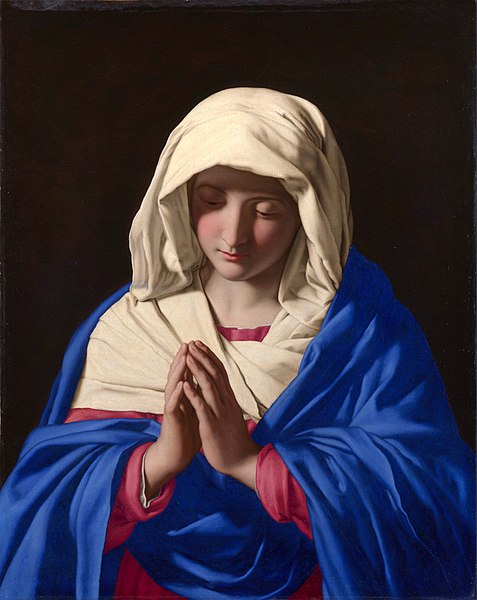
Perhaps the hatred for the colour blue was due to the difficulty of making blue dyes. This all changed nearer to medieval times as artists and dyers successfully created blue dyes from minerals such as lapis lazuli, azurite and cobalt. Blue became the colour of the Virgin Mary. Artists began painting the sky and the sea as blue, which were previously depicted using black, white and green. Nobles began wearing blue instead of the traditional red and purple, and dyers followed this trend by devising better blue dyes with a variety of shades.
This led to the thriving of blue dye industries in European cities such as Amiens, Toulouse and Erfurt, where blue dye was made from a plant called woad. Although this was a very lucrative business, blue was still a very expensive and difficult colour to use, with the dying process involving soaking the woad in human urine (which contains ammonia) to extract the colour.
Blue became a much more accessible colour in the 18th century when flourishing trade brought indigo from the Americas. Indigo was much easier to use, more concentrated and produced a richer, more stable blue than woad. As blue became more and more popular, synthetic blue dyes were discovered – one of the most famous being Prussian blue which was discovered in Berlin in 1709.
Throughout its history, perhaps the product that best promoted the status of blue as a colour is the denim jean (dyed with indigo blue), invented by Levi Strauss in 1873.
In modern times, blue is an extremely popular colour that is widely used in art, fashion, architecture etcetera. However, the one field that blue has not yet been able to set foot in is food. Researches show that the colour blue drastically decreases a person’s appetite as it is associated with poison in the natural world.
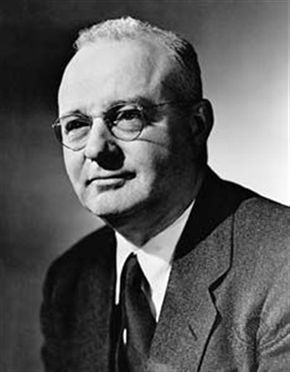
In the history of mankind, who could be considered to have done the most damage to the environment? Although many names may pop up, no one comes close to the destruction that resulted from one man: Thomas Midgley Jr. While working for General Motors in 1916 as a chemist, Midgley discovered that adding iodine to kerosene reduced “knocking” in engines – where pockets of air/fuel mixture explode in the engine. The effects of knocking on engines range from negligible to destructive. However, he found that the iodine only reduced knocking slightly. To improve on this, he tried adding different elements to fuel until he found the magic solution – lead. And so, the leaded petroleum was born.
Leaded petrol was an instant commercial success and it became the most popular choice of fuel. This resulted in cars, buses, planes and almost all motor vehicles pumping out billions of tons of lead into the atmosphere for over seventy years. Unfortunately, lead is a highly toxic metal that causes symptoms such as muscular weakness, pain, nausea, vomiting, fatigue and madness. Lead poisoning is particularly dangerous to children as it can cause irreversible retardation of physical and mental development. Even though the effects of lead poisoning were recognised since the late 19th century (with many workers and even Midgley himself suffering from it), it was only after the 1970s when fuel companies stopped adding lead to their fuel. Thanks to Midgley’s idea of adding lead to petrol, who knows how many children would have suffered a crippling illness due to lead poisoning.
But Midgley’s “accomplishments” did not stop there. In the late 1920s, Midgley decided to tackle the problem of using sulfur dioxide, propane and ammonia as refrigerants (possibly out of guilt over the whole lead fiasco), which were effective but prone to combusting or exploding. Within three days, he developed an alternative – dichlorofluromethane. This amazing gas was inert, non-toxic and did not have the risk of exploding. It was the first of the chlorofluorocarbons (CFC), which was named “freons”. We now know that freons are responsible for destroying the ozone layer.
In 1940, Midgley contracted polio, causing him to be disabled. Poliomyelitis causes paralysis due to the destruction of motor neurons. Being an inventor, Midgley devised a clever device that would help him off the bed using pulleys and strings. Unfortunately, one day the invention twisted in a certain way, leading him to become entangled in the ropes and being killed of strangulation.
Such was the sad life of Thomas Midgley Jr, who environmental historian J. R. McNeill dubbed “[someone who] had more impact on the atmosphere than any other single organism in Earth’s history”.
Let’s imagine that you are walking outside, when rain clouds catch you by surprise and suddenly pour down on you. Assuming that you have no umbrella or anything to cover yourself with, is it best to run back home or walk back? Or to elaborate, should you walk and spend more time in the rain, or should you run, which means you will run into rain sideways?
There are two ways you can get wet in the rain: it will either fall on top of your head, or you will run into it from the side. The amount of rain that falls on your head is constant whether you are walking or raining, as the entire field you are travelling through is full of raindrops. Therefore, one would naturally think that running would not add much benefit as you run into more rain by moving faster, as you essentially hit a wall of raindrops.
But this is not true. No matter how fast you travel, the amount of rain you hit sideways is constant. The only variable that affects the amount of rain you hit sideways is the distance you travel. This is because the amount of raindrops in the space between you and your destination is constant.
Summarising this, the wetness from rain you receive is:
(wetness falling on your head per second x time spent in rain) + (wetness you run into per meter x distance travelled).
Since you cannot really change how far you are from your destination, the best way to minimise getting wet is to run as fast as you can to minimise the time you spend in the rain.
Then again, this is only the most practical option to keep you dry. If you are feeling particularly romantic or blue, then feel free to stroll through the rain, savouring the cold drops on your face (or wallow in the sadness that is your life).
One of the most well-known philosophical questions is what came first: the chicken or the egg? A chicken is born from an egg, and an egg is birthed by a chicken. This means that the cause and effect are intertwined in a never-ending cycle. This kind of problem is known as circular cause and consequence or circular reference.
In some ways, this question is extremely easy to answer. In biology, many different creatures lay eggs to give birth to their young, but there are no examples of a chicken being born without an egg being involved. The chicken is most likely a product of a lineage of evolving species that ultimately resulted in the genetic makeup of a chicken. That “proto-chicken” would have laid an egg, which had enough mutations in its genome to be sufficiently different from the proto-chicken to be called a “chicken”. Therefore, the egg must have come before the chicken. Even if we use the strict rule of defining “egg” by as a “chicken egg”, the egg that birthed the first chicken contained the original genetic makeup for chickens; ergo the chicken egg came before the chicken.
Science and philosophy aside, a completely unrelated point about chickens and eggs is that there is a Japanese dish called oyakodon, which is made with chicken and egg over a bowl of rice and vegetables. The name comes from the Japanese for parent (“oya”, 親) and child (“ko”, 子), giving away the cruel nature of the relationship between the main ingredients in the dish.
What would happen if you dropped a 1kg ball and a 10kg ball at the same time from a high building? Most people would think that the 10kg ball would obviously fall faster and thus hit the ground faster, but the truth is they would fall at exactly the same time. The reason for this is that the force that accelerates a falling object is gravity, which on Earth is constant at 9.81ms-2. This means that no matter how heavy the object is, they will always accelerate by 9.81 metres per second per second. This was hypothesised by Galileo Galilei, who came up with the thought experiment of dropping two balls of different mass from the Leaning Tower of Pisa (there is debate as to whether he actually performed the experiment). The theory was later solidified by a certain Isaac Newton, who devised the laws of universal gravitation and the three laws of motion.
However, if the two balls were dropped from an extremely high place, they may land at different times as mass affects the terminal velocity – when the force of gravity equals the force of drag caused by air resistance, leading to a constant velocity. A heavier object will keep accelerating to a greater velocity than a lighter object, which would have reached terminal velocity before the heavier object.
One place where this will not happen is in a vacuum where there is no drag force. To prove that the hypothesis that two objects of different masses will fall at the same time in the absence of air resistance, Commander David Scott of the Apollo 15 moon mission took a hammer and a feather with him. Once he landed on the moon, he dropped the hammer and feather in front of a live camera, showing that the two landed at exactly the same time. He thus proved that Galileo’s conclusion from two hundred years ago was in fact correct.
How many eggs can you eat in one sitting? Three? Half a dozen? No matter how big or hungry you may be, eating a hundred eggs is just unthinkable. Whether you fry it, boil it, scramble it or straight out drink it, “one hundred’ is simply too much. Too difficult to imagine how much one hundred eggs would be? A hundred eggs weigh about 4~5kg. Considering a steak is usually 200~400g, this is an incredible amount. The nutritional values cannot be ignored either. A hundred eggs contain about 32350kJ of energy (7750 calories), 56g of carbohydrates, 530g of fat and 630g of protein. It is an astonishing amount of food. How could anyone eat such a massive amount in one sitting?
Surprisingly, even a petite, slim girl can eat a hundred eggs. The secret lies in how the eggs are cooked. The best thing about eggs is that they can be cooked in various ways, such as fried eggs, poached eggs, scrambled eggs and boiled eggs. The following is a fascinating way of cooking eggs to maximise the amount of eggs you can eat in one sitting. The secret method is noodles.
This is not the same as standard “egg noodles” that merely contain eggs. This is noodles only made of eggs. As strange as it sounds, once you learn the recipe and some simple scientific facts, it all becomes very clear.
Firstly, take a hundred eggs, crack them into a very large bowl and whisk thoroughly. This may be difficult due to the sheer amount of eggs as mentioned above. Next, take a cupful of the whisked eggs and strain it through a sieve straight into boiling water. The egg instantly solidifies into thin, long noodle-shapes. The reason you strain it is to make the texture smoother. Repeat this method until all of the eggs are used up and then cook the noodles in whatever way you fancy.
How does turning eggs into noodles let you eat more of it? The reason being, two-thirds of an egg is just water. Most lifeforms contain a large proportion of water. For example, about two-thirds of your weight is water too. By dripping the whisked egg in the boiling water, the water disperses out while the proteins and fat solidify to form noodles. Ergo, the nutritional components of the eggs are preserved but the filling portion is thrown away. Any other way of cooking eggs causes the water to be trapped in the final product.
Of course, this is an extremely wasteful way of eating eggs, but it can be of some benefit for a person seeking a high-protein diet to bulk their muscles.