There is an extremely entertaining experiment that can be done with two simple ingredients found in the local supermarket: Mentos mints and Diet Coke (it is more effective than original Coke). The experiment procedure is as following:
After opening the bottle, quickly drop the Mentos in to the Diet Coke. Run.
As soon as the Mentos falls in, the Coke spurts foam explosively, which shoots up to great heights. Depending on the temperature of the Coke (the warmer the better) and the number of Mentos mints (it is more effective to thread them and drop them all at once), the pillar of foam can rise to a few metres.
This fascinating phenomenon is not caused purely by a chemical reaction, but has more to do with physics. Mentos mints are coated with menthol, which has numerous microscopic dents. When it enters the Coke, the dissolved carbon dioxide forms bubbles that collect in these pits. As they collect, the bubbles expand until the pressure builds past a certain level, causing an explosion.
The most important point is that if this experiment is not performed outside, one could end up cleaning a sticky room for days.
In the late 1880s, a war raged on in the United States – one that is not commonly known by the public. It was a war between two wizards: Nikola “The Wizard of the West” Tesla and Thomas “The Wizard of Menlo Park” Edison.
This war involved no guns or explosives, but centred on something so commonplace that people take it for granted nowadays – electricity. The two scientists/wizards fought to determine whose form of electricity transmission was better.
There are two types of electric currents used for transmission. Direct current (DC) was used by Thomas Edison, a pioneer of electricity distribution. Before him, electricity was more of a scientific curiosity and was not widely available to the public. DC is a unidirectional flow of electric charge. Alternating current (AC) was later developed by Nikola Tesla, also a pioneer in the field of electricity. AC is the alternating movement of electric charge as it periodically reverses direction from + to -.
When electricity first became public, the industry standard was DC, as Edison started his company, General Electric. This was incredibly profitable for Edison, whose inventions relied on the usage of DC. For example, his incandescent light bulb was the principal electrical device during the time. Edison further advanced DC technology and heavily advocated it.
Tesla claimed that AC was a much more efficient mode of electricity transmission and tried to convince Edison while working for him. However, Edison ignored him and stated that it was an insane, useless idea. Edison was more an inventor than a mathematician, so he did not understand the theoretical benefits of AC over DC.
AC has the advantage of being able to use a transformer to gain much higher voltage than DC, while losing less power when transmitted. It also allowed easy conversion from low-voltage use, such as lamps, to high-voltage use, such as motors.
Despite this, Edison refused to accept the system and continued to lobby against it. The most famous case is his drastic attempt to defame AC by showing the public how “dangerous” it is.
In 1890, Edison and his company developed the electric chair, which used AC to demonstrate the safety hazards of Tesla’s invention. He did this by arranging the first capital punishment by electrocution. Unfortunately, due to calculation errors, the first shock was insufficient to kill the convict, William Kemmler. The procedure was repeated for 8 minutes, during which the convict was screaming in agony, seizing due to electrocution, and at one point, caught fire. This horrible image is portrayed quite accurately in the film The Green Mile.
Despite this unpleasant event, AC became the standard over time and DC is now only used in labs on certain special applications. Also, the electric chair was adopted as an official method of execution.
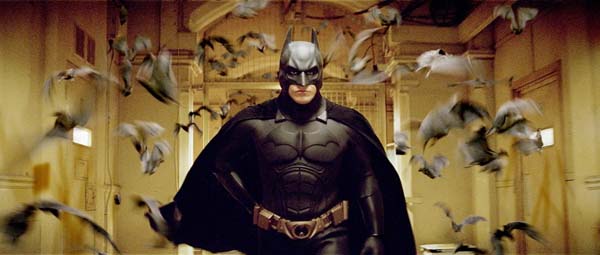
The most famous characteristics of a bat is its behaviour of hanging upside down. This strange behaviour actually greatly benefits a bat’s survival. Because a bat’s wing is structurally different to a bird’s, it cannot generate enough flight to lift a bat off the ground directly. Therefore, bats leap off a high location to fly, so hanging from a high place allows them to fly off at any given moment. Also, living in a high place provides protection from predators.
A bat’s anatomy has heavily adapted to accommodate this behaviour. Thanks to its unique anatomical structure, a bat expends no energy while hanging. This is because they have talons that are designed to clench naturally when pulled by gravity, as the tendons tense. Thus, when hanging upside down, a bat can rest peacefully, and can even sleep in that posture as it requires no muscle action (all muscles relax in REM sleep).
As it is the norm to live upside down, a bat does everything in that manner. As stated above, a bat sleeps upside down, eats upside down, mate upside down, and even stay like that after death. There is only one time a bat stands upright: when it excretes waste. Even behaviour cannot overcome the power of gravity.
There’s only one thing other than love that can make a person oversee another’s weaknesses and amplify their strengths – alcohol. The term beer goggles refers to this phenomenon, where a member of the opposite sex appears more attractive due to the influence of alcohol. This is because alcohol inhibits the cerebral cortex where higher order thinking occurs, reducing sexual inhibition and allowing primitive behaviour to surface.
Beer goggles can be utilised to increase the chances of succeeding in courtship if one knows how to manipulate it.
There is even an equation to calculate the strength of beer goggles, produced from actual scientific research and experiments. The equation is:
An = number of units of alcohol consumed S = smokiness of the room (graded from 0-10, where 0 clear air; 10 extremely smoky) L = luminance of ‘person of interest’ (candelas per square metre; typically 1 pitch black; 150 as seen in normal room lighting) Vo = Snellen visual acuity (6/6 normal; 6/12 just meets driving standard) d = distance from ‘person of interest’ (metres; 0.5 to 3 metres)
Ergo, the more you drink, the further you are from them, the smokier and darker it is and the worse your eyesight, the beer goggle index (ß) rises and the subject becomes more attractive, thus increasing the probability that you will approach that person.
Dreams are wonderful things. Within a dream, nothing is impossible and the mind unleashes its full potential creativity. Is there a way to harness such power? The short answer is: yes.
Lucid dreams are defined as the state of being aware that you are in a dream. This means that unlike normal dreams, you know that you are dreaming. Although this may sound easy, it is quite hard to enter and stay in a lucid dream. Many people experience a lucid dream a few times in their life, but tend to pass it off as a normal dream or some paranormal event (many “out-of-body” experiences can be explained as lucid dreams).
The major difference between a normal dream and a lucid dream is the ability to control your dream. This concept is explored in detail in the movie Inception, where characters utilise the creative power of dreamspace, tricking the victim that they are in reality to manipulate information out of them. Inception is actually a great example of what a lucid dream is like: the architect can manipulate the dreamspace to her wishes, even going as far as ignoring the laws of physics and conjuring objects out of nothing. This ability is not exclusive to movies – you too can exert this power within your own dreams, every night.
The most important point to remember is that lucid dreams are based on memory. Reason being, if you cannot remember the dream, then it might as well not have happened. Also, you need the ability to distinguish a dream from reality, as otherwise it will pass you by without you realising. There are a few tips and tricks that can help the induction of a lucid dream.
Firstly, keep a dream diary – a record of every dream you have in excruciating detail. This not only trains your ability to remember dreams in detail, but also lets you prepare for when a lucid dream comes. So every morning when you wake up, record whatever you can remember from the night’s dream. Many people complain that they never dream, but this is false – they are merely forgetting it. After keeping a dream diary for at least a couple weeks, you will find that the frequency of dreams increase dramatically, with increasing creativity.
Secondly, look for dream signs. You will notice from your dream diary that certain things appear often in your dreams. This may be a certain person, an impossible object (such as the staircase from Inception), meeting a deceased person or something happening (e.g. falling). A classic example is a clock. In a dream, when you look at a clock (preferably digital) and blink, time suddenly leaps around, such as 3pm suddenly becoming 6pm. Looking for these signs in your surrounding can easily alert you to the fact that you are dreaming.
Lastly, do reality checks as often as possible. These are actions that confirm that you are in reality, or conversely if the check fails, that you are dreaming. Reality checks are represented as totems in Inception, and although the risk of “getting lost in a dream” is close to nothing in a lucid dream, it is an extremely useful tool. Reality checks (RC) are based on the fact that the laws of reality do not function in dreams. For example, a common RC is bending your fingers backwards. In real life, your fingers will only go back so far. In a dream, the fingers can touch the back of your hand: a definitive proof that you are not in reality. Other examples include breathing through a pinched nose, pinching yourself (no sensation in a dream) and… anything creative actually. The general rule is: “habituate what is not your habit” – i.e. make a habit of something that is not usually your habit, so you can do it in a dream as a RC.
After a few weeks practising using the above skills, prepare your mind for a lucid dream. Every night before going to sleep, keep thinking “I will dream” or “I will stay awake in my dream”. Continuous reinforcement directly increases your chance of “waking up” in your dream, and allows you to begin your journey into lucid dreams.
As mentioned above, within a dream, you have almost godly powers as you can manipulate the entire dreamspace to your will. However, there is a catch: you have to control the dreamspace. This may sound absurd, but it will be relevant when you have your first lucid dream. Dreams are like wild mustangs – they will spiral out of control as soon as you try to take control. For instance, a novice lucid dreamer (or, in Greek, oneironaut) will find that as soon as they acknowledge that they are in a dream, they will instantly wake up. This is a form of defence mechanism as the boundary of reality and dream is faded, causing your brain to become confused.
There are methods to help your stay in dreamstate. It has been suggested that when you notice signs of waking up (e.g. the surroundings become blurred and slowly disappear), spinning on the spot can prolong the dreamstate. Rubbing your hands together also helps. The duration you stay in the dream becomes longer as you become more proficient in lucid dreaming.
This is only the first step. The more you manipulate your dream, the more your brain will “reject” your dream-self. Again, this is seen in Inception (it is actually quite an accurate depiction of lucid dreaming). You will find that through practice, you not only lengthen your lucid dream, but also increase the power to manipulate things. In the advanced stage, you will not only be able to completely recreate the world around you, but also achieve flying and the ability to summon people.
A final point to learn about lucid dreaming is that there are two ways into a lucid dream: DILD and WILD.
The first, and the most common, type is Dream-Induced Lucid Dream. This is by far the easiest method. In DILD, you “wake up”, or become self-aware, in a dream and then continue to dream the same dream (except now it is lucid). It is easier to achieve this during a nap or when you go back to sleep after waking up in the middle of the night.
The second, and more advanced method, is the Wake-Induced Lucid Dream. WILD is when a lucid dreamer can go straight into a lucid dream from a state of alertness. This lets you enter a lucid dream anytime at will, and can be more powerful than a DILD. However, there is a catch. WILD easily induces sleep paralysis (see Sleep Paralysis) due to the forced induction of REM paralysis. This can be a horrifying experience for the unprepared, especially due to the nightmarish hallucinations it brings. But after practice and the correct mindset, you can easily vanquish this state with willpower, and freely enter a lucid dream. Sleep paralysis should not deter you from attempting lucid dreaming, for it is only a temporary side effect.
Lucid dreaming is one of the most useful skills one can learn. Not only does it let you explore your mind freely, you can go deeper to discover your subconscious (often through imagery), solve complex problems you couldn’t in real life and relieve the stress built up from reality. An interesting feature about dreams is that time is completely relative; this means you will enjoy a lengthy dream much longer than your actual sleep, giving you a better rested sleep. If you are lucky, you may even enjoy the delightful experience of a “dream within a dream” (or go even deeper).
The victory condition for this card game, named after an ancient Greek city, is quite simple: discover the pre-determined law via induction. This game needs at least four people, with one person acting the position of God. God decides on a certain law (in the form of a single statement) and writes it down on a paper, thus creating the way of the universe. Next, the deck of cards is split evenly between the other players, then one person places a card in the centre. After “the world begins to exist”, God looks at the card and says “This card qualifies” or “This card fails”. The next player also places a card in the centre and the God judges whether it fits the way of the universe.
Players carefully study which cards qualify or fail to try discover the way of the universe. If someone thinks they figured the law out, he or she proclaims themself as the prophet, who begins to take over the role of God to announce whether the cards qualify or not. If at any point the prophet is wrong, he is dismissed. If the prophet correctly judges ten cards in a row, he states his hypothesised law and compares it to the piece of paper. The prophet wins if the two laws coincide, but is dismissed if it is not. When all 52 cards are played without a successful prophet, God becomes victorious.
However, as this is a game, the way of the universe cannot be too complex. To make it fun, the God player must devise a law that is simple yet difficult to discover. For example, the law “Alternate a card higher than 9 and a card lower than 9” is tricky as players tend to focus on picture cards or the colours of the cards. Also, laws such as “Only red cards qualify, except the tenth and thirtieth cards are disqualified” and “Accept all cards that are not the 7 of Hearts” are illegal, as they are too detailed. A God who comes up with such ways of the universe that cannot be found using logic and the scientific method loses his right to play the game. Ergo, the God must seek simplicity that is not easily conceived.
So what is the most successful strategy for this game? Even if there is the risk of being dismissed, proclaim yourself as the prophet as soon as possible for the best chance of winning.
As most people know, the Moon is Earth’s only satellite (or “moon”), and it circles the Earth from a distance of 360000km. This giant rock was most likely formed from a gargantuan heavenly body colliding into the young Earth, displacing material from it. The Moon also has oceans, but they are flat, barren rockbeds. As it has a geography, we see a pattern on the lunar surface, which people interpret as the Moon rabbit, Man on the Moon, crab, beautiful woman and whatever else they see through the power of pareidolia.
The Moon, which forms the basis of yin and yang with the Sun, has had a significant impact in every civilisation. In the East, the lunar calendar is still used and many festivals are set to it (such as the Lantern Festival and Mid-Autumn Festival). In the West, the Moon has been associated with lunacy, so called the “lunar effect”. Some people (including Aristotle) believe that people act more crazy and criminal when a full moon is up (werewolves and the Cheshire Cat’s “crescent moon” grin are also linked to this symbolism).
As such, the Moon has always been an important part of human societies. Without it, there would be no tides, the lunar calendar would be useless, the night sky would be darker, werewolves would not terrorise the forests, and most importantly, Sailor Moon would not be able to stop criminals in the name of justice.
How will the world change over the next millennium? Everything will change: from lifestyle and culture, to international politics and economics. This makes the posited question extremely interesting.
As science will continue to advance rapidly, technology that can only be dreamed of by modern man will become commonplace in the future. For example, computers will become essential tools such as pen and paper, or possibly become obsolete like the typewriter. Human beings will rely more and more on machines, which may lead to human-machine interfaces and cyborgs, or simply robots becoming common household appliances. Space travel will become as common as air travel, and humanity may even begin to colonise other planets or moons. As this field can flow in completely unpredictable directions, it is extremely hard to know what will come. One thing is for sure: there is infinite potential in science for at least the next thousand years.
The continuing evolution of medicine and advanced hygiene policies will increase the lifespan of the world. This will bring upon the aging of the population, a “disease” that already plagues some developed nations. Governments may even respond with extreme solutions such as setting an age limit (or killing the elderly to change the demographics), but the more likely option is lengthening the period of youth or reversing aging to prevent the phenomenon of an elderly population.
Socially, the internet will allow for a ubiquitous society, bringing together the entire world. However, the internet is a double-edged sword that may improve interpersonal relationships, but also cause people to become antisocial and communicate only via electronic screens. Unfortunately, it is unlikely the gap between the rich and poor will be filled. The reason being, people’s basic instinct to take from others to improve their own life means that there will always be those who are rich and those who are poor.
In mankind’s history, there have been only a few empires that have survived over a millennium. Even the United States of America that currently is the leading nation is showing signs of deterioration, and China will instead rise to the top over the next few hundred years. But no one knows who will be the strongest power in the year 3000, as even a (currently) weak nation may suddenly strike and claim the throne. For example, the Roman empire 2000 years ago, the Mongol empire 1000 years ago, and the Ottoman empire 200 years ago have all fallen and have only become pages in history books now.
Even after two vicious world wars, future nations may ignore history’s teachings and cause a third world war, which could involve the use of nuclear weapons. In this case, the world will definitely be unrecognisable compared to now. Alternatively, history may take a peaceful course where the concept of “nations” crumble and instead a united world is formed.
An even more interesting thought is “How will future people see us?”. As we mock the unsanitary conditions, violent history and underdeveloped science of the past, the future may laugh at concepts such as paternalism and communism, or even our fashion of jeans and shirts. On the other hand, it is possible that works such as Harry Potter or House MD will be seen as classics and become the future Shakespearean plays.
As seen from this, the possibilities for the future are endless, and pondering the different futures sometimes bring light to ways to improve the present.
Occam’s razor is a philosophical concept that dictates that all other things being equal, the simplest solution is the best. It is useful in many situations, especially the sciences, where it allows one to find an answer without being distracted by the numerous variables.
In medicine, Occam’s razor is extremely useful in differential diagnosis where a doctor may easily prioritise the possible diagnoses and save precious time. Dr Greg House in House MD shows demonstrates just this.
In physics, models showing movement of objects for calculation of force required ignores real factors such as friction or centrifugal force to simplify the situation, showing only the forces being observed. This type of modelling is used in many subjects, where only factors being observed are taken into consideration to find a correlation, or some form of desired truth.
Although some may suggest that this method does not give the “truth” as vital information may be cut out in the process, it can also be argued that one cannot see the truth unless the “distractions” are removed. This is the fundamental basis of the Occam’s razor, where complexities are “shaved” away until truth is left. A quote by the musician Daniel Jacobs, “The truth of simplicity is camouflaged by the complexity of lies just as a tangle of lies will mask the simplicity of truth,” also supports this idea.
It is often believed that for complex organisms such as animals, sexual reproduction is a must to produce offspring. Asexual reproduction is common in bacteria and (some) plants, but even tiny beings such as insects use sexual reproduction to produce a mass of variable offspring.
However, it has been found that despite having two clear sexes – male and female – there are cases where a certain species is able to reproduce without the need of sexual intercourse. In these cases, the female’s eggs spontaneously divides to form a new offspring without being fertilised by a sperm. Furthermore, sometimes the egg either fuses with another egg or undergo several genetic mixing and mutation to produce some variety in genetic pool, thus avoiding the issue of asexual reproduction (where the entire population can be wiped out by a single disease due to identical genetic makeup). This is known as parthenogenesis, and it has been documented in many insects, fish, reptiles and even birds.
Obviously, as there is no donation of a Y chromosome, every offspring born from parthenogenesis is female. Because of this, some species such as the New Mexico whiptail, a lizard that is capable of both sexual reproduction and parthenogenesis, the population has completely rid itself of males, making it a completely female species. Curiously, they still engage in “mock sex”, giving them the nickname “lesbian lizards”.
Although parthenogenesis has never been documented in mammals in nature, it has been induced artificially in mice, rabbits and monkeys. However, they all developed severe developmental issues due to the numerous mutations in the egg required for parthenogenesis. But if in the future, human parthenogenesis is perfected, it is possible that humanity too could end up as an all-female society.