Posted in Psychology & Medicine

Flow

Have you ever had a moment of pure passion, where you are so immersed in what you are doing that everything around you does not matter and you are in a state of total bliss? In that moment, you feel fully alive, present and completely engaged with what you are doing. When the happiness and creativity expert Mihaly Csíkszentmihályi was studying how painters work, he noticed an odd thing. When their painting was going well, they did not care about getting tired, hungry or uncomfortable. They just carried on. But when the painting was finished, they rapidly lost interest in it.

Csíkszentmihályi described this state of mind as a flow state: the experience of being fully engaged with what you are currently doing. When in a flow state, an hour can pass in the blink of an eye, action and awareness merges and the experience is intrinsically rewarding. You feel that what you are doing is important, in full control and not self-conscious. Flow state does not just involve ultimate concentration. It is a complex state of mind where you are solely driven by focused motivation, operating at your peak level of mental and emotional engagement. Essentially, your mind uses 100% of its capacity for the task at hand, rather than wondering what is for dinner or peeking at the beautiful girl across the road. Because of this, a person in flow state not only works with great efficiency and creativity, but they also feel positive, energised and happy. In fact, the intense spontaneous joy brought on by flow state can almost be considered the mental equivalent of an orgasm.

So how can you achieve flow state? Flow state is not something that one chooses to go into. It is only attained when certain criteria are met.

  • Flow state can happen with any activity, but it is more likely to occur if you are internally motivated (i.e. you are doing the activity mainly for its own sake).
  • You should have clear short-term goals for what you are trying to achieve. This adds direction and structure to the task.
  • An important aspect of flow is that the activity must be challenging enough to stretch your skills almost to the limits, but not more. If it is not challenging enough, you will get bored. If it demands more skill than what you are capable of, you will become anxious. That being said, the balance only has to be between “perceived” challenge and skill. In other words, all you need is confidence that you can take on the challenge.
  • The activity should provide immediate feedback on how you are doing (e.g. seeing how a painting is turning out, hearing yourself sing). This allows you to adjust your performance in order to maintain flow state.

Flow is an incredibly useful thing. Through flow, you can forget about your worries and your strife, reach a state of pure happiness and inner peace and produce something truly great. The key to happiness is knowing what allows you to reach flow state and routinely entering flow state. For example, I know that the three things that give me flow are: music, humour and obsessions. Ergo, I play my guitar and sing, watch television shows that make me laugh and write an entry for the Encyclopaedia of Absolute and Relative Knowledge every day. All of these activities allow me to be truly happy, no matter what the situation may be.

image

Posted in Life & Happiness

Success

If you ask a hundred children what their dream is, not a single one would say “I want to be successful”. But as children grow up and enter society, society advises them that dreams do not feed them. And so, children slowly lose their innocence and dreams and choose to chase success instead. Why? Because success will feed them and give them a secure future. It is uncommon to find a middle-aged person who has achieved their childhood dreams. The majority judge their dreams as unrealistic, put them away in a corner of their mind and sacrifice happiness to earn more money to feed the family. The child who wanted to become a painter who put the world on a canvas follows her parents’ advice and becomes a lawyer. The child who wanted to become an astronaut is working into the night at a bank so that he will be promoted. They devote themselves to work and strive to succeed. But when they are at their deathbed, the only thing they are left with is regrets.

In life, there is no success or failure. The only moment you will know whether you led a successful or failed life is when you are at your deathbed. No one else can judge whether you were a success or a failure. Whether you were rich, poor, famous, average, lived long or died prematurely, you were a success if you can end your life with this thought: “Yeah, I lived a happy life without regrets”.

Live without regrets.

image

Posted in Life & Happiness

The Donkey And The Well

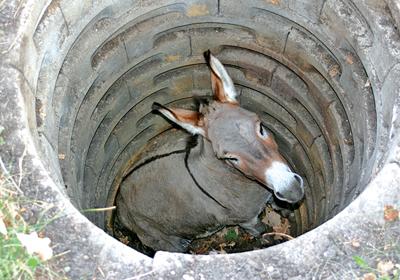
One day, a donkey fell in to a well. It cried piteously for hours while the farmer tried to figure out what to do. Ultimately, the farmer decided that the donkey was old and was nor worth saving. He planned to fill the well, as he had no need for it either. He invited his neighbours to come over and help him. Everyone grabbed a spade and shovelled dirt into the well.

The donkey was terrified; sooner or later he would literally be buried alive, with no food, water or air. It cried even more and begged the farmer to show mercy. The people ignored the animal’s neighing and screeching. The donkey was about to give up. There was no hope of getting out the well and soon it would die a slow, suffocating death. But then, it came up with a cunning plan. As the dirt slowly filled the well, the donkey stepped up on the mound of earth. Eventually, the mound grew high enough for it to jump out of the well. The donkey then kicked the farmer and galloped off into the sunset.

Life is bound to throw all kinds of dirt at you. But just because bad things happen, it does not mean you have to live a miserable life. When life throws a spadeful of dirt at you, brush it off and step over it instead of letting it weigh you down. With a positive mindset and determination to become happy, you can escape even when you fall into the darkest, deepest well of despair.

Posted in Philosophy

Bittersweet Dream

One still autumn night, a student woke up in tears. A teacher who found this peculiar asked the student:

“Did you dream a scary dream?”

“No sir.”

“Did you dream a sad dream?”

“No sir. I dreamed a sweet dream.”

“Then why are you crying so?”

As she wiped away her tears, the student said:

Because that dream will never come true.”

(from Bittersweet Life)

Posted in Psychology & Medicine

Parent

Parents only have one duty: to bring up their children with love. The problem is that so many parents do not know this fact, or have a twisted understanding of the concept of “love”. Some never even hug their child, some abandon their child for their own lives and some even abuse their child. However, that does not mean one should obsess with their child either. Always teaching the child that “they are the best” is not love. Also, trapping a child and preventing them from leaving you is obsession, not love. Some parents tell their children that studying will lead to a happy, successful future, and compare them to other children who get better grades. This is a crucial mistake, as the children will probably live out an unhappy life with a deep wound in their heart for the rest of their lives. This is because the parents’ role is not to secure a successful future and instructing them how to get there, but to allow the child to independently plan their future, taste failure and develop their own values and philosophy, only supporting them from the side. A parent is not a leader who leads a child along a predestined path of life, but an assistant who supports a child while they pave their own path of life and walk down it. To support and respect a child’s decisions, dreams, talents and potential; to teach the wisdom and skills the child will need to follow their dreams; that is true love.

Of course, that is not to say that one should neglect and leave a child without any interventions. If a child clearly makes an objective error or misbehaves, it is a parent’s role to correct it. This kind of home education is not interference like obsessing about the child’s studies, but supportive intervention that helps the child follow their dreams and not be lost on the way. Home education is a very important form of love that imbues a child with skills such as social skills, ethics, morality, philosophy and love that will allow them to lead a happy and wholesome life.

Why is parental love so important to a child? Childhood is a critical period when the child’s brain is rapidly developing and when the child begins to form his or her personality and view of the world. Almost every mental illness (especially personality disorders) can be traced back to a childhood trauma, or at least be affected by it. For example, a child whose parents did not care for them will grow up lacking love and attachment, leading to constantly seeking love and attention from others, which may develop into dependent personality disorder. If a child has to live up to the parents’ great expectations, they will not receive sympathy and fail to develop a self identity. To fill this void, the child will continuously float from one person to another to seek this sympathy. A child with obsessive parents being led to believe that they are the best could develop narcissistic personality disorder, who becomes violent and enraged when someone points out a mistake they made. As one can see, parental love is a crucial nutrient that fosters a healthy personality in a child, helping them become a wholesome, independent “person”.

No matter how poor the parents are, a child who was raised on love is able to construct a plentiful, happy life. Then, when the child becomes a parent, they will know how to raise their own children with love as well. The best parents are those who respect the child’s decisions and allow them to be free when they set out on their pursuit of happiness. All you need is love.

Posted in Science & Nature

History Of The Earth

The Earth has been around for a good 4.6 billion years. Let us compress the long time from the Earth’s birth to today (2012) into one year to put everything in perspective.

The Earth’s history starts on January 1, 00:00:00. The Earth is a hard sphere, barren as any other planet. Incessant wind and rain erode away the barren mountains and tectonic forces create new ones. Nothing much happens for the next three months. Then, around the start of April, life begins in the form of bacteria. Over the course of the next few months, the bacteria divide and mutate, slowly forming new life forms that are multicellular. However, all life on Earth are still in the oceans.

Life on land only starts in the end of November, when plants begin to settle on land. Plants expertly take the abundant carbon dioxide in the atmosphere and convert it into oxygen. By early December, the oceans are teeming with fish, some of which adapt to living on land by developing lungs. These become the first amphibians. Insects also populate the land and become one of the most diverse types of life.

In December 12, reptiles evolve and the land is ruled by dinosaurs, but only for 9 days until they are wiped off the face of the Earth by a meteorite on December 20. Mammals quickly take the niche left by dinosaurs, populating the entire world. Even at this late time, there are no signs of humans.

December 31, humans have still not arrived on Earth. They only appear around 8pm, where the first hominids venture on to the plains of Africa. At 10pm, the Ice Age begins and the Earth is covered by a thick white sheet of ice. The ice comes and goes three more times. At 11:59pm, human civilisation begins as cities begin to rise. 22 seconds before the end of the year, the Egyptians build their pyramids. More monuments arise within seconds. At 11:59:47pm, Jesus teaches the people to love one another, until he is killed a millisecond later. In the last second of the year (about 150 years), humanity: has two major world wars, take to the skies, create the nuclear bomb that can wipe out all life on Earth and even step foot on the Moon.

We may like to think that we have made a significant impact in the history of the Earth, but we have only existed for an infinitesimally small fraction of the history. We are but a dot on the grand scheme of natural history.

Posted in Psychology & Medicine

Tit For Tat

In human society, there are many ways for a person to interact with others when in a group setting. Some may choose to be selfish and only be out for their best interests, while others may choose altruism and cooperate with each other. The mathematical model that tries to predict human behaviour and outcome in these settings is the Prisoner’s Dilemma – the core of game theory. Tit for tat is one strategy that can be employed in such a setting.

The basis of tit for tat is equivalent exchange. A tit for tat player always chooses to cooperate unless provoked. As seen in the Prisoner’s Dilemma, if both players cooperate, both benefit (let us say 3 points each); if one player defects, that person gains more than from cooperation (5 points) while the tit for tat player gains 0 points.
If a tit for tat player is provoked, that player will retaliate. However, the player is also quick to forgive. Ergo, if the other player chose to cooperate, the tit for tat player (following the principle of equivalent exchange), will also cooperate. If the other player defected, the tit for tat player loses the first round and then chooses to defect from then on.
Note that tit for tat strategy only works when there is more than one game so that the player has a chance to retaliate.

Let us use an example to illustrate why tit for tat strategy works. In this scenario, two tit for tat players and two defectors all play six games each, using the above point system (if both defect, they each receive 1 point). The results are as follows:
  • Tit for tat vs defector: Tit for tat loses first round, both defect for next 5 rounds (5 vs 10)
  • Tit for tat vs tit for tat: Both cooperate on every round (18 vs 18)
  • Defector vs defector: Both defect on every round (6 vs 6)

When the points are added up, a tit for tat player gains 28 points (5 + 5 + 18) while a defector only gains 26 points (6 + 10 + 10). This is a surprising turn of events, as the defectors never lost a round and tit for tat players never “won” a round. This goes to show how cooperation leads to better long-term results while selfishness prevails.

There are shortcomings of this strategy. If there is a failure in communication and one tit for tat player mistakes the other’s actions as an “attack”, they will retaliate. The other player then retaliates to this and a vicious cycle is formed. This is the basis of many conflicts ranging from schoolyard fights to wars (although interestingly, tit for tat strategy is also found during wars in the form of “live and let live”). One way to prevent this is tit for tat with forgiveness, where one player randomly cooperates to try break the cycle (a defector would respond negatively while a tit for tat player will accept the cooperation), or the tit for two tats, where the tit for tat player waits a turn before retaliating, giving the opponent a chance to “make up for their mistake”.

Computer simulations have all proven that tit for tat strategy (especially the other two types mentioned just before) are extremely effective in games. In fact, it is considered one of the most optimal strategies in overcoming the Prisoner’s Dilemma.

In human societies, there is usually a mix of “nice people” and “selfish people”. By cooperating and trusting each other, we can produce a much greater gain over time compared to being selfish. And since society still unfortunately has “defectors”, you can retaliate to those who refuse to cooperate by defecting on them also. Ergo, a good approach to life is to initially reach out your hand to whoever you meet and treat them from there on according to how they respond. If they take your hand and want to cooperate, treat them with altruism and help them out. If they swat your hand away and try to use you for their selfish gain, it is fine to shun them and not help them out.

Through cooperation, understanding and connection, we can build a far more productive and efficient society, just like the ants.

Posted in Psychology & Medicine

Learned Helplessness

The following is an incidental finding from an experiment studying conditioning in dogs. In stage 1, a dog was tied on a leash in a room with electrified floors to prevent it from running away and was shocked for a day. Next, the dog from stage 1 and another dog were left in the same room without any leashes, leaving the door opened so that they could run away when they were shocked. Although the dog that did not pass stage 1 (fresh dog) immediately ran to the next room, the dog from stage 1 just helplessly lay down on the floor, receiving the electric shock. In stage 3, the same dog from stage 1 was taught that going to the next room prevents it from getting shocked. However, even after learning this, the dog refused to move and stayed in the room and accepted the shock. It had learned helplessness.

Everyone has depressing moments in their lives, but when these repeat over time it can cause you to feel that life is an inescapable pit of despair. You will learn a sense of helplessness that no matter what you do, the result will be failure and disappointment. But the moment you accept this helplessness, the nightmarish fate that you loathe so much becomes reality. There is no such thing as fate or destiny. If you do not like the fate given to you, free yourself the restraints of life, break away from the fetters and pioneer a new future for yourself. 

Posted in Science & Nature

Goldilocks

In the children’s story Goldilocks and the Three Bears, the protagonist is found trying out various porridges, chairs and beds until she finds the one that is just right for her. Because of this, the name “Goldilocks” has become a symbol for something that is “just right”. A Goldilocks economy is one where there is high growth but no inflation; a Goldilocks planet is one which is not too hot or too cold, making it an ideal planet for life; the Goldilocks effect is when success is achieved because something was not too great or too little.

The Goldilocks effect is a law of nature that is far more important than you would think. Nature always seeks consistency, as shown in the human body. For something as complex as life to exist, a cell must maintain its internal environment in a perfect, ideal state. French physiologist Claude Bernard observed that a cell’s internal environment does not change even with changes in the external environment, and commented that “The stability of the internal environment is the condition for the free and independent life”. This is the basis for homeostasis. Without homeostasis, life cannot exist and all living things put in all their effort in keeping homeostasis. Our body constantly strives to keep various factors such as pulse, blood pressure, oxygen saturation, temperature, blood glucose, electrolytes and numerous hormones etcetera in a stable range. One could possibly argue that the meaning of life is “to maintain homeostasis” – a rather cyclical argument.

To understand the importance of homeostasis, let us look at how changes in the external environment affect us. Our core temperature is maintained in a tight range around 36.5 degrees. If it is altered even a couple of degrees, we exhibit symptoms of hypothermia or hyperthermia. If the weather is too hot, we sweat to cool ourselves; if the weather is too cold, we shiver to raise our temperature. After a meal, we secrete insulin to lower our blood glucose, while we secrete glucagon when starving to raise our blood glucose. Failure of either system leads to either diabetes or hypoglycaemic shock respectively. Homeostasis is an extremely complicated and intricate self-repair system that cannot be imitated.

The Goldilocks effect can be applied beyond physiology to our lives. Everything in moderation; to go beyond is as wrong as to fall short. If we have too little money, it is a problem. If we have too much money, it causes other problems. Whether we work or play, doing too much or too little of either can be bad for us. Medicines become poison in excess and even love in excess becomes obsession. In the marathon that is life, if you run too fast you end up collapsing from exhaustion, while running too slow will mean you never get anywhere.

The secret to happiness lies in understanding what is “just right”.

Posted in Psychology & Medicine

Laughter

We laugh when we are happy. Laughter provides us with happiness and is the best medicine available to us, relieving the pain and stress of life. In fact, when we laugh we secrete a neurotransmitter called endorphin, which as the name suggests (endo(inside) + morphine), has the same properties as morphine.

What makes us laugh? The best theory to date is that laughter is an instinctive response to the passing of danger (also called the relief theory). For example, if our ancestor came across a predator but it passed by without noticing him, he would have laughed in response to the relief he felt. Others would see from his laugh that the danger had passed and laugh also (possibly explaining why laughter is contagious).

This theory also explains why humour makes us laugh. When you throw a joke, you are essentially giving the other person a “cognitive riddle” with a logical inconsistency. This inconsistency causes the recipient’s subconscious to become confused: “Why is it funny? Why can’t I understand it?”. As jokes are fundamentally a “surprise” to the other person’s mind, they try to solve it and figure it out whether it is a danger or not. If they get the joke, the inconsistency is solved and the person feels relief (as it has been revealed that the confusion brought on by the inconsistency was not dangerous). Once the confusion passes, the person laughs in response. But if the person does not get the joke, the “danger” has not passed and the person does not laugh. This is the basis of one of the laws of comedians: “if the audience is confused, they do not laugh”.

Laughter is beneficial for your health. Frequent laughter lowers the blood pressure, boosts the immune system, relieves pain and lowers the levels of stress hormones such as cortisol. Laughter is especially good for your mental health, therefore having a five-minute laughter yoga session every day where you just laugh as hard as you can will help you lead a happier life. However, ironically laughter can kill you too. Cases of “death from laughter” have been recorded since ancient Greek times to the modern day. The cause has not been identified but it is known that intense laughter can cause cataplexy, which is a paralysis induced by extreme emotions. It is possible that intense laughter overloads the nervous system and causes a heart attack.

Whatever it is, anything is toxic in excess.