
Good food.
Good wine.
Good coffee.
Good dessert.
Good song.
Good show.
Good laugh.
Good company.
The simpler your demands, the easier life can fulfil them and give you happiness.

Good food.
Good wine.
Good coffee.
Good dessert.
Good song.
Good show.
Good laugh.
Good company.
The simpler your demands, the easier life can fulfil them and give you happiness.
Have you ever noticed that when a car or train speed past you, the sound it makes changes in pitch depending on where it is? For example, imagine a train loaded with a marching band. You watch the train come closer and closer to the station where you wait, while the band plays a single note. As the train approaches, the pitch of the note gets higher and higher. The train does not see you and races past the station. As it gets further from you, the note played by the band becomes lower and lower in pitch again. If you cannot imagine this, the next time you see a police car or ambulance racing past you, carefully listen to the sound of the siren.
This change in pitch is called the Doppler effect. The Doppler effect is defined as the change in frequency of a wave (such as sound) for an observer moving relative to the source. It occurs because of the nature of waves. When the source of the sound is still, sound waves ripple out in all directions at a uniform speed. But when the source begins to move, the waves in front of the source begins to bunch up as the source moves with the wave, shortening the distance between each successive wave. As the waves bunch up, the frequency of the sound wave increases, causing a stationary observer to hear it as a higher pitch. This is essentially the same as the waves in the front of a moving boat being bunched up.

The Doppler effect is very useful as it lets the observer measure the speed of the moving object from the amount of “shift” that occurred in the measured wave. This is how speed guns work. Astronomists can use the shift in colour of a star to measure the speed at which it is moving away from or towards us (known as a blue or red shift respectively). In medicine, the Doppler effect is used to visualise the flow of blood in the heart or through vessels on an ultrasound.
In modern society, life gets extremely busy and we have to move quite fast to catch up with it. But like with the Doppler effect, sometimes moving too fast can distort things. You might lose track of what your hopes, dreams and priorities are. People might see a distorted version of who you really are and say that you have “changed”. So no matter how busy you are and how fast the world spins on, remember that it is okay to slow down every now and then just to get a clear picture of where you are, who you are or what you are doing. For in the wise words of Ferris Bueller: “Life moves pretty fast. If you don’t stop and look around once in a while, you could miss it”.

In Hindi mythology, it is said that the universe is controlled by three major gods (Trimurti): Vishnu, Brahma and Shiva. Vishnu is the ultimate omnipotent god who is depicted resting on his giant serpent Ananta, tended to by Lakshmi. A lotus grows out of Vishnu’s navel and gives rise to Brahma – the creator. When Brahma awakens, the universe is created. Brahma models the universe according to Vishnu’s dreams and imaginations – dipping into the experiences of his past incarnations. Once the universe is created, it is maintained by Vishnu.
However, the Hindu view of cosmology is that the universe is not fixed. It continuously undergoes a cycle of creation, maintenance and destruction. The god who is responsible for the destruction of the universe is Shiva. When a certain time comes, Shiva dances the tandava to annihilate the universe and all of its contents. But this is not an act of evil. It is for the purpose of rebuilding the universe, reaching closer to a perfect, ideal world. Once there is nothing, Vishnu rebirths Brahma and the cycle begins again.
Remarkably, this is strikingly similar to the current scientific model of how the universe came about. It is suggested that the universe arose from a massive explosion of matter, something we call the Big Bang. Since the Big Bang, the universe has been expanding at the speed of light. However, it is theorised that one day the expansion will decelerate, until the forces of the universe pull it back together to cause a contraction. The universe contracts until all matter is crushed into a single point – an event called the Big Crunch. This gives rise to an extremely dense piece of matter that will eventually undergo a new Big Bang to create a different universe.
Destruction is not an evil force. Shiva is not considered the devil, but a great god who is almost as popular as Vishnu. This is because Hindus (rightly) believe that destruction is a key component of nature, allowing for the cycle of birth and death. A caterpillar must destroy its form within its chrysalis to form the pool of matter that will give rise to a beautiful butterfly. Creation and destruction are simply polar forces that cannot exist without each other and sometimes even the best of things have to fall apart to make way for better things. Furthermore, one cannot forget the importance of the neutral force that maintains the status quo between creation and destruction.
Nature is governed by these three force: plus, minus and zero.

How does a caterpillar become a butterfly? Every child and adult knows that they undergo a process of metamorphosis while in a chrysalis. But few know that the caterpillar has to dissolve all of its internal organs to form a pool of raw materials that it will use to build itself into a new butterfly. Although from the outside we only see a beautiful shell that appears to be just sitting there, in reality the caterpillar is undergoing a change so profound that it completely rebuilds its foundation.
What is interesting about the metamorphosis process is that it is not as simple as breaking down a caterpillar and rebuilding the pieces into a butterfly like one would do with Lego blocks. Once the puddle of cells is formed within the chrysalis, a new type of cells called imaginal cells appear. We do not know where they come from, but they just appear at a certain time. These cells are completely different from the original caterpillar cells – so different that the original cells begin attacking it as if it was a virus. However, even with all this cellular genocide, more and more imaginal cells pop up, until eventually the original cells cannot keep up. The imaginal cells start to cluster together, multiplying at an exponential rate. These clusters then grow and differentiate to form the parts of the new butterfly, such as wings and antennas. The original caterpillar cells slowly wither away as they are overrun by the new, fresh imaginal cells. The caterpillar becomes a butterfly.
Human beings, in general, are not good with change. We as a society fear something that would completely shift our paradigms and proceed to attack it viciously. Throughout history, ideas that would shake the foundations of society were often challenged and oppressed: the concept that the Earth is round, that the Earth revolves around the Sun or that we are the product of millions of years of evolution. These “imaginal cells” of society such as Charles Darwin and Galileo Galilei were faced with criticism, mocking and even punishment by those who could not accept the fact that what we know can be wrong. However, their ideas spread among like-minded people, until the number of people who believed in these new ideas greatly outweighed the people who did not. This is how society evolves and metamorphosed over time.
Change is difficult and scary, whether you are on the receiving end or on the side trying to change the world. Being the first imaginal cells of society is a painful road one to travel, but the effects of your actions can cause ripples throughout society to change the world for the better. Or perhaps you are experiencing change at a more personal scale, with your traditional way of life being threatened by some new force. But no matter what the change is – for better or for worse – you will adapt and society will adapt. Great ideas persevere and change for the better is inevitable.
There is no reason to be afraid, for everything is and will be okay.

One of the things that mankind has been fascinated with throughout history is the concept of an apocalypse or doomsday. Just in the last decade, there have been no less than fifty claims that the world would end on a certain day. The most famous of these include Nostradamus’ prediction that the world would end on July 1999, the Y2K problem that suggested that the year 2000 would cause all computers to malfunction, and many claims that a certain date would be the Rapture – the second coming of Christ and the end of the world. The latest of these doomsday predictions is the one regarding the Mayan calendar. There are claims that on the 21st of December, 2012, the Mayan calendar finishes its 5125-year cycle, leading to a cataclysmic event that will destroy the universe. But of course as usual, this theory is complete and utter nonsense.
Firstly, there are no records that the Mayans predicted that the world would be doomed when the cycle would finish. It is true that December 2012 marks the end of a b’ak’tun – a time period in the Mesoamerican Long Count calendar equating to about 394 years, much like how we measure 1000 years by 1 millennium. Essentially, it is like a “turn of the century” for the Mayans. Pretty much the entire concept of the Mayan calendar ending bringing doom to us all was fabricated by some shoddy academics and New Age believers.
Secondly, every theory about how the world might end in such a scenario has been disproven. Some of the most popular “theories” were: the collision of a Planet X or “Nibiru” with Earth, geomagnetic reversal and galactic alignments. However, to this date (20th December, 2012), there are no large rocks or planets hurtling directly towards Earth (would have been noticed by thousands of astronomers worldwide months prior), the magnetic poles are stable (even if they switched it would not cause much harm) and there are no alignments between planets, moons or stars scheduled at the time.
No matter how crazy the theories and predictions are, there will always be people claiming that the world will end soon, and that we should repent our sins or something like that. Even better, there will be a significant amount of people who believe it or at least worry enough about it to affect their lives somehow.
Perhaps the most fitting quote for this phenomenon is something that Martin Luther wrote in his diary at a young age: “Even if I knew that tomorrow the world would go to pieces, I would still plant my apple tree”. Whether the world is ending or not, live your life to the fullest, seizing every day and making the most of your chances.

When children grow up and learn to become independent, parents must let go of their children and allow them to fly free. However, it is the inevitable human condition that the parents will be saddened by this change. For many parents, the moving out of their children can lead to depression and a loss in purpose. This phenomenon has been named empty nest syndrome as it happens as the children leave the metaphorical nest that is home.
As obvious as it sounds, empty nest syndrome can have a serious effect on the parent’s well-being. Common symptoms include depression, loss of purpose, anxiety, stress and a feeling of rejection. The suffering parent continues to obsess whether they brought up their child in a way to prepare them for the big world. At the same time, they feel that they are losing their identity as a “parent” – something they may have defined themselves as while they were bringing up the child. They may also feel rejected as they may believe that the child “does not need them anymore”. It has been observed that mothers are more likely to suffer empty nest syndrome (occasionally, menopause may be a confounding factor). Other factors that contribute are parents who find change difficult, have an unstable relationship with their spouse or those with an unhealthy obsession with their children or with the idea of being a parent.
Empty nest syndrome is a natural part of parenthood, but it is important to know how to prevent it from becoming too severe. The best way to cope with this syndrome is to keep in touch with the children and accept that they are young adults who are moving on with their life. Not only that, but the parents must also recognise that a new era has begun for them as well. This is important as failure to do so will lead to the identity crisis mentioned above. A good way to remedy this is through discovering hobbies and interests while maintaining healthy social networks with other people. Essentially, the parents have to “begin a new life”, just like their children. It is also worth noting that it helps if the children recognise this as well and try to keep in touch with their parents to make sure they are coping well without them.

There are millions of units for various things. Some are simple and standard like the metre and gram, while others are quirky and humorous like the Helen unit and the Banana Equivalent Dose. As long as you can justify it with logic and objective quantification, you can virtually create any unit. Using this logic, some historical knowledge and a cruel sense of humour, one can come up with an extremely disturbing unit called the Hitler unit.
As most people know, Adolf Hitler is one of the most notorious criminals against humanity in the history of mankind. He was responsible for the death of at least 17 million people, including the 6 million Jews and 5 million other ethnicities killed during the Holocaust, and victims of World War II. For simplicity’s sake, let us only consider the victims of the Holocaust as direct victims of Hitler’s ambitions.
Using this statistic, we can now create a new unit called the hitler – equivalent to 11 million human deaths. Ergo, killing a single human amounts to a crime of 91 nanohitlers. The “hitler level” of some of history’s worst notorious dictators are as follows:
The hitler unit gives us a clear picture of “how much worse” someone’s crimes are compared to those committed by Adolf Hitler. For example, Jozef Stalin could be considered twice more evil than Hitler.
The true utility of the hitler unit is that like other units, it allows for useful conversions to other units. For example, the EPA currently values a human life at $6.9 million (USD). A simple unit conversion thus tells us that 1 hitler is equivalent to the loss of $75,900,000,000,000 (-$75.9 teradollars). In 2008 when the US Congress failed to pass a stimulus bill following the subprime mortgage crisis, the market lost $1.2 trillion over one day – the equivalence to 15.8 millihitlers. Conversely, if a mugger took $200 from you, they have technically committed a crime of 2.64 picohitlers.
Although the crimes of Adolf Hitler were beyond tragic, this imaginary unit teaches us that almost anything can be quantified in the field of science and mathematics.

Consider this theory. People feel happy when they experience an upturn in life. A hungry person is happy when he receives food, a poor person is happy when she earns money, and a person seeking love is happy when they find love. But as people are highly adaptable creatures, they become used to such upturns very quickly. Even the happiness brought on by great food and luxurious lifestyles tend to fade over time, and the love between a couple who act like they cannot live without each other will eventually die away. To remedy this, people always seek excitement that will create an upturn in life, giving them happiness. This causes them to adventure, seek new experiences and sometimes make dangerous, risky decisions.
Everyone has a point in their lives that could be called the “peak”. But no matter how tall the peak is, as people will adapt to it soon, the height itself does not matter. What matters is the path to the peak. For example, if someone experiences their peak in life too early, every moment from then on will seem worse than the past. The person will continuously face disappointment and reminiscence the good times. The reason being, no upturn can beat the peak that they experienced, meaning they cannot feel the happiness of an upturn in life. According to this theory, the key to a happy life is delaying this peak as much as possible. When life is starting to get boring and dull, add just a little sprinkle of greatness in your life to continuously infuse it with happiness.
However, life is not as predictable and controllable as we want it to be, making this theory highly implausible. But the theory is not completely wrong. Although it is near impossible to artificially add little upturns throughout life, it is extremely easy to “feel” an upturn. All you need to do is change your perspective. The difference between a happy person and a miserable person is that the former finds joy in the smallest things. A miserable person will feel bored unless something exciting is happening, but a happy person leads what appears to be a boring life while enjoying every minute of it. Enjoying a warm cup of coffee on a rainy day, being astounded by the beautiful sky, smelling the roses on the path, singing and dancing when no one is looking… Finding and enjoying the simple pleasures of life is the most important skill one can have in life.
Who would you rather be: a miserable person who always seeks excitement and thrills or a happy person who enjoys a “boring” life?

Stroke is a disease often associated with the elderly, but this is not necessarily true. As much as 5% of the population carry a ticking time bomb in their brain, known as a berry aneurysm. An aneurysm is a weakening of the arterial wall, causing a localised ballooning of the vessel. A berry aneurysm is a common type of aneurysm where the ballooning resembles a berry. What is most troubling is that a large proportion of these aneurysms can present very early (usually congenital, meaning you are born with it), with one research suggesting that 1.3% of the population in the age group of 20 to 39 has a berry aneurysm. If this berry aneurysm was to burst, no matter how young and fit you are, you will bleed into the area around your brain (subarachnoid haemorrhage), suddenly develop a severe, crippling headache (“thunderclap headache”), become confused, show signs of stroke such as speech or movement problems, or simply drop dead.
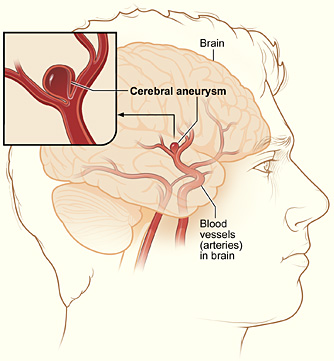
Fortunately, only 10% of people carrying a berry aneurysm suffer a ruptured aneurysm and subsequent brain bleed. The other 90% will carry on living their lives, without ever knowing that they had a time bomb in their brain.
Certain factors make the risk of the aneurysm bursting go up, such as high blood pressure, which can be caused by a stressful lifestyle or smoking. But in some cases, as explained above, even a healthy teenager could suddenly drop to the ground with a massive brain haemorrhage.
Berry aneurysms are only one of many ways death could strike unnoticed, no matter how young you may be. You could live a long and healthy life and die peacefully in your sleep when you are 90 years old, or you may have a stroke and drop dead in a few minutes’ time. For all you know, a bus might run you over tomorrow, with no warning whatsoever. Ergo, youth is not an excuse to waste the day you are given. You do not have to achieve something great, or be productive, but at least spend your day knowing that you are doing everything in your power to make yourself happy, without harming your health, your future or other people.

Countless teenagers claim that “you only live once” and use that as an excuse to live a reckless, risky life. Although most adults have the sense to recognise how idiotic and juvenile that sounds, it seems that they live their life as if there is only one chance as well. Too many people give up everything after a big failure messes up their lives, thinking that their life is “over”. For example, if a person has trained to become a mechanical engineer and one day has an accident that prevents them from ever working as an engineer again, the most common response is to fall into a pit of despair. They believe that they are only trained to do the one thing, and not doing it contradicts their life entirely. They are afraid that their life is over – that they are “dead”.
According to a certain statistic, we are capable of learning and mastering something new in 7 years. This means that between the ages of 11 and 88, you have no less than 11 opportunities to be great at something. Ergo, even if one “life” is over, you still have 10 opportunities to start a new life. Some people are too afraid to let one of their lives die and cling to the past, never moving forward to live on. But you have many lives. You do not live once.
Spend a life writing poems, spend a life building things. Spend a life looking for facts, spend a life looking for truth. Be a doctor, a musician, a detective, a chef, a businessman or a wanderer. No life is wasted as long as you are doing what you truly want, while not hurting yourself or others. Never forget that you have numerous lifetimes that are waiting to be seized by you. There will be times in life when you are hit with misfortune, when your life seems to crumbling around you. But that is just life. Realise that you still have the chance to start anew. And in the meantime, enjoy the lifetime you are living. Seize the day, and all the other lifetimes that are lying ahead of you.
Carpe diem.

(Idea and image from: http://www.smbc-comics.com/index.php?db=comics&id=2722#comic)