Spinach is a vegetable that is excellent for your health as it is rich in nutrients such as vitamins and minerals. If you ask someone the first two things that come to mind regarding spinach, they will most likely reply Popeye and iron. Popeye is a cartoon that began airing in the 1930’s and every child knows that the man gains superhuman powers from eating a can of spinach. In fact, after Popeye began airing, US consumption of spinach grew 33%. Most people believe that Popeye gains powers due to spinach having a high iron content. Thus, adults always tell children that if they want to be as strong as Popeye, they must eat their spinach.
Unfortunately, eating spinach does not make you as strong as Popeye. In fact, it is not even related to iron either. Firstly, the reason why Popeye eats spinach was because the producers wanted to advertise the high vitamin A content in spinach. Furthermore, spinach does not have a high iron content. The spinach iron myth originated from a German scientist named Emil von Wolff. In 1870, von Wolff was analysing the nutrition contents of different foods when he, from severe fatigue, accidentally misplaced a decimal point while recording the iron content of spinach. This led to spinach being known to have ten times the amount iron it actually has (to the level of red meat).
One problem with this is that this story is not true either. There are no detailed records of von Wolff’s experiments and no one knows if he misplaced a decimal point or not. The myth most likely originates from a 1980 article in The British Medical Journal that first brought up the story. Does that mean spinach is actually is a good source of iron? Wrong. Vegetarians often claim that spinach has iron levels close to red meat, but there is something about iron that they do not know. Many plants have a high iron content (it is found in chlorophyll which is used for photosynthesis), but this is mostly non-heme iron. There are two types of iron the human body can absorb: heme and non-heme. Heme iron can be used directly after absorption whereas non-heme iron needs to be metabolised by the liver to be usable. This takes a long time and is inefficient meaning it is far more effective to eat foods rich in heme iron. Plant iron is all non-heme iron while 40% of iron in red meat is heme iron, meaning it is a much better source of iron. Furthermore, spinach has a high oxalate content, which is an iron absorption inhibiting agent, making what little usable iron it has unabsorbable.
In short, it is true that spinach has “iron” but as we cannot absorb it or use it, it practically has no iron content. But if you tell this to your parents and refuse to eat spinach, you may get into a lot of trouble.
The following is an excerpt from the Analects by Confucius, titled The Secret of Politics:
Confucius’ disciple Zi-gong asked him: “What is politics?”
Confucius replied: “The key to politics is to make food plentiful(足食), keep enough soldiers(足兵) and earn the people’s trust(民信).”
Zi-gong thought about this, but decided it was too hard to do all three. He asked again: “If you had to give up one, which would you choose?”
Confucius replied: “I would give up the soldiers.”
Zi-gong asked again: “If you had to give up one more thing, which would you choose?”
Confucius thought for a minute and said: “I would give up food. If you believe, you can withstand hunger for a while and withstand the hardships of war, but if you lose trust you will immediately lose everything.”
The character 信 stands for trust, which is believing in another person. Of course there must be trust among the people, but Confucius teaches us that the trust between the people and their leaders is the most important. In fact, with trust and faith you can overcome anything. If you can respect and trust in your leaders, you can endure hunger and at times, even summon the strength to defeat your enemies with your bare hands.
An administration that has lost the hearts of the people will fail.
Among the thousands of signs and symptoms in the field of medicine, there is one that every doctor and medical student knows since the development of medicine. Clubbing is an easily noticeable sign in a patient’s fingers that can have wide implications on their health.
Clubbing is essentially when the angle (gap) between the fingernail bed and finger disappears. The formal definition is much more complicated, such as “the loss of the normal <165° angle, or Lovibond angle between the nailbed and the fold”, but for all intents and purposes the simple definition is sufficient.
To see if a patient has clubbing, the physician carefully studies the fingers against light. There are a few ways to check for clubbing but the most popular methods are holding the fingers out straight and holding them parallel to the ground, checking the angle between the nailbed and finger, or the Schamroth’s window test. The latter test is done by holding two opposing fingers (such as the left and right index fingers) against each other nail to nail. The fingers are then held against the light so that the light can shine through the “window” that is made. If the window is not seen, the test is positive and the patient has clubbing.
What does clubbing suggest? Clubbing was first noticed by Hippocrates, the father of Western medicine, who observed that people with clubbing tended to grab their chest and fall dead. This is one of the most common associations to clubbing – a congenital cyanotic heart defect such as tetralogy of Fallot or patent ductus arteriosus. Other common associations are related to the lungs, such as lung cancer (one of the most common causes) and various other lung diseases such as interstitial lung disease, tuberculosis and other chronic infections. There are also a myriad of other diseases associated to clubbing, including but not limited to: Crohn’s disease, ulcerative colitis, cirrhosis, celiac disease, Graves disease and certain types of cancers (lung, gastrointestinal and Hodgkin’s lymphoma mainly). Clubbing can also be idiopathic, where there is no apparent cause for the clubbing and the person just has it (possibly just born with it).
Despite knowing about clubbing for over 2000 years, we still do not know the exact reasons for clubbing. There are theories that it is related to a fall in blood oxygen content leading to vasodilation in the peripheries. As the pathophysiology is not clear and so many diseases are associated with it, when clubbing is found in the patient the physician should investigate the related organ systems (heart, lungs, GI mainly) to narrow down the possible cause of it. As many of the causes (such as lung cancer) carry a rather morbid prognosis, it is quite important to notice whether the patient has clubbing when doing a physical examination.
Any computer user would have had an (unfortunate) experience where their computer crashed and all the information there was destroyed in a second. You may still be able to format it and use it without problems, but the data you had on the computer and any customisation you made would be lost. But what if this exact thing could happen to a human being?
There are many types of amnesia, with causes ranging from neurobiological (where trauma to the brain, a drug or some other pathology causes memory loss) to psychogenic (where there is no apparent biological cause for the amnesia). With psychogenic amnesia, one only experiences retrograde amnesia, where they cannot recall memories from the past. However, anterograde amnesia, where you cannot form new memories and keep forgetting what happened, is absent in psychogenic amnesia. Psychogenic amnesia is often caused by extreme stress or a traumatic event. One type of psychogenic amnesia is situation-specific amnesia, as seen in post-traumatic stress disorder (PTSD) that occurs after a severely stressful experience such as war, rape, child abuse or witnessing a brutal death. In this case, the patient tends to only lose memories regarding the event, as if the brain is trying to protect the person from the hurtful memories.
A more interesting and much rarer type of amnesia is global psychogenic amnesia, also known as a fugue state or dissociative fugue. Unlike situation-specific amnesia, patients in fugue states have absolutely no memory of their original identity and personality. Simply put, they (usually) retain all their functions such as speaking and social interactions, but their persona has been wiped out like a formatted computer. Fugue states often develop after severe stress and can happen to anyone. Similar to situation-specific amnesia, the brain blocks all memories of the past in an attempt to protect the person’s psyche. Due to the “deletion” of the previous persona, patients in fugue states often generate new identities and begin wandering (sometimes even travelling to another country) away from the place they lost their memories. This is most likely the brain attempting to leave the environment to avoid the stressor that caused the event.
Fugue states are often short-lived, lasting from days to months. However, very rarely they can last for years. Once out of a fugue state, the patient recovers all of their past memories but have no recollection of what happened during the fugue state. This creates a hole in their memory. For obvious reasons, this usually causes intense confusion and distress in the patient and treatment is often based around helping the person come to an understanding about the episode and cope with the stressor that caused it.
People take interest in ants for many reasons. Some people are fascinated by how ants have achieved what they deem a perfect totalitarian system. In fact, if you observe it from the outside, an ant nest appears to be completely harmonious as everyone works the same, everyone focuses on the good of the whole and everyone is prepared to sacrifice themselves. But humanity has failed in every attempt at totalitarianism up until now. The Egyptians, Greeks, Romans, Babylonians, Carthaginians, Persians, Chinese, French, British, Russians, Germans, Japanese and Americans all experienced an age of glory and appeared as if the world would be assimilated into them, but fortunately a tiny grain of sand would always fall and destroy their unified systems.
This is why there are people who try to imitate insects who live in hive societies (consider how Napoleon’s insignia was of a honeybee). If what unifies an ant nest’s thoughts into one is pheromones, then modern society’s worldwide media does the same function today. People always suggest something that they believe is good and expect others to follow it. They believe that this way, we will achieve a perfect human society one day. But this is not the way of the universe.
Nature, unlike what Darwin suggested, does not evolve so that the fittest survive and rule (and what standard could possible differentiate “fit” and “undesirable”?). Nature’s powers lie in variation. In nature, there are good, evil, insane, devastated, lively, ill, deformed, demented, happy, depressed, intelligent, foolish, selfish, generous people and big, small, black, yellow, red, white things etc. They must all exist. If there is one danger in nature, it is when one group is destroyed by another group.
If there is a field of corns and only the corns that have the “best” traits (i.e. require the least water, stand cold weather and produce juicy corn) are used to pollinate, then the entire crop can be wiped out by a single disease. Contrastingly, a wild crop with individual corns having unique traits with varied weaknesses and differences can survive diseases as the corns find a way to beat it among the many different traits.
Nature hates standardisation and loves diversity. It is through diversity that nature exerts its original abilities.
(from The Encyclopaedia of Relative and Absolute Knowledge by Bernard Werber)
One of the most basic instincts of a human being is to doubt. We do not easily extend our trust to strangers. This is a natural response that is very beneficial for your survival from an evolutionary perspective (consider the overfriendly dodos that were wiped out by humans). As civilisation has progressed and the size of societies grew, people devised legal systems to lower their vigilance against each other. This was because instead of wasting time being suspicious of others, we devised specialist roles who would do that for us, allowing us to live in peace with each other. These specialists who stay alert and guard us enforce the law and stabilise our society. However, what would happen if the people that protect us from evil become evil? Is it not a scary thought to think that there is no one that watches the watchmen?
Emperor Qin Shi Huang who united China to form the Qin dynasty divided up his people, setting up a mutual guard system to enforce his rule. Informing became a civil obligation. To not report illegal activities was illegal in itself. The system of informing was as follows: five families form a group with each group being watched by an official warden who reports on them. This official warden is carefully observed by an unofficial surveillant. Five groups come together to form a tribe. If it is found that at any level something was not reported, the blame was turned on every member of the group. Thus, a circle of surveillance is formed.
This method was extremely effective and Emperor Qin’s rule of terror was unstoppable. Crime rates plummeted while productivity rose. The problem was that the people’s quality of life was pathetic. Emperor Qin’s system of watching was later adopted by Nazi Germany. The people under the rule of the Nazis had to live in fear of being reported by their neighbours. This method is also seen being used by Big Brother in George Orwell’s novel 1984. Is this truly the best system to keep peace? Laws are put in place for the happiness and safety of the people, yet over-surveillance is an ironic concept that exists for those who hold power rather than the people.
How much should we trust another person? And who will watch the watchmen?
A long time ago in ancient China, there was a merchant who sold weapons. He would pick up a spear and advertise it as a spear that can pierce any shield. Then, he would pick up a shield and proclaim that it can block any spear. A wise man who was walking past the merchant questioned: “So what would happen if you took your ultimate spear and threw it at your ultimate shield?” The merchant could not answer.
That is why the word for contradiction, or something that does not make logical sense and cannot co-exist, in Korean, Chinese and Japanese is 모순(矛盾), meaning “spear and shield”.
How many friends can a person have? Believe it or not, science has solved this question. An anthropologist called Robin Dunbar studied various societies, tribes and primate groups to determine how many members a group can have to maintain stability. He discovered that the ideal size for a group of humans was about 150.
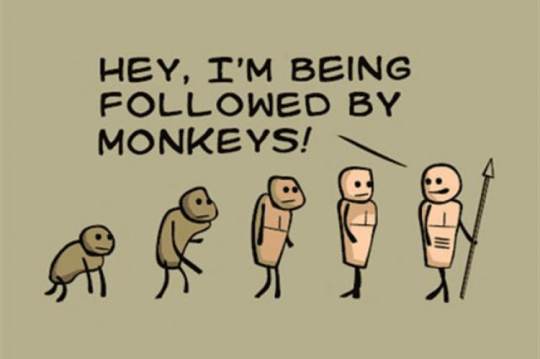
What happens if there are more than 150 people in a group? This is easily explained by the following thought experiment. Imagine that you have a friend called Mr. White. Add a personality to him – flesh him out as a person. Next, you make another friend called Mr. Red. Then Mr. Blue, Mr. Green, Mr. Maroon… At a certain point, you will no longer remember the name or personality of your “friend” and not even care about that person. This is the limit set by our brains – known as Dunbar’s number, or more colloquially the Monkeysphere.
Any person outside of this Monkeysphere is not of your concern. Once you saturate your brain with 150 relationships, the brain ceases to care about other people. Interestingly, the Monkeysphere is directly related to the size of the neocortex (the part of the brain responsible for higher order thinking). For example, most monkeys can only operate in troupes of 50 or so.
The Monkeysphere can be defined as the group of people that you conceptualise as “people”. Because of this limitation, we are physiologically incapable of caring about everyone in the world. For example, we are highly unlikely to be concerned about the welfare of the janitor at work compared to a loved one. As politically incorrect it may be, the brain sees the janitor as “the object that cleans the building” rather than a human being. You may “care” about the janitor in the sense that you greet him in the corridor, but there is a limit to this. This effect actually explains quite well why society is dysfunctional in general.
Because we do not see people outside the Monkeysphere as “people”, they mean less to us. Stalin once said that “one death is a tragedy; a million deaths is a statistic”. Similarly, the death of a family member is devastating but 10,000 people dying in a foreign country from war does not have the same emotional effect. Furthermore, if a stranger was to die in front of your eyes, you would still not be nearly as devastated as the death of someone you are close to.
Also, as we do not feel connected to these “outsiders”, we are much more prone to act rude or aggressively. For example, one may insult other drivers with the most colourful words on the road, but would (hopefully) never say those words to a friend.
This expands to a greater scale in the context of survival. We are wired to put the need of the members of our Monkeysphere ahead of those outside of it. Thus, we would not steal from our friends but openly evade taxes as we see the government and others as a cold, faceless body. It does not occur to us that through our actions, we are harming other human beings. The same applies to our view of corporations; despite being made up of real people, we only see them as heartless machines actively conspiring against us.
What if the scale was then expanded to countries? If we do not see a person on the other side of the road as a human being, it is extremely unlikely we would register a foreigner as one. This explains why racism and stereotyping is so common in human societies. Although liberal-minded people would like to believe that we should treat every human being like we treat our mothers, our brain is incapable of it. In fact, it is much more likely we would see those people as acting against our interests by “stealing jobs” and so forth. Thus, racism is a hard-wired behaviour to protect the best interest of our Monkeysphere.
We have established that it is impossible to worry about the seven billion strangers in this world. This brings us to an important point: it is just as impossible to make “them” interested in “you”. It is a cold, hard fact that if you are outside of their Monkeysphere, people will not care about you. Ergo, they treat you badly, put you down, steal from you and downright ignore you. In fact, cognitive dissonance means you are even less likely to care for people outside the Monkeysphere as your brain actively rejects people from getting closer to your Monkeysphere, exceeding the preset limit of 150 people. This is why propaganda always focusses on dehumanising the enemy and why people seeking votes and attention pull at sympathy strings – to try get as close to your Monkeysphere as possible.
Many people will lament how we are not monkeys and the Monkeysphere does not apply to us. We have laws, ethics and “humanity”. However, we cannot escape our primitive psychological behaviours and this is reflected in societies filled with crime, unhappiness and a general disinterest in people not related to yourself. This is why city-dwellers tend to be less friendly than villagers, as there are too many people to fit in one, happy Monkeysphere. In fact, monkeys may have more functional societies than us because they hardly ever exceed their own Monkeyspheres (which may also explain why they rarely have wars). The same can be said of tribes and villages of the past.
Ironically, the development of society has been based around working around the limitations of the Monkeysphere – a theoretically ideal society. By living in larger groups, humans can achieve greater feats such as industries and large-scale economies. Although we suffer the consequences of racism and crime, we have become very effective in survival.
Economics is based on the Monkeysphere too. As we only care about our Monkeysphere, there is no reason for us to be concerned about the needs of others. So when a system such as communism forces us to share our bananas, we become infuriated that we have to give up our bananas to people we do not know. But in capitalism, every individual can pick bananas for just ourselves and those we care about. The system thrives as each Monkeysphere acts dynamically and everyone is happy. This is the concept of the invisible hand that is the foundation of modern economics.
But still, the concept of countries means that we have to share the burden of millions of people we do not care about in the form of taxes and civil duties. This makes us unhappy. So what can we do?
Firstly, realise that you are to others what others are to you. If you find a certain person on television as annoying and irrational, chances are that someone else sees you in that light. You are limited to your Monkeysphere of 150 people and people outside of it are in their own Monkeyspheres.
Secondly, understand that no one is special. There are no heroes or perfect beings. Everyone is a human being and prone to making mistakes and acting “human”. Therefore, we cannot idolise people and be disappointed by their actions. This also means that you cannot judge another person and consider their words and actions as insignificant, as they are just as human as you.
Lastly, never simplify things. The world is not simple. It cannot be generalised as one happy village with everyone living happily in harmony. It is a composite of a massive number of different Monkeyspheres, all concerned with their own well-being and not caring about anything else.
Remember the words that Charles Darwin spoke to his assistant, Jeje Santiago: “Jeje, we are the monkeys”. As much as we would like to think that we are higher-order beings, we are simple creatures of habit and behaviour limited by our Monkeysphere.
What happens when an economy is going into a depression? Unemployment goes up, inflation goes up, housing markets tank… There are many (miserable) indicators of a waning economy, but none are as strange as the Hot Waitress Economic Index. Simply put, this index suggests that the worse the economy is doing, the more attractive the waitresses are on average.
Despite sounding incredibly shallow and sexist, there is sufficient data to support this theory. It can be explained by the fact that when the economy is doing fine, attractive women are more likely to be in higher paying jobs as they are favoured by employers (unfair, but statistically true). When the economy is doing poorly, unemployment rates rise and these attractive women are pushed down to low-paying jobs such as waitressing as actual skill becomes a higher priority when hiring. This causes an apparent increase in the overall attractiveness of waitresses in the country. Some studies suggest that the Hot Waitress Economic Index is even more accurate in predicting the state of the economy than unemployment as attractive people tend to be the first to earn jobs, acting as an immediate indicator for the economy. For example, when the economy dips out of the depression and starts to rise again, attractive people are the first to be re-hired into higher paying jobs, causing the Hot Waitress Economic Index to change before the unemployment rate does.
Interestingly, there is no data on how the economy affects the average attractiveness of waiters.
Is time travel possible? In 1943, a science fiction writer called René Barjavel posited the following paradox.
A man travels back to the past and kills his biological grandfather before he meets his grandmother. Thus, his grandparents would not have sired a son (the man’s father) or daughter (mother), which then suggests the man could not have been conceived. If so, who killed the grandfather? As there was no one to kill the grandfather, he would have had a child and the man would ultimately be born, travelling back to the past and killing his grandfather. This paradox suggests that time travel is impossible.
Some people use the parallel universe theory to argue against the paradox. They suggest that as soon as the man travels to the past to kill his grandfather, an alternate universe is created where the grandmother meets a different man and the course of time is changed. This is a valid theory but the grandfather paradox still holds strong in disproving time travel. However, the grandfather paradox only states that travelling back in time is impossible; it says nothing about time travelling to the future.