
Posted in Psychology & Medicine

Overpopulation

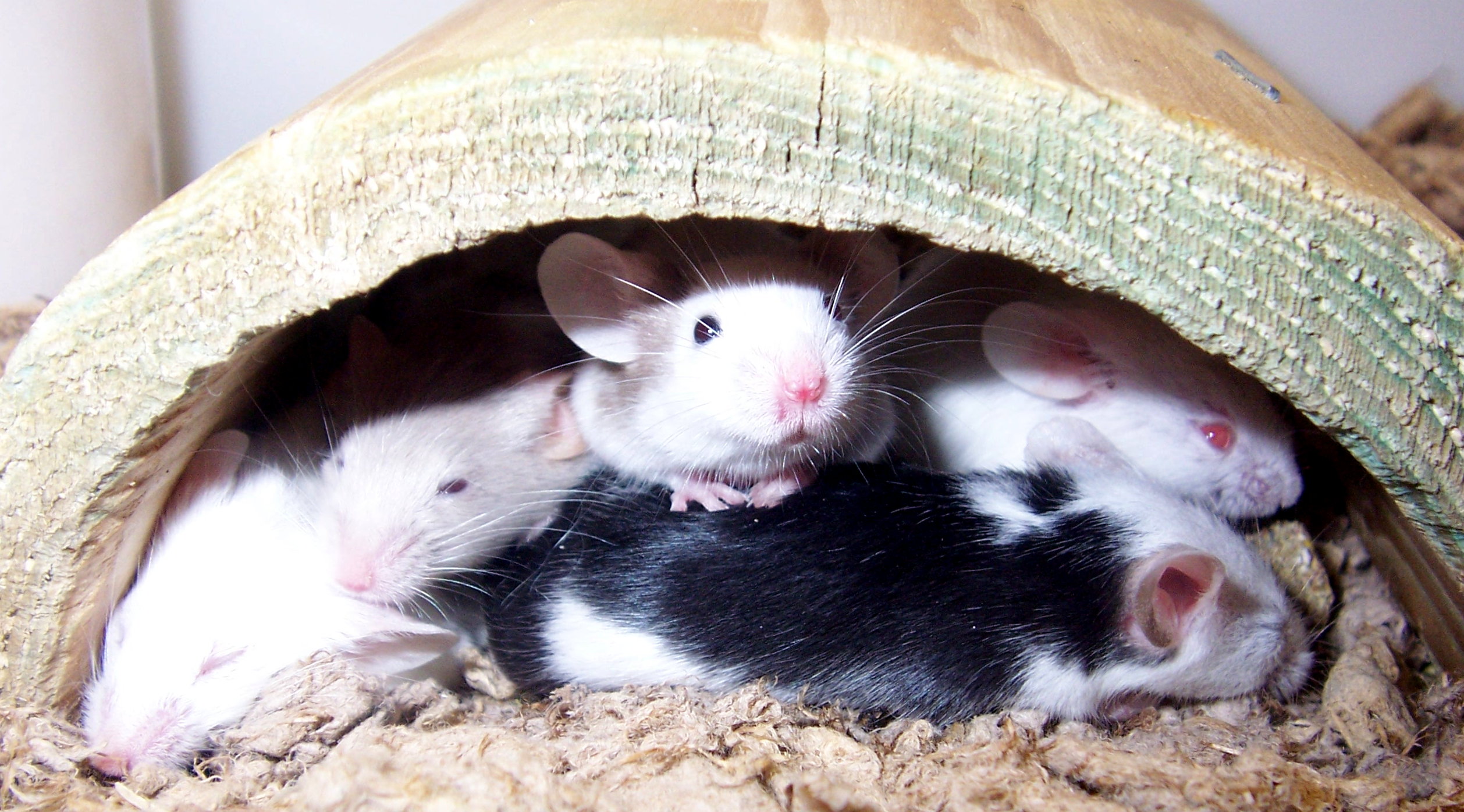
In 1972, John B. Calhoun designed a very specific mice cage called Universe 25, also known as the Mortality-Inhibiting Environment for Mice. Universe 25 was designed as a practical utopia for mice. It was constantly replenished with food and water, each wall had an intricate grid of nesting boxes connected by mesh tunnels and stairwells (like an apartment) and the cage was cleaned periodically. There were no predators, the temperature was set at a comfortable level and all mice resident were disease-free. In all ways, Universe 25 was an idyllic home for the mice.

Calhoun’s aim of this experiment was the same as the countless experiments before Universe 25: to see the effects of abundance on a population, and the consequences of that. Biologically speaking, a population only grows to the point that the environment can sustain it and then plateaus. So if the environment is completely abundant, the population will grow and grow without limitations (other than space). Thus, Calhoun’s main focus was overpopulation in societies. What did he find?

At the start of the experiment, four breeding pairs of mice were introduced to Universe 25. They began reproducing after 104 days of familiarisation and the population increased exponentially. The mice flourished in the prosperous environment. Around day 315, population growth slowed. By this stage, the mice population had grown to over 600, which made Universe 25 very crowded. Although there were still plenty of resources, the problem of overpopulation still remained. As the population grew and space became limited, male mice found it too difficult to defend their territory and eventually gave up doing so. The mice began losing their ability to form social bonds and these mice (“failures”) began congregating at the centre of the cage. This group of mice gave up on all normal social behaviour, leading to constant violence. The violence soon spread throughout the cage, with the mice society descending into chaos. The females, stressed and confused by the violence, attacked and cannibalised their own young, after which they retreated to the highest nest boxes where they isolated themselves. Certain males (termed “the beautiful ones” by Calhoun) did not show violence or any interest in females, choosing only to eat, sleep and groom themselves, wrapped in narcissistic introspection. Because of these two isolated groups, procreation slumped and population growth slowed. Elsewhere, in the “inner city” group at the middle of the cage, cannibalism, pansexualism and violence became common. The entire society had collapsed.

On day 560, the population ceased to grow at a peak population of 2200. After this, the number of pregnancies dwindled to nothing and no young survived past infancy. Adult mice were also affected, with mortality rates skyrocketing at all ages and increased rates of diseases. It was clear that the population was headed towards extinction. Even after the population dwindled down to a much more sustainable number, the mice were incapable of (or chose not to) reproducing to regenerate the population. Not only did mice society die, but the mice themselves met a grim fate as well.

This result was repeated in all of Calhoun’s experiments, conclusively showing that overpopulation leads to the demise of a society. Calhoun described this as “crowding into the behavioural sink”. He explained that the mice served as a warning to what human societies are headed towards if we do not solve the problem of overpopulation. We can already see the effect overpopulation has on societies. It is a known fact that people living in the inner areas of a city are more prone to poverty, crime, violence and a lower quality of life. However, Calhoun was not a nihilist. Instead of saying “humanity is doomed”, he explored different ways of resolving the problem. The most effective idea he came up with was space colonisation.
Posted in Science & Nature

Verneshot

If there is one thing we learn about dinosaurs, it is that they were wiped off the face of the Earth by an asteroid impact. Another feasible theory is that a supervolcano eruption completely destroyed the ecosystem, wiping out all life on Earth by either directly destroying them via a massive shockwave (if they were within range), or by slowly starving them as the resultant plumes of smoke would have blotted out the sun for years. But interestingly, scientists looking back over some extinction-level events of the past, discovered signs of both an asteroid strike and a volcanic eruption. This sounds to be extremely implausible, as the odds of both happening in the same era are near impossible (unless there is some extremely vengeful deity that hated the dinosaurs).

One theory that tries to explain all of this is the verneshot theory. To better understand the concept of a verneshot, imagine a cartoon character such as Yosemite Sam (the beloved red-bearded, gunslinging cowboy character on Looney Toons) shooting his gun wildly into the sky. Cartoon logic dictates that his bullets will eventually fall back on some unwary bystander. Now imagine if the Earth did the same thing, but instead of a bullet it shoots a giant piece of rock capable of causing mass extinction into the sky.

A verneshot occurs in a similar way a supervolcano erupts, where there is an incredible build-up of super hot molten rock. A supervolcano would be when this molten rock erupts as lava. In the case of a verneshot, massive amounts of carbon dioxide build up instead, leading to a pressure build-up under the crust. When the pressure becomes too much, the crust explodes, with the piece (of indeterminate size) being rocketed into space. However, the giant rock does not end up in space. Instead, it is only launched to a sub-orbital altitude, meaning it will come crashing back down to Earth due to gravity. Thus, a verneshot is when a volcanic eruption acts as a giant cannon to launch a piece of the Earth into the sky, which falls back to Earth as an asteroid-like object.

Posted in Life & Happiness

True Love

Let us assume that everyone has a person they are destined to end up with. Can we calculate the probability of such a fateful meeting between a man and a woman?

Suppose that the woman is X and the man is Y. Firstly, X and Y need to be born as human beings. They cannot be born as a worm or an onion or something. Here, we will say that the total number of species is M and the population number of each species as P (technically this part is forcing it slightly, so we can skip it).

Although the two have to beat ridiculous odds just to start, just being born as human beings is not enough. One must be born with XX chromosomes to be a woman, and the other must be born with XY chromosomes to be a man.

Let us assume that the two were lucky enough to be born as a man and a woman. Next, they must live in the same space. If one lives in some Korean city and the other lives in some American rural village, it is unlikely the two will ever meet.

Even if they did live in the same place, X and Y must have subjective qualities that the other person finds attractive. If they are not interested in each other, nothing will happen even if they did meet. By this stage, we have clearly gone past the scopes of mathematics.

Then let us assume that a man and a woman, who fit each other perfectly and born as people, are living in the same space. We are still missing one variable: time. Even if we took only the 5000 years that civilisations have existed, the odds of the two being born in the same era as similar ages is less than 0.001%.

Species, sex, space, time… Statistically speaking, the chances of a man and a woman beating all of these odds to establish a perfect couple seem nearly impossible. But we can clearly see that “true love” exists all around us. Numbers are just numbers. If you find a person that makes your heart skip a beat when your eyes meet, that makes you feel that the more you get to know them, the more you think you cannot live without them; in essence a person that makes you think “this person is The One”, do not let the person slip away. The scenario of you and that person existing on the same space-time and loving each other is something that verges on the impossible.

There is no treasure as rare as true love. If you have found true love, or believe that you have found it, fight to seize it and do everything in your power to protect it. That is the greatest accomplishment you can make in life.

image

Posted in Life & Happiness

Talent

The following is a story from a school in Detroit, USA, many years ago. One day during class, the class lost a mouse that was needed for an experiment. The students looked desperately for the mouse, but no one could find it. The teacher then said: “Everyone be quiet, Stevie Morris will be able to find the mouse”.

The students replied: “That’s impossible, Morris will never find the mouse”. The reason being, Morris was blind.

The teacher said: “You’re right. But Morris, while not being able to see, has excellent hearing. He will be able to hear and find the mouse that you cannot see”.

Morris was extremely touched by this comment. He realised that his blindness was not just a disability, but also gave him a superior sense of hearing compared to others. Morris used his hearing to nurture his musical talent and became a successful singer-songwriter. This boy is Stevie Wonder.

Talent is not something grand. At first, it merely appears tiny, useless and infantile. Stevie Wonder only started off as a boy with good hearing; he was not born a genius singer-songwriter. To develop a talent into a real talent, two extra factors are needed. The first is a master, such as Stevie Wonder’s teacher, who can identify and nurture a child’s natural talent. The second is another talent that when combined with the master’s guidance, develops the talent into something great. This something is effort. Effort is a talent that everyone can have. Those who complain that they are talentless are simply people who have not yet put in the effort.

Posted in History & Literature

To End All Wars

In his play Lysistrata, Greek playwright Aristophanes gives a comic account of one woman’s extraordinary mission to end the Peloponnesian War – a 30 year old war between Athens and Sparta. How did one woman bring an end to such a deadly war?

In the play, Lysistrata (the female protagonist) becomes sick and tired of men treating women like simplistic hedonists incapable of functioning on their own. She believes that the war is a result of irrational men making stupid decisions and the long war is a waste as young, nubile women are aging away. She holds a convening of the women of various city states and proposes that the women must rise up to stop the war. Lysistrata’s plan is simple: withhold sex from the men until they cave (i.e. a sex strike). The women are reluctant at first, but agree to join her. They then take over the acropolis of the city, setting up a safe haven for women, barring any man from entering.

The men initially scoff at this revolution and try repeatedly to lay siege on the acropolis. However, they fail and the women continue to not provide any sexual pleasures to any male. The men constantly make snide comments about how women are hysterical and only seek pleasure, but sooner or later, they become desperate for sex. One by one, desperate men (sporting “burdens”, i.e. erections) come to the acropolis, pleading for relief (funnily, some women desert the acropolis in desperation for sex as well). The women take the men in, but only to tease them and leave them disappointed.

Eventually, the men (of both Athens and Sparta) cave and surrender, agreeing to end the war. There is a hilarious scene during the peace talks where Lysistrata brings out a stunning young girl named Reconciliation in front of the men, quashing any complaints or objections. Even the men who protest against the women’s demands are overcome by their lust and want(/need) for sex. Once peace is declared, the men and women all come together in the acropolis for singing and dancing, celebrating the women’s success in ending the war.

Although the play is only a comic exploration of the battle of the sexes, it clearly shows the power women have over men, and how they can use that power to easily control men.

Posted in History & Literature

Week

In Genesis from the Old Testament of the Bible, it is said that God created the world in six days and rested on the seventh. But the system of a seven-day week can be found in many other cultures and religions. The origin of the seven-day week system is ancient Babylonia. The Babylonians believed that every seventh day was one of misfortune, with 7 having the significance that it is the largest single-digit prime number and the number of heavenly bodies known at the time (sun, moon, five planets). This was passed on to the Jewish people who made the seventh day the Sabbath. This was then adopted by Catholics in Rome and in 325AD, it was officially decided at the Concilium Nicaenum (official council that was held to vote for the official religion of Rome) that every week would be seven days long.

There is also a reason for assigning a heavenly body to each day (Monday = Moon, Tuesday = Mars, Wednesday = Mercury, Thursday = Jupiter, Friday = Venus, Saturday = Saturn, Sunday = Sun). At first, the order of the days was the same as the order of heavenly bodies by their distance from the Earth: “Saturn, Jupiter, Mars, Sun, Venus, Mercury, Moon”. This was then cross-referenced with the astrological 24-hour system of planetary hours, resulting in a new order of “Saturn, Sun, Moon, Mars, Mercury, Jupiter, Venus”. Because of this, the week started on Saturday in ancient times. It was only during Roman times when the week was changed to start on the Sunday, with Sunday becoming an official day of rest.

The Romans named the days after the heavenly body assigned to that day. For example, “Sunday” obviously comes from “Sun”, with the same applying to Monday and Saturday. This system is used in Korea and China, where each day is labelled according to the assigned planet. For example, Thursday is 목요일(mok yo il) in Korean, where 목 means wood, with 목성(mok sung) meaning Jupiter.

In English, the names of each day are mixed. Some are based on planets like the Korean system (Saturday, Sunday, Monday), while others inherit their name from the Germanic people. The Germanic people assigned one of their gods (from Norse mythology) to each day (except Sunday and Monday, which are related to the Sun and the Moon, while Saturday had a completely different name). Tuesday stands for “Tyr’s day”, Wednesday stands for “Wodan’s(or Odin’s) day”, Thursday stands for “Thor’s day” and Friday stands for “Frigg’s day”.

Interestingly, the Norse god assigned to each day correlates with the Greek/Roman god assigned to it. For example, Thursday is “Thor’s day” and also “the day of Jupiter”. Jupiter is the Roman king of gods (same as Zeus from Greek mythology) who uses lightning, while Thor is the Norse god of thunder.

Not every country calls each day a meaningful name. In China, Monday is simply 星期一(xing qi yi), or “first star period”, with each day after that being one number higher (Sunday is specially called 星期日(xing qi ri), where the number is replaced by the character for “Sun”). Although China used the same system as Korea and Japan based on 음양오행설(eum yang oh hang sul, system of Five Elements and Yin Yang), the days were renamed with the simplification of the language.

Posted in Life & Happiness

Yellow Ball

If I was to put a yellow ball in front of you and ask what colour the ball is, you would confidently say “yellow”. As you say, the ball appears yellow, but the answer is technically wrong. Strictly speaking, the ball itself is not yellow – it is merely reflecting the colour yellow. The ball only appears yellow because we see the yellow part of the natural light spectrum bouncing off the ball. We cannot say that the essence of the ball is “yellow”. For example, if you were to look at the ball through a red lens, the yellow light would be filtered and you would see a black ball. A person with a certain kind of colour blindness would say the ball has a bluish hue. A butterfly, which sees the ultraviolet spectrum as well, would see a colour we cannot even name.

Human beings judge objects using the vision. We describe an object as we see it and store that information in our brain to define the object. For this purpose, the fact that a colour blind person or a butterfly sees the ball a different colour is irrelevant to us. All we need to know is that object appears yellow to us. But this is only the case for objects. Let us imagine the ball is a person. If everyone in the world sees you as a yellow ball, would that make you a yellow ball? Of course not. However, people worry too much about how others see them. Although other people’s perception does not change our true nature in the slightest, we even go as far as erasing or abandoning our nature to look good in front of another person. Thus, whether our essence is white, black, red, blue or technicolour, when others see us as yellow, we have a tendency to try desperately to become yellow. 

If the world says you are a yellow ball, act crazy and be a red ball. There is not a single reason you should have to hide your true nature. Have confidence in your essence. There is nothing wrong with that.

image

Posted in Life & Happiness

Success

If you ask a hundred children what their dream is, not a single one would say “I want to be successful”. But as children grow up and enter society, society advises them that dreams do not feed them. And so, children slowly lose their innocence and dreams and choose to chase success instead. Why? Because success will feed them and give them a secure future. It is uncommon to find a middle-aged person who has achieved their childhood dreams. The majority judge their dreams as unrealistic, put them away in a corner of their mind and sacrifice happiness to earn more money to feed the family. The child who wanted to become a painter who put the world on a canvas follows her parents’ advice and becomes a lawyer. The child who wanted to become an astronaut is working into the night at a bank so that he will be promoted. They devote themselves to work and strive to succeed. But when they are at their deathbed, the only thing they are left with is regrets.

In life, there is no success or failure. The only moment you will know whether you led a successful or failed life is when you are at your deathbed. No one else can judge whether you were a success or a failure. Whether you were rich, poor, famous, average, lived long or died prematurely, you were a success if you can end your life with this thought: “Yeah, I lived a happy life without regrets”.

Live without regrets.

image

Posted in Psychology & Medicine

Sleeping Sickness

A woman travelling in Africa is bitten by what appears to be a mosquito. She swats the insect and keeps on going about her journey. The next week, she finds that she has a small nodule where she was bit. She is also feeling slightly unwell, with fever and fatigue. Over the following two weeks, her fever worsens (coming and going intermittently) and she notices large lumps along the back of her neck. By this stage, she is experiencing muscle and joint pain as well. After returning home from her trip, she finds that her symptoms have not resolved. On top of her fever and pains, she begins experiencing headaches, mood swings, lethargy, confusion, clumsiness, delayed response to pain, sleepiness during the day and insomnia at night. She begins to worry that something is wrong, but she believes that it is a bad flu and does not see a doctor. Her symptoms worsen with time (sleeping up to 15 hours a day), until one day, she falls asleep and does not wake up. She is taken to a hospital, where it is discovered she is in a coma. She dies within a week.

This is the typical presentation of sleeping sickness, also known as human African trypanosomiasis. It is an infectious disease caused by a protozoan parasite called Trypanosoma brucei (comes in two types: T. brucei rhodesiense (East African type) and T. brucei gambiense (West African type)), which is transmitted by tsetse flies – a bloodsucking fly endemic to sub-Saharan Africa (there are also case reports of sexual transmission between people). When infected, the parasite rapidly proliferates in the patient’s bloodstream. It is not detected by the host immune system, thanks to a surface protein called VSG. This allows it to spread through the patient swiftly and silently via the circulatory and lymphatic systems. The early symptoms (intermittent fever, rash, lymph node enlargement), typically presenting about a week or two after infection, are due to the parasite spreading through the blood and lymph. As the infection spreads, the parasites begin to invade the central nervous system (although in the West African type of the disease, patients often die from the toxic effects of the parasite replicating in the blood before they reach this stage).

As the infection spreads through the CNS, it causes the neurological symptoms described in the case. The sleepiness (from where the disease gets its name from) worsens as the disease progresses, with patients finding it difficult to wake up in the morning, even sleeping for over 20 hours. The sleepiness is caused by a chemical called tryptophol, which is produced by the parasite. Essentially, the neurological symptoms appear as if the person’s brain is slowing down, until they fall into a coma, resulting in death without treatment (usually within 2~3 years since the infection).

Sleeping sickness is invariably fatal unless treated early. Once the patient reaches the second stage (neurological phase), treatment becomes very difficult. The current first line treatment is a drug called melarsoprol, which is a form of arsenic. Because of its toxic nature, it is extremely dangerous and there is around an 8% chance of the patient dying from side effects. Fortunately, there are less dangerous and more effective treatments such as eflornithine (which only works for the West African type) being developed.

Posted in History & Literature

Honeymoon

It is customary for a newlywed couple to embark on a romantic vacation to celebrate their marriage. This is known as a honeymoon. The word originates from the Scandinavian region – the home of the Vikings. The Vikings had a tradition (as did many other European cultures) where a newlywed couple would drink mead for a whole month. The reason being, it was believed that mead was good for stamina and would facilitate fertilisation. Ergo, the honeymoon’s original purpose was to provide a time for the couple to make a child. Ironically, alcohol has the effect of inhibiting not only the cerebral cortex (causing sexual disinhibition), but also testosterone, leading to erectile dysfunction. Thus, drinking like the Vikings on your honeymoon would be very counterintuitive if you are thinking of making a child (or just love). Furthermore, it may endanger your marriage right from the start.

Whatever the origin of the word, a honeymoon is indubitably the sweetest time for a couple as they celebrate their promise for eternal love and look forward to a future they will build together. Perhaps the true meaning of “honeymoon” is a metaphor for the sweetness of a newly developing romance.