Posted in Philosophy

This Is Not A Pipe

This is a painting named The Treachery of Images, painted by the famous surrealist artist René Magritte in 1929. The picture shows a pipe and below it, the words Ceci n’est pas une pipe, which is French for “This is not a pipe”. However, the painting clearly shows a plain pipe. Is Magritte implying that he did not actually draw a pipe? Is the object actually some other clever invention?

What Magritte is saying is that this is not a pipe, but an image of a pipe. The painting is only a realistic representation of a pipe, but it is not real. No matter how hard you try, you will not be able to stuff the pipe and smoke it. Ergo, if Magritte had written “This is a pipe” under the image, he would have been lying.

Magritte was a master of painting realistic pictures and then changing something subtly (or sometimes obviously) to completely change the context, making the picture very surreal. He knew for a fact that his painting of the pipe and the “paradoxical” subtext would rub people the wrong way because people are predictable in some ways. Without the explanation that it is an image of a pipe, many people will experience cognitive dissonance as they see a pipe, yet something is telling them it is not a pipe. This makes people wonder about what Magritte means, until they either figure it out, ask someone about it, or become angry and insult the painting because they have no idea what it means.

Posted in Science & Nature

Units

In September of 1999, NASA ambitiously launched a Mars weather satellite. But the satellite did not even reach its destination, instead exploding in the atmosphere soon after launch. Why was this? The reason was so stupidly simple. The failure was because of units.

The satellite that was designed by Lockheed Martin was designed using the imperial system (pounds, feet and yards), whereas NASA’s systems used the internationally-used metric system. Because of this simple error, the pride of the USA space program fell to the ground and an astronomical amount of money was burnt to ashes in the air.

image

Posted in Science & Nature

Mathematical Beauty

What is the most “beautiful” mathematical equation? For millenia, many mathematical formulas and concepts have been described as beautiful (and some defining beauty, as the golden ratio does). In the mathematical world, the adjective “beautiful” is used in the sense that certain mathematical concepts, despite the fact they are rational and objective, are so pure, simple and elegant that they can only be described as art.

One such formula is Euler’s identity:

image

Renowned physicist Richard Feynman described it as “the most remarkable formula in mathematics”. What makes this array of symbols and numbers so beautiful? Firstly, it contains the three basic arithmetic operations exactly once each: addition, multiplication and exponentiation. It also connects five fundamental mathematical constants with nothing other than themselves and the arithmetic operations.

0 is the additive identity, as adding it to another number results in the original number. 1 is the multiplicative identity for the same reason as 0. Pi(π) is one of the most important mathematical constants in the history of mathematics that is ubiquitous in Euclidean geometry and trigonometry. Euler’s number(e) is the base of natural logarithms and is used widely in mathematical and scientific analysis. i(√-1) is the imaginary unit of complex numbers, a field of imaginary numbers that are not “real”, allowing for the calculation of all roots of polynomials. Euler’s identity neatly sums up the relation between these five numbers that are so crucial in the field of mathematics. It is also interesting to note that these five numbers were discovered at different points in history spanning over 3000 years.

Some people describe mathematics as a distinct language in itself. Not only that, but mathematics is considered the universal language as it is both universal and ubiquitous. If that is the case, than Euler’s identity can be considered an extremely pithy literary masterpiece.

Posted in Psychology & Medicine

Child Prodigy

At the age of 6, Wolfgang Amadeus Mozart toured Europe to astound audiences with his mastery of the violin, organ and keyboard. At the age of 11, Judit Polgár defeated a Grandmaster in chess, later becoming a Grandmaster herself at the age of 15. By the time he finished elementary school, Saul Kripke had taught himself ancient Hebrew, finished the works of Shakespeare and mastered the works of Descartes and complex mathematical problems.

Each of these people is considered a child prodigy – person who develops and shows extreme talent in a skill at a level far beyond the norm for their age. The term wunderkind (German for “wonder child”) is also used. For some unexplained reason, these people are far beyond the average level of children at their age in terms of intelligence or a certain talent.

Prodigies are actually a subset of a condition known as precocity, where a young child shows unusually early development or maturity, especially in mental aptitude. For example, a German child called Christian Friedrich Heinecken is known to have talked within a few hours after his birth, learnt the key events of the first five books of the Torah within a year, mastered the Bible at age 2 and had a working knowledge of universal history and geography, Latin and French at age 3. Unfortunately, he was struck ill at the age of 4, and shortly after predicting his death, passed away. Heinecken’s case is an extreme example of precocity, but nonetheless most precocious children show at least an outstandingly advanced level of mental maturity compared to other children. Along with prodigies, savants and children with extraordinarily high IQ (over 160) are also considered precocious.

Although precocious children enjoy their extreme talent (for which they usually have deep passion for) and may even become famous for it like Mozart, they are almost always at risk of certain problems. One common issue is that they tend to be placed on pedestals as people constantly praise their ability. This can quickly evolve into narcissism, setting a major expectation that the child battles with throughout his or her life. Children with advanced intellect are often unable to fit in to society as they are far more intelligent than their peers. Not only do other children shy away from them, but they feel too bored and unstimulated by other children and choose to alienate themselves. Furthermore, although they may have the intelligence and maturity to comprehend philosophical concepts, they still have the emotions of a child, meaning they are tormented by the dissonance between the rational mind and their emotions. All of these factors combined lead to a great increase in risk of depression in precocious children.

Essentially, the main conundrum for child prodigies is trying to balance their amazing talent with a happy life in a “normal” society. This could be achieved by parents keeping things real and not placing excessive expectations on the child, and giving the child a way to vent their genius in some way. For example, chess has been a classic way of keeping children with high intellect engaged. Having this kind of vent allows the child to still engage with other members of his or her society (other children), while honing their great skills for an even brighter future. The child must stay engaged and passionately practise and advance their skill so that they do not stay in a perpetual rut all their life.

With great power, comes great responsibility.

Posted in Psychology & Medicine

Tetrachromacy

They say that human imagination is infinite and limitless. But consider this: can you imagine a colour outside of the visible spectrum? Most likely, you are incapable of thinking of a new colour that cannot be mapped on a standard colour chart. Interestingly, a small proportion of people can see and understand colours beyond the range that the majority of us can see.

The physiology of vision is rather complex, but essentially boils down to the retina (inside lining of the eyeball) acting as a film for the image that you see. Cells known as photoreceptors convert the visual image into electrical signals that are transmitted to the occipital lobe of the brain via the optic nerve. There are two types of photoreceptors: rod cells, which sense movement, and cone cells, which sense colour and provide sharp images (visual acuity). Human beings typically see colour by combining three primary colours: red, green and blue (known as the RGB system). There are cone cells for each primary colour. The brain processes the signals sent by each cone cells and figures out what “colour” you are seeing. Therefore, you can only perceive colours made from a combination of red, green and blue. It is easy to visualise this by playing with colour palettes on computer programs such as Photoshop.

In recent years, it has been speculated that a certain percentage of women have an extra type of cone cell that senses a different wavelength of light. Ergo, they can theoretically sense a greater range of colours compared to someone who has three types of cone cells. This condition is called tetrachromacy (“four colours”). Tetrachromacy is the opposite to colour blindness, which is caused by a deficiency or fault in one or two types of cone cells. To these people, the average person (a trichromat) will appear “colour blind”.

According to one estimate, as many as 12% of women are tetrachromats. Although there are many theoretical barriers to true tetrachromacy, there have been several documented cases of women who perceive colour in much more depth.

The ability to see an extra primary colour is more significant than just a 25% increase in the person’s colour range. An average person can see about 1 million different hues (shades of colours), while a true tetrachromat can see 100 million hues – a hundred-fold increase in the range of colours they can see. One can only wonder what kind of amazing sights a tetrachromat sees when she gazes upon a field of flowers or even a rainbow. Unfortunately, even if a tetrachromat tried to explain the colours she saw to us, we would not be able to grasp the colours as our minds would be incapable of visualising the colours, much like how describing the colour red to a blind person is impossible.

image
Posted in Life & Happiness

Simple Pleasures

Consider this theory. People feel happy when they experience an upturn in life. A hungry person is happy when he receives food, a poor person is happy when she earns money, and a person seeking love is happy when they find love. But as people are highly adaptable creatures, they become used to such upturns very quickly. Even the happiness brought on by great food and luxurious lifestyles tend to fade over time, and the love between a couple who act like they cannot live without each other will eventually die away. To remedy this, people always seek excitement that will create an upturn in life, giving them happiness. This causes them to adventure, seek new experiences and sometimes make dangerous, risky decisions.

Everyone has a point in their lives that could be called the “peak”. But no matter how tall the peak is, as people will adapt to it soon, the height itself does not matter. What matters is the path to the peak. For example, if someone experiences their peak in life too early, every moment from then on will seem worse than the past. The person will continuously face disappointment and reminiscence the good times. The reason being, no upturn can beat the peak that they experienced, meaning they cannot feel the happiness of an upturn in life. According to this theory, the key to a happy life is delaying this peak as much as possible. When life is starting to get boring and dull, add just a little sprinkle of greatness in your life to continuously infuse it with happiness.

However, life is not as predictable and controllable as we want it to be, making this theory highly implausible. But the theory is not completely wrong. Although it is near impossible to artificially add little upturns throughout life, it is extremely easy to “feel” an upturn. All you need to do is change your perspective. The difference between a happy person and a miserable person is that the former finds joy in the smallest things. A miserable person will feel bored unless something exciting is happening, but a happy person leads what appears to be a boring life while enjoying every minute of it. Enjoying a warm cup of coffee on a rainy day, being astounded by the beautiful sky, smelling the roses on the path, singing and dancing when no one is looking… Finding and enjoying the simple pleasures of life is the most important skill one can have in life.

Who would you rather be: a miserable person who always seeks excitement and thrills or a happy person who enjoys a “boring” life?

Posted in Science & Nature

Wave

One of the joys of going to a beach is listening to the breaking of waves. Waves are typically associated with the ocean, but can also form on lakes, rivers, canals or any body of water with a free surface. 

Waves are caused by wind blowing over the water surface, dragging it in a certain direction. As the wind only affects the surface, the water below rises to fill the space, causing a circular movement. This appears as a wave on the surface. The faster the wind blows, the more the surface is shifted and the bigger the waves become. Other factors that determine the wave size are: water depth, distance of water that the wind blows over (fetch), the width of the area of the fetch and the duration the wind blows over the area. Because of these factors, some lakes may be as wavy as the sea while others are completely tepid.

The waves formed by the wind merge to form bigger waves in the ocean. The resulting wave is known as a swell. When the swell reaches the shore, the depth of the water reduces, causing the wave to rise in height and become steeper. If the wave is high enough, the base becomes unstable and the wave collapses, which is what causes waves to break.

Although it sounds like a simple process, the consequences can be deadly. Wind waves can reach heights above 30m given that the conditions are right (usually during extremely serious storms). Such a wave can flip a cruise ship with ease like a rubber toy.

Posted in Psychology & Medicine

Berry Aneurysm

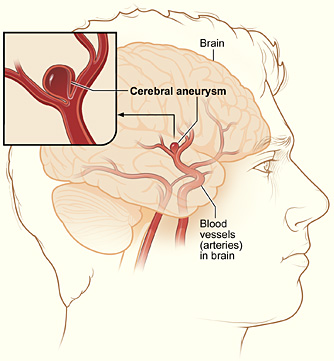
Stroke is a disease often associated with the elderly, but this is not necessarily true. As much as 5% of the population carry a ticking time bomb in their brain, known as a berry aneurysm. An aneurysm is a weakening of the arterial wall, causing a localised ballooning of the vessel. A berry aneurysm is a common type of aneurysm where the ballooning resembles a berry. What is most troubling is that a large proportion of these aneurysms can present very early (usually congenital, meaning you are born with it), with one research suggesting that 1.3% of the population in the age group of 20 to 39 has a berry aneurysm. If this berry aneurysm was to burst, no matter how young and fit you are, you will bleed into the area around your brain (subarachnoid haemorrhage), suddenly develop a severe, crippling headache (“thunderclap headache”), become confused, show signs of stroke such as speech or movement problems, or simply drop dead.

image

Fortunately, only 10% of people carrying a berry aneurysm suffer a ruptured aneurysm and subsequent brain bleed. The other 90% will carry on living their lives, without ever knowing that they had a time bomb in their brain.

Certain factors make the risk of the aneurysm bursting go up, such as high blood pressure, which can be caused by a stressful lifestyle or smoking. But in some cases, as explained above, even a healthy teenager could suddenly drop to the ground with a massive brain haemorrhage.

Berry aneurysms are only one of many ways death could strike unnoticed, no matter how young you may be. You could live a long and healthy life and die peacefully in your sleep when you are 90 years old, or you may have a stroke and drop dead in a few minutes’ time. For all you know, a bus might run you over tomorrow, with no warning whatsoever. Ergo, youth is not an excuse to waste the day you are given. You do not have to achieve something great, or be productive, but at least spend your day knowing that you are doing everything in your power to make yourself happy, without harming your health, your future or other people.

Carpe diem. Seize the day.

Posted in Philosophy

Carpe Diem

Countless teenagers claim that “you only live once” and use that as an excuse to live a reckless, risky life. Although most adults have the sense to recognise how idiotic and juvenile that sounds, it seems that they live their life as if there is only one chance as well. Too many people give up everything after a big failure messes up their lives, thinking that their life is “over”. For example, if a person has trained to become a mechanical engineer and one day has an accident that prevents them from ever working as an engineer again, the most common response is to fall into a pit of despair. They believe that they are only trained to do the one thing, and not doing it contradicts their life entirely. They are afraid that their life is over – that they are “dead”.

According to a certain statistic, we are capable of learning and mastering something new in 7 years. This means that between the ages of 11 and 88, you have no less than 11 opportunities to be great at something. Ergo, even if one “life” is over, you still have 10 opportunities to start a new life. Some people are too afraid to let one of their lives die and cling to the past, never moving forward to live on. But you have many lives. You do not live once.

Spend a life writing poems, spend a life building things. Spend a life looking for facts, spend a life looking for truth. Be a doctor, a musician, a detective, a chef, a businessman or a wanderer. No life is wasted as long as you are doing what you truly want, while not hurting yourself or others. Never forget that you have numerous lifetimes that are waiting to be seized by you. There will be times in life when you are hit with misfortune, when your life seems to crumbling around you. But that is just life. Realise that you still have the chance to start anew. And in the meantime, enjoy the lifetime you are living. Seize the day, and all the other lifetimes that are lying ahead of you.

Carpe diem.

(Idea and image fromhttp://www.smbc-comics.com/index.php?db=comics&id=2722#comic)

Posted in Science & Nature

Dihydrogen Monoxide

Many people know about the dangers of chemicals such as lead and dioxin, but there is lack of awareness of an even bigger killed chemical: dihydrogen monoxide. It is a colourless, odourless, tasteless chemical that is responsible for the death of hundreds of thousands of people around the world.

Most deaths caused by dihydrogen monoxide (DHMO) are by accidental inhalation, causing cerebral hypoxia. However, the dangers of DHMO do not end there. Its solid form can cause severe tissue damage after prolonged exposure, and both its gas and liquid forms can cause severe burns. It is possible to overdose on DHMO, with symptoms ranging from excessive diaphoresis and micturition, bloating, nausea, vomiting and body electrolyte imbalance such as hyponatraemia. For those who are dependent on it, withdrawal means certain death. DHMO has also been found in various types of tumours biopsied from terminal cancer patients.

Not only does DHMO have consequences on human health, it is also damaging for the environment. DHMO is the leading cause of the greenhouse effect (surpassing carbon dioxide), a key component of acid rain, accelerated corrosion and rusting of many metals and contributes to the erosion of natural landscapes. DHMO contamination is a real, global issue, with DHMO being detected in lakes, streams and reservoirs across the globe. DHMO has caused trillions of dollars of property damage in almost every country, especially in developing nations.

Despite the danger, DHMO is commonly found in the household, in the form of additives in food and drinks, cleaning products and even styrofoam. There are no regulation laws for DHMO and multi-national companies continue to dump waste DHMO into rivers and the ocean. It is astounding to see such a deadly chemical go unregulated.

If you have not caught on by now, dihydrogen monoxide’s chemical formula is H2O – also known as water. Technically speaking, there are no false statements in the above description. But even children know that water is not only (relatively) safe, but necessary for life. The report on “dihydrogen monoxide” originates from a 1997 science fair project by Nathan Zohner, who was 14 years old at the time. His project was titled “How Gullible Are We?” and involved presenting his report about “the dangers of DHMO” to fifty school students to see what their reaction would be. 43 students favoured banning it, 6 were undecided and only one recognised that DHMO was actually water. Even more surprising is that there are cases (such as in California in 2004), where city officials came close to banning the substance, falling for the hoax. This goes to show how gullible people can be in the face of what they do not know.