Posted in Philosophy

Creation And Destruction

In Hindi mythology, it is said that the universe is controlled by three major gods (Trimurti): Vishnu, Brahma and Shiva. Vishnu is the ultimate omnipotent god who is depicted resting on his giant serpent Ananta, tended to by Lakshmi. A lotus grows out of Vishnu’s navel and gives rise to Brahma – the creator. When Brahma awakens, the universe is created. Brahma models the universe according to Vishnu’s dreams and imaginations – dipping into the experiences of his past incarnations. Once the universe is created, it is maintained by Vishnu.

However, the Hindu view of cosmology is that the universe is not fixed. It continuously undergoes a cycle of creation, maintenance and destruction. The god who is responsible for the destruction of the universe is Shiva. When a certain time comes, Shiva dances the tandava to annihilate the universe and all of its contents. But this is not an act of evil. It is for the purpose of rebuilding the universe, reaching closer to a perfect, ideal world. Once there is nothing, Vishnu rebirths Brahma and the cycle begins again.

Remarkably, this is strikingly similar to the current scientific model of how the universe came about. It is suggested that the universe arose from a massive explosion of matter, something we call the Big Bang. Since the Big Bang, the universe has been expanding at the speed of light. However, it is theorised that one day the expansion will decelerate, until the forces of the universe pull it back together to cause a contraction. The universe contracts until all matter is crushed into a single point – an event called the Big Crunch. This gives rise to an extremely dense piece of matter that will eventually undergo a new Big Bang to create a different universe.

Destruction is not an evil force. Shiva is not considered the devil, but a great god who is almost as popular as Vishnu. This is because Hindus (rightly) believe that destruction is a key component of nature, allowing for the cycle of birth and death. A caterpillar must destroy its form within its chrysalis to form the pool of matter that will give rise to a beautiful butterfly. Creation and destruction are simply polar forces that cannot exist without each other and sometimes even the best of things have to fall apart to make way for better things. Furthermore, one cannot forget the importance of the neutral force that maintains the status quo between creation and destruction.

Nature is governed by these three force: plus, minus and zero. 

Posted in Philosophy

Of Cats And Dogs

When a dog is fed by its owner, it thinks to itself: “This human feeds me every day and cares for my every need. It must be god.

When a cat is fed by its owner, it thinks to itself: “This human feeds me every day and cares for my every need. I must be god.

Posted in Psychology & Medicine

Placebo Effect

A strange phenomenon found in medicine is the placebo effect, where a patient’s symptoms improve after being given a completely inert substance (like a sugar pill) under the guise of a medication. The placebo effect is not only limited to pills, but any procedure that is intended for a therapeutic purpose (but does not have any actual therapeutic value). It is believed that the placebo effect is a strong component in many forms of alternative medicine such as homeopathy and faith healing. The placebo effect has been proven to be effective in improving or even curing the symptoms of some diseases such as allergies, asthma, headaches, abdominal pains and even severe illnesses such as heart attacks and cancer. Placebos are particularly effective for psychological symptoms.

There has been much research to determine how the placebo effect works. The leading theories so far are that placebos act to relieve anxiety and condition the patient into a more positive mindset, reducing stress and boosting the body’s natural healing process. This would also explain why placebos are effective in pain relief as perceived pain is amplified by negative emotions. Cognitive dissonance may also play a role, where the patient’s mind believes that since it is receiving treatment, it must be getting “better”, producing a beneficial psychosomatic reaction. Essentially, fooling the mind to believe and expect that it will get better makes the patient actually feel better.

Research into the placebo effect has also revealed some bizarre characteristics of the effect. For example, it has been found that the placebo effect is stronger if there are more pills, the pill is larger, branded or generally looks fancier. Even colour plays a role, with blue pills acting better as depressants (“downers”) and red pills acting better as stimulants (“uppers”). Telling a patient that a placebo will have a certain effect boosts that effect. Human factors such as the doctor’s credibility and confidence or the patient’s expectations and culture are known to drastically change the efficacy of a placebo. What is weirder is that studies have shown that telling a patient that they are being prescribed a placebo will not affect its efficacy, as long as they are told that “it could help them”.

The placebo effect is a great example of how much influence our mind, beliefs and expectations have on our health and our lives. The more positive thoughts and beliefs we have, the healthier we become. The more negative we are, the less effective treatments become. In fact, the same pill that gives people the placebo effect can be used to increase pain and symptoms if it is described in a certain way. This is known as the nocebo effect – the opposite of the placebo effect.

image

Posted in Science & Nature

Imaginal Cells

How does a caterpillar become a butterfly? Every child and adult knows that they undergo a process of metamorphosis while in a chrysalis. But few know that the caterpillar has to dissolve all of its internal organs to form a pool of raw materials that it will use to build itself into a new butterfly. Although from the outside we only see a beautiful shell that appears to be just sitting there, in reality the caterpillar is undergoing a change so profound that it completely rebuilds its foundation.

What is interesting about the metamorphosis process is that it is not as simple as breaking down a caterpillar and rebuilding the pieces into a butterfly like one would do with Lego blocks. Once the puddle of cells is formed within the chrysalis, a new type of cells called imaginal cells appear. We do not know where they come from, but they just appear at a certain time. These cells are completely different from the original caterpillar cells – so different that the original cells begin attacking it as if it was a virus. However, even with all this cellular genocide, more and more imaginal cells pop up, until eventually the original cells cannot keep up. The imaginal cells start to cluster together, multiplying at an exponential rate. These clusters then grow and differentiate to form the parts of the new butterfly, such as wings and antennas. The original caterpillar cells slowly wither away as they are overrun by the new, fresh imaginal cells. The caterpillar becomes a butterfly.

Human beings, in general, are not good with change. We as a society fear something that would completely shift our paradigms and proceed to attack it viciously. Throughout history, ideas that would shake the foundations of society were often challenged and oppressed: the concept that the Earth is round, that the Earth revolves around the Sun or that we are the product of millions of years of evolution. These “imaginal cells” of society such as Charles Darwin and Galileo Galilei were faced with criticism, mocking and even punishment by those who could not accept the fact that what we know can be wrong. However, their ideas spread among like-minded people, until the number of people who believed in these new ideas greatly outweighed the people who did not. This is how society evolves and metamorphosed over time.

Change is difficult and scary, whether you are on the receiving end or on the side trying to change the world. Being the first imaginal cells of society is a painful road one to travel, but the effects of your actions can cause ripples throughout society to change the world for the better. Or perhaps you are experiencing change at a more personal scale, with your traditional way of life being threatened by some new force. But no matter what the change is – for better or for worse – you will adapt and society will adapt. Great ideas persevere and change for the better is inevitable.

There is no reason to be afraid, for everything is and will be okay.

Posted in Philosophy

Ship Of Theseus

An ancient Greek philosopher named Plutarch pondered this scenario. Imagine that the Greek hero Theseus was to repair his ship after a long journey by replacing broken parts with new timber. If he was to embark on so many journeys and repair his ship so much that all of the original material that made the ship were replaced, is that ship still the same ship of Theseus?

This is an interesting philosophical question where some may argue that the ship is still, by definition, the “ship of Theseus” while some may argue that it is no longer the same ship Theseus once owned, but merely a replacement.

Although it is hard to grasp the significance of this question when using an analogy of ancient Greek heroes and ships, it comes closer to home in the field of biology. It is a known fact that the human body is under constant change; cells divide to produce a new lineage of fresh cells while shedding away old, dead cells. Different cells turnover at different rates; skin is almost completely replaced every 4~6 weeks, the lining of the gut is turned over every 4~6 days, while brain cells are almost never replaced (but contrary to popular belief, they can regenerate). If this is the case, are you the same “you” as you were a year ago when the majority of your skin and gut cells were technically “different” (but genetically identical) cells to what they are now? Or are you simply a replacement shell for your brain?

A simpler way of thinking about this would be to consider the case of clones: are clones the “same” as their originals?

The paradox of the ship of Theseus can be extended into a larger scale. Consider a large city like New York. If we were to assume that all of the inhabitants of a city are replaced over a hundred years, then is that city still “New York”? Not only would it looks different because of its new buildings and whatnot, but the people that make up the culture and substance of the city would be completely changed. However, New York is still called “New York” just as it was in the early 1900’s. So is the modern day New York still New York or New New York?

image

Posted in Science & Nature

Blue

Why is the sky blue? This is because of a phenomenon called Rayleigh scattering where molecules and tiny particles in the atmosphere scatter direct sunlight. Light scatters at different amounts depending on its frequency. Because of this, blue and violet light (short-wavelength light) scatters more than the other colours, causing the sky to be blue. But during sunrise and sunset, the light enters the atmosphere from an angle, causing blue and green light to be so scattered that you cannot see it. This produces a red or orange colour.

The deep ocean is blue for a similar reason; red and yellow light is absorbed while blue becomes scattered by the water. However, the colour of the sea is also largely dependent on the colour of the sky at the time, as it reflects the sky. The colour of the sea may change due to algae in the water, which can make it green, brown or even red.

A similar form of light scattering called the Tyndall effect is responsible for blue eyes, caused by a turbid layer in the iris. The Tyndall effect can also be seen in a glass of water mixed with milk, or flour suspended in water.

Blue has one of the most interesting histories compared out of all the colours. In the ancient world, blue was considered a lowly colour, with some cultures such as the ancient Greeks not even considering it a “real colour” such as red, black, white and yellow. In fact, the Greeks did not have a word for the colour blue; it was merely called bronze colour. The ancient Romans considered blue the colour of barbarians. The Romans stereotyped blue-eyed women as promiscuous and blue-eyed men as aggressive and foolish. Only the ancient Egyptians liked the colour blue, as they considered it a colour of divinity. They made blue dye from copper.

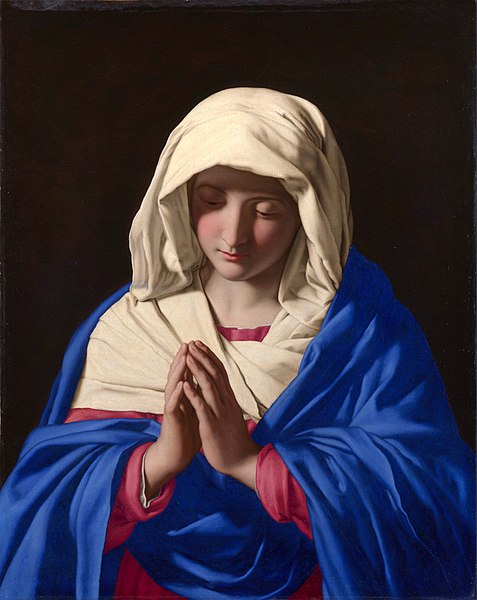
Perhaps the hatred for the colour blue was due to the difficulty of making blue dyes. This all changed nearer to medieval times as artists and dyers successfully created blue dyes from minerals such as lapis lazuli, azurite and cobalt. Blue became the colour of the Virgin Mary. Artists began painting the sky and the sea as blue, which were previously depicted using black, white and green. Nobles began wearing blue instead of the traditional red and purple, and dyers followed this trend by devising better blue dyes with a variety of shades.

image

This led to the thriving of blue dye industries in European cities such as Amiens, Toulouse and Erfurt, where blue dye was made from a plant called woad. Although this was a very lucrative business, blue was still a very expensive and difficult colour to use, with the dying process involving soaking the woad in human urine (which contains ammonia) to extract the colour.

Blue became a much more accessible colour in the 18th century when flourishing trade brought indigo from the Americas. Indigo was much easier to use, more concentrated and produced a richer, more stable blue than woad. As blue became more and more popular, synthetic blue dyes were discovered – one of the most famous being Prussian blue which was discovered in Berlin in 1709.

Throughout its history, perhaps the product that best promoted the status of blue as a colour is the denim jean (dyed with indigo blue), invented by Levi Strauss in 1873. 

In modern times, blue is an extremely popular colour that is widely used in art, fashion, architecture etcetera. However, the one field that blue has not yet been able to set foot in is food. Researches show that the colour blue drastically decreases a person’s appetite as it is associated with poison in the natural world.

image
Posted in Science & Nature

Wine Aging

One of the (many) defining features of a “great wine” is the aging of the wine. The complex chemical reactions between the wine’s sugars, acids and tannins can produce a much deeper, sophisticated aroma and taste that stays in the mouth for longer. For example, the tannins break down to give a softer mouthfeel. Acids and alcohols combine in the wine to form esters – chemical compounds that produce very unique smells. This also reduces the perceived acidic taste of the wine, making it less sour. The longer the wine has aged, the more of these chemical reactions occurs and the wine typically improves in quality.

Of course, the problem with wine of excellent quality is the price and the time required to age the wine. Is there any way to artificially “age” wine? The solution lies in something that sounds like science fiction: irradiating the wine.

If you expose a bottle of wine to radiation (about 500 rads) for an hour, it can greatly improve its maturity. In a simple experiment, blind-tasted sommeliers could not believe that the two glasses of wine – one before irradiation and one after – were exactly the same. In fact, they valued the irradiated wine at almost five times the market price of the original bottle. The reason for this is that radiation accelerates the esterification process of the acids in the wine, producing a much deeper and smoother taste.
There are also other experiments that have shown that magnetism, ultra-sonic waves and high-voltage electricity can all be used to artificially age wine.

Although radiation does not turn people into superheroes, it turns out it can for wine.

Posted in History & Literature

Destroyer Of The Environment

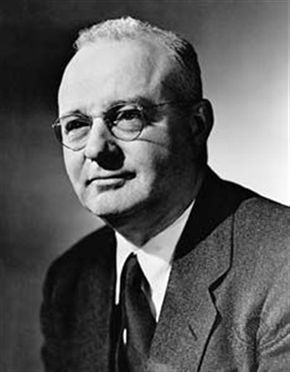
In the history of mankind, who could be considered to have done the most damage to the environment? Although many names may pop up, no one comes close to the destruction that resulted from one man: Thomas Midgley Jr. While working for General Motors in 1916 as a chemist, Midgley discovered that adding iodine to kerosene reduced “knocking” in engines – where pockets of air/fuel mixture explode in the engine. The effects of knocking on engines range from negligible to destructive. However, he found that the iodine only reduced knocking slightly. To improve on this, he tried adding different elements to fuel until he found the magic solution – lead. And so, the leaded petroleum was born.

Leaded petrol was an instant commercial success and it became the most popular choice of fuel. This resulted in cars, buses, planes and almost all motor vehicles pumping out billions of tons of lead into the atmosphere for over seventy years. Unfortunately, lead is a highly toxic metal that causes symptoms such as muscular weakness, pain, nausea, vomiting, fatigue and madness. Lead poisoning is particularly dangerous to children as it can cause irreversible retardation of physical and mental development. Even though the effects of lead poisoning were recognised since the late 19th century (with many workers and even Midgley himself suffering from it), it was only after the 1970s when fuel companies stopped adding lead to their fuel. Thanks to Midgley’s idea of adding lead to petrol, who knows how many children would have suffered a crippling illness due to lead poisoning.

But Midgley’s “accomplishments” did not stop there. In the late 1920s, Midgley decided to tackle the problem of using sulfur dioxide, propane and ammonia as refrigerants (possibly out of guilt over the whole lead fiasco), which were effective but prone to combusting or exploding. Within three days, he developed an alternative – dichlorofluromethane. This amazing gas was inert, non-toxic and did not have the risk of exploding. It was the first of the chlorofluorocarbons (CFC), which was named “freons”. We now know that freons are responsible for destroying the ozone layer.

In 1940, Midgley contracted polio, causing him to be disabled. Poliomyelitis causes paralysis due to the destruction of motor neurons. Being an inventor, Midgley devised a clever device that would help him off the bed using pulleys and strings. Unfortunately, one day the invention twisted in a certain way, leading him to become entangled in the ropes and being killed of strangulation.

Such was the sad life of Thomas Midgley Jr, who environmental historian J. R. McNeill dubbed “[someone who] had more impact on the atmosphere than any other single organism in Earth’s history”.

Posted in Philosophy

Truth And Lies

You are walking along the road when you reach a fork, where you see two guards chatting with each other. You approach them to ask which way you should go, but you notice a peculiar sign that says: “One of us always tells the truth, one of us always lies”. There is no way for you to know who tells the truth and who tells lies. If you could only ask one question to help you walk down the right path, what would you ask the guards?

The solution is simple: all you have to do is ask “If I asked the other guard which road is the right one, which road would he tell me to take?” then go to the opposite road. The reason being, no matter who you ask – truth-teller or liar – they will tell you the wrong answer. If you asked the truth-teller, he would honestly reply with what the liar would say, which is the wrong answer. If you asked the liar, he would tell you the opposite of what the truth-teller would say, which would ultimately be the wrong answer.

image