Posted in Psychology & Medicine

Creative Outlet

A popular factoid (a popular piece of trivia that is actually false) is that the brain has two sides: the rational, logical left brain and the creative, emotional right brain. The human brain does have differences between the two hemispheres, but there is no evidence that there is a clear division of functions between the two. The factoid is meant to be a figurative description of the brain.

Although the factoid is medically wrong, we can still learn something from it. All of us lead very busy lives. We are overworked and have little free time and energy. Our minds are filled with facts and figures, as we have high expectations of being specialists in a given field. Our “rational” mind works in overdrive to plan our careers and schedules, while churning through data at work like a computer. On the other hand, our “creative” mind is neglected.

If you look at a child, they are avatars of creativity. They imagine entire worlds, they think outside the box and they are constantly singing and dancing and drawing. But the older we get, the more we lose this side. We lack the time to play our saxophones that we loved as a teenager. Our cameras gather dust in the bookshelf. Our notebooks yearn to be filled with poems, lyrics and stories. All because we “don’t have time”.

Creative outlets are extremely important as they provide balance. Our rational mind provides logical intelligence, but our creative mind is the source of emotional intelligence. If it is neglected, it atrophies and withers away like any muscle that is not used for a long time. We lose our ability to regulate our emotions, to empathise with one another and we forget how to be happy.
Having a creative outlet gives you a chance to enter flow state and escape the stress and dreariness that comes with modern life. It strengthens your emotional intelligence so that you become more mindful of your own emotions.
In short, it is key to enjoying a happier, more balanced life.

But even if you understand the importance, there is the practical problem of not having enough time. The solution is simple: make time for it. Why is it that we set aside time to go for a run to improve our physical health, yet we cannot spare any time to improve our mental health? Whether it be singing a song in the car during your commute, or doodling a sketch while you drink a cup of coffee, there is always time to indulge your creative side.

The best part of having a creative outlet is that it does not have to be for an audience. It can be for your own enjoyment. Even if you make mistakes because you didn’t have time to practise, no one will judge you. What is important is that you dedicate some amount of time every week so that you can get back into forming a habit. Feel free to make mistakes, to be silly and to just enjoy yourself.

If you feel more confident, you could try carefully sharing your creativity with your friends and loved ones. It may be ignored, but it may strike a chord with someone who shares your passion. You may learn about a deeper side to them and it may strengthen your connection. It might even inspire them to foster their own creative outlets. Furthermore, if someone happens to like your work and gives you positive feedback, it will fill your heart with pride and joy.

Creativity is more than just a hobby; it is a state of mind. If you feel that you lost it somewhere along the way of growing up, don’t worry. Just think back to when you were a little kid drawing with crayons and the pure bliss you experienced when you were “in the zone” with your instrument as a teen. You will realise that the creative spark still glimmers in your heart, waiting to burn brightly again.

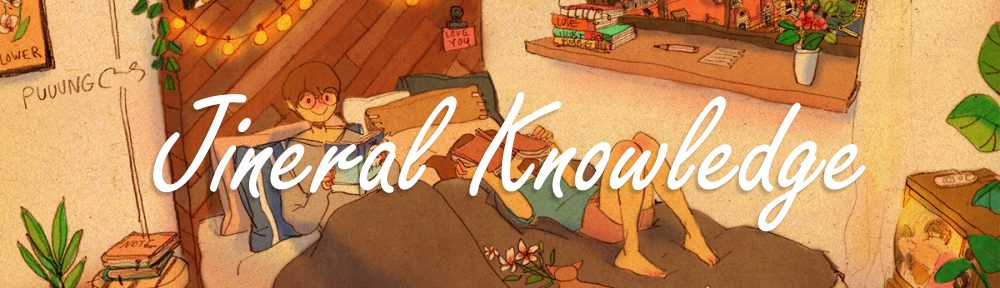
(Image source: Puuung http://www.grafolio.com/puuung1)

Posted in Life & Happiness

The Luxury You Cannot Afford

The night sky looks darker than it is because the bright moon and stars offer contrast. Similarly, bright colours truly “pop” in a background of dark, simple tones. A tiny pinch of salt brings out deeper, sweeter flavours in chocolate milk and watermelon because it offers a contrast in tastes. Contrast allows us to experience something at a greater level.

Happiness is much the same. Some of our happiest memories are from when we enjoyed luxuries we could not afford. An example would be eating out at a nice restaurant when your budget is straining. You know that rationally, you should not be doing that as you need to save money, but emotionally, you know that this is one of the few cases where money really does buy happiness.

The greatest luxury we cannot afford most of the time, is time itself. All of us lead such busy lives that we lack the free time and energy to indulge in what we are passionate about: hobbies we enjoy, sleeping enough or spending time with people we love. However, this is exactly the time we need to set aside a small break. Ironically, the busier life gets, the more vital it becomes that you stop for a moment and take care of yourself.

Whether it be spending a couple hours having lunch with a friend, or sitting down for half an hour to write in your journal, or singing a song on your guitar for ten minutes, breaks are essential. Even if you feel like you cannot spare a single minute, take five minutes to sit down with a cup of coffee, not doing anything productive, just watching people passing by on the streets. Better yet, lie down on the grass and stare into the blue sky for a little while.

When you look back on your life in ten, twenty years’ time, you will not be savouring the moment of working twelve hours straight without food. You will reminisce on how you spent one evening away from studying to play board games with your friends, but still passed the exams because you were refreshed the next day and could study more effectively.

Happiness is not a grand achievement, but a state of mind. It cannot take root in an overworked soul that is torturing itself. Enjoying the luxury of a break when you think you have no time is one step towards breaking the miserable cycle that our busy lives place us in.

So go on, take five and treat yourself.

image
Posted in Psychology & Medicine

Anxiety

The human brain is one of the most sophisticated computers ever developed. It is so powerful that it can simulate all kinds of imaginative scenarios, allowing us to predict and plan for the future. Unfortunately for us, it is a double-edged sword that brings with it the curse of anxiety.

Anxiety is different to fear in that fear is a response to a specific present danger, such as a bear, whereas anxiety is usually a more vague concern for the future. Because our brain can imagine many unpleasant possible outcomes, we become fearful of what may come. This might be because of a past trauma, such as being afraid of abandonment, or because we do not know enough to safely predict what may happen, such as starting a new job.

Regardless of what the source may be, anxiety can be damaging as it prevents us from living life to the fullest. To protect ourselves from becoming overwhelmed by anxiety, we develop strategies to ease our anxiety from a very young age. A common example is an object that gives reassurance, such as a teddy bear or a security blanket. Unfortunately, these are less socially acceptable to carry as an adult.

In some ways, almost everything we do could be seen as an attempt to escape anxiety. We strive for stable jobs so that we don’t have to worry about financial problems in the future. We seek pleasure and happiness, through healthy means such as a passionate hobby or unhealthy like alcohol, to distract us from anxiety. We look for a partner who we can connect with emotionally – someone who can hold us and tell us everything will be alright, even when all hope seems lost.

Anxiety is unavoidable, but it can be managed. There are many effective methods.

First, there is distraction. Hobbies and interests let us enter flow state, where our worries melt away because we are so focussed on the present and enjoying the moment that we do not need to worry about the future. Music gives us similar relief, as it helps us calm our nerves and drowns out the neurotic voice in our heads.

Second, there is the physiological approach. Anxiety raises your heart rate and breathing rate. You can trick your brain in to being less anxious by slowing your heart rate and breathing down. This can be done effectively through breathing exercises, meditation or even a simple, relaxing bath.

Third, there is mindfulness. Train yourself in becoming more aware of why you are feeling anxious. Anxiety usually stems from a single source then spreads like wildfire into its general form. Finding the source will make it easier to take the next step.

Lastly and most importantly, there is reassurance. This may be external, such as the kind words from a friend or a motivational poster, or internal, where you remind yourself that you will be okay. Remind yourself of all of the horrible experiences you have already survived in your life. Remind yourself that regardless of how stressful it was at the time, you are still (hopefully) okay. Remind yourself that you are an amazing, resilient, capable person who will get through this.

However, be aware that up to one-fifth of people suffer from anxiety disorders – a group of psychological disorders that cause persistent, distressing anxiety and dysfunctional behaviours developed to try reduce that anxiety. These disorders, such as phobias, panic disorder and OCD, are much more complicated to treat. They often require professional help and even medicines to treat. Even so, the above psychological treatments are used in conjunction and certainly can’t do much harm.

Anxiety is one of the greatest barriers to happiness. So in the wise words of Meher Baba: “Don’t worry, be happy”.

Posted in Philosophy

Memento Mori

No matter how special you may be, there is one universal truth: we will all die someday. It may be in fifty years’ time, or it could be tomorrow. But nonetheless, we all have to eventually face our mortality. Memento mori, which is Latin for “remember you must die”, is the philosophy of being mindful of this fact.

It may sound morbid to ponder one’s own mortality day by day. However, the true meaning of memento mori is not to live anxiously fearing that death may be around every corner. Instead, it teaches us to not take life for granted, as it is finite and will end someday.

Many of us stress about the future so much that we cannot enjoy the present. We are ambitious: always aiming higher, to reach a higher position, to gain more wealth and to attain pleasure. But we forget that on our deathbed, none of these material things matter. What matters is whether you will be able to look back on your life and say that you truly lived with little regrets.

That said, it is okay to fear death. It is human nature to fear the unknown. Instead, we can harness our fear of death to live a fuller life. Fear is a poison that prevents us from seizing the day. Fear of failure, fear of rejection, fear of judgement… But when we compare it to the weight of our inevitable demise, it is nothing. Although we are all afraid of dying, the vast majority of us are able to live without the fear of death interfering with our day-to-day lives. Therefore, unless death is an immediate consequence of your actions, nothing should make you afraid of trying.

Lastly, memento mori is a reminder of the temporary, impermanent nature of the human condition. Any moment could be our last, no matter how banal it may be. A brief phone call with your loved ones arguing about something petty may be the last conversation you have with them. It is a well-known fact that the human brain remembers the first and last things or events the most (primacy and recency). When you remember that death awaits all of us, every moment becomes a little bit more precious. We start paying more detail to how wonderful life is and how fortunate we are to have loved ones in our lives.

Remember you must die; you might as well make the most of life before then. Or as Ferris Bueller put it:

“Life moves pretty fast. If you don’t stop and look around once in a while, you could miss it.”

Posted in History & Literature

Halcyon Days

There is a story in Greek mythology about a woman named Alcyone. Alcyone was married to Ceyx and the two were madly in love with each other. They would go as far as playfully calling each other Zeus and Hera (the king and queen of the gods). When Zeus heard of this, he became infuriated and plotted a way to punish the couple for their sacrilege.

One day, while Ceyx was sailing, Zeus threw a thunderbolt to raise a furious storm. The storm made quick work of Ceyx’s ship and Ceyx sank to the bottom of the sea. With his dying breath, he prayed to the gods to bring his body to the shore so that Alcyone may see him one last time and give him a funeral. The gods took pity and arranged for this to happen.

Meanwhile, Morpheus, god of dreams, appeared before Alcyone in the image of Ceyx, to gently inform her of her husband’s death. Alcyone ran to the shore in grief. There, she found the cold, lifeless body of her beloved husband. The loss of her true love was too much for her to bear. After Ceyx’s funeral, she threw herself in to the sea and drowned, so that she may meet her husband again in the underworld.

The gods, who were admirers of Alcyone and Ceyx’s beautiful love, were deeply saddened by this tragic fate. Zeus decided to atone for his rash actions by transforming the couple into a pair of kingfishers. The two birds lived happily ever after, but found that whenever they tried to lay eggs on the beach during the winter, strong waves would wash them away. Alcyone’s father Aeolus, god of the winds, saw this and calmed the winds for two weeks every winter, so that the couple may lay their eggs and make a nest in peace. Kingfishers have been referred to as halcyons since then.

Nowadays, the term halcyon days refers to a period of peace and calm, particularly during times of hardship.
Perhaps it is an allusion to the fact that we can navigate through any adversity when we are with our loved ones.

Posted in History & Literature

Bechdel-Wallace Test

What makes you want to watch a movie? There are various factors to consider: how original the idea is, pacing of plot, quality of acting, emotional engagement, suitable score… Out of all of these factors, one of the most interesting is the Bechdel-Wallace test.

In 1985, cartoonist Alison Bechdel wrote a comic strip called Dykes To Watch Out For, where one of her characters states that she only goes to see movies that satisfy three conditions.

  1. First, the film must have at least two women in it. Modern adaptations of the rule state that these women must be named characters.
  2. Second, the women must have a conversation with each other at some point in the film.
  3. Lastly, they must talk about something other than a man.

It is quite easy to pass this test. Even a simple conversation between two women, such as about the food they are eating or what happened at work count. As simple as it sounds, the test is surprisingly powerful. 

Upon review of all movies listed in major databases, it has been shown that only 50 to 70% of all movies pass the Bechdel-Wallace test. The most common reason is the lack of any conversation between two named women characters. This suggests that a large proportion of female characters are put in the movie as a romantic interest or support character for the male, or they are the “token woman”, such as a sole female soldier in a special forces unit.

The Bechdel-Wallace test initially started as a joke in a comic strip, but it highlights the depressing fact of how poorly women are represented in films. There is a strong tendency for women to be portrayed only as a damsel in distress, a love interest for the (male) protagonist or someone who helps the (male) protagonist develop their character, such as their mother. This may be an extension of the fact that the overwhelming majority of directors, producers and screenwriters are men – a gender gap commonly known as the “celluloid ceiling”.

The scariest part is that many movies only passed the test because of a single, short scene where two women have an extremely trivial conversation. It is almost as if those scenes are inserted by moviemakers to tick a box saying that they are not sexist.

The test has many flaws due to its simplicity. For example, it does not account for movies with very few characters, such as those focussed around a female protagonist who does not interact with many other people, or movies focussed purely on one woman and one man conversing with each other. 

Nonetheless, it sends a powerful message regarding the rampant inequality women have to face in day-to-day life.

Posted in Philosophy

Quantum Immortality

The famous Schrödinger’s cat thought experiment illustrates the Copenhagen interpretation of quantum physics. Quantum physics is an extremely complicated field of study, but the gist of the Copenhagen interpretation is that a probability remains in a superposition – that is a state where many possibilities exist at the same time – until it is observed, when it collapses into a certain state.

For example, imagine a cat that is locked in a box sealed with a vial of poison, that is set to break open only 50% of the time. Until the box is opened, we do not know if the cat has been killed by poison or not. Therefore, the cat can be said to be both alive and dead at the same time (Erwin Schrödinger initially devised the experiment to mock the Copenhagen interpretation).

There is a fascinating theory that takes this strange thought experiment one step further. Another interpretation of quantum physics is the Everett many-worlds interpretation. This explains that instead of the wavefunction collapsing (i.e. producing a single result such as alive or dead) on observation, two parallel universes are created instead: one universe where the cat died and another universe where the cat is still alive. Essentially, it states there are infinite universes containing every permutation of possibilities that can exist and that whenever a probability is observed, we enter a specific universe.

This is a very confusing concept to grasp, so let us return to the cat in the box. According to the Copenhagen interpretation, the cat has a 50% chance of surviving the experiment the first time. From then on, the chance of the cat being dead grows exponentially with every experiment. However, according to the many-worlds interpretation, no matter how many experiments we perform, there always will be a universe where the cat miraculously survived each one. From the cat’s perspective, it would not know of the universe if it had died. Therefore, the only universe where the cat is able to tell this story to its friends at the end of the day is one where it survives every single experiment

Now let us apply that to our own lives. Imagine that you are crossing the road and a bus is about to hit you. If there is even a 1% chance you might survive this event, your quantum self will move to a universe where it is possible (otherwise you would be dead and your consciousness ceases to exist). By extrapolation, you can never really die as a version of you will forever live on, beating improbable odds until a point where there are literally no possible universes you could be alive.

Quantum immortality is a thought experiment that relies on the many-worlds interpretation. However, it is also extremely difficult to prove wrong. The only way you could confirm this is if you attempted to kill yourself over and over (quantum suicide) and failed each time. But if you were wrong, you would die and not be able to tell anyone. Ergo, you cannot rule out the possibility that you will live forever.

The scariest part of the theory is not that you are potentially immortal. It is that quantum immortality does not account for your well-being – just your consciousness. If an accident were to leave you horribly disfigured but alert, it would still satisfy quantum immortality. You could be trapped in a motionless body for the rest of eternity, unable to communicate to anyone. Yet quantum immortality will keep you alive, forever and ever.

(Infinity Mirror Room by Yayoi Kusama)

Posted in Life & Happiness

Snowflake

From a young age, we tend to be placed on a pedestal. We are consistently told that we are unique – that we are special. We are told we should make something of ourselves and to be brilliant.

But as we grow up, we realise that this is not necessarily the case. Society does not particularly appreciate us for our uniqueness. We learn that in many situations, we are treated as a dime a dozen. This could not be more evident than the example of job hunting, where you are competing with other young adults of similar qualifications, skills and general background. Once you enter the working world, you soon find that you have become a cogwheel in the machine.

As adults, we start to lose some of the things that made us unique when we were younger, such as our passions and imaginations. We even start to lose our identity as an individual as we become categorised, such as an accountant, a doctor, somebody’s partner or a parent.

Instead of feeling like a unique snowflake, it is easy to feel like a plain white dot in a field of snow. Perhaps this is why we yearn to find someone who will treat us like we are the most important, special person in the world.

However, there are some downsides to being unique. More often than not, people feel alone because of their niche interests, specific perspectives and strange imperfections. Then you meet someone who shares a quality that you thought was unique to yourself.

It might be the way they think how it’s odd how an object looks different as you move past it or even something as little as sharing the same guilty pleasure song. When we meet someone like that, we feel connected with them and that we are not alone in our weirdness.

Furthermore, thinking that we are special makes us feel entitled and act less kind to others as we believe we deserve special treatment. Not being unique grants us empathy as we can see ourselves reflected in another person.

Statistically, most of us will lie within the bulk of the bell curve where we are not so different from the average person. But perhaps that’s okay as long as we can find someone who we can be uniquely weird together with.

“We are all a little weird and life’s a little weird, and when we find someone whose weirdness is compatible with ours, we join up with them and fall in mutual weirdness and call it love.”

~ Dr. Seuss

image

(Image source: Puuung http://www.grafolio.com/puuung1)

Posted in Life & Happiness

Passion

“People love what other people are passionate about – you remind them of what they forgot.”

~ Mia, La La Land

What do you do for fun? It sounds like a simple question, yet a surprising number of people have difficulty answering it. Some fortunate people will talk passionately about their hobbies and interests for hours on end. Others, reflect on their day-to-day lives and realise that they haven’t been truly passionate about anything for a long time.

We all possess passion deep in our hearts. Think of your childhood – fulfilling curiosities, exploring new places, playing your favourite instrument or sport… But at some point, they became lost under the mounting pressures of stress and fatigue from work, financial responsibilities and relationships. Sadly with time, passion falls lower and lower on people’s list of priorities. Ironically, passion is the cure to the reasons why people forgo their passions.

Passion is one of the best ways we can obtain happiness. This intense emotion overwhelms us with a rush of excitement and joy, motivating us while dissolving away our worries and fatigue. With passion, we can enter flow state – the magical state where the world around you fades away and only you and the subject of your passion remain, leaving you in perfectly focussed bliss.
For most people with a passion, they will often say that it is part of their identity. They feel the desire to engage in the activity at the end of a rough day and when they do, they feel cathartic and recharged.

An interesting aspect of passion is how we will happily sacrifice time and money for it. Perhaps this is because we know that this is an example of how money can actually buy happiness. We are happy to pay the cost of happiness, whether it be waiting two days in the rain for a tennis tournament ticket, buying an expensive instrument or losing sleep practising intensely for a tournament.
In a sense, passion for a hobby or interest is quite similar to love.

For those who don’t know what their passion is, think back to your younger self and remember what made you really happy. If you can’t or if it is no longer feasible, there is always the option of finding and learning a new passion. There are some common qualities in hobbies and interests that people are passionate about:

  • Ideally, it should be skill-based, so that you can improve in it through investing time and energy. The desire to be better is an excellent self-motivation tool and the key to reaching flow state.
  •  It should be sustainable and not self-destructive. For example, luxurious parties, drugs, alcohol, sex are all examples of dopamine-inducing activities that are not sustainable as they cause “lows” where you feel miserable without the next “hit”. Furthermore, some of them may damage your physical and mental health rather than improve it. You should also consider whether it is financially sustainable, as at the end of the day, you still need to pay the bills.
  • It should excite you and make you happy. Sometimes people force themselves to like the same things as their significant other. It is okay to have different passions in a relationship, but you should try to understand why that person is passionate about that particular thing instead of blindly copying it. Plus, it is healthy to have something in your own life outside of your relationship that can keep you happy.

Unfortunately, you are the only person that can find your own passion. If you have forgotten passions, then that is a great starting point. Pick up a camera, brush, guitar, pen, racquet or whatever it is that made you happy, and revive your passion.

If you truly cannot think of anything, then focus on something that has piqued your interest and give it an honest try. It will be a much more effective use of your time than lamenting that your life is dreary and unhappy.
A practical tip is to start with a creative hobby, such as music or the arts, or a sport. These tend to fulfil most of the above criteria while also offering a creative or physical release, both of which can easily be lacking in our modern day lives.

Passion is a renewable source of happiness that does not rely on other people. Many people rely on the company of other’s for their happiness, but this is ultimately unsustainable and will lead to resentment.

How can we make someone else happy if we don’t know how to make ourselves happy? Maybe this is why we find passionate people attractive – it reminds us of what we had forgotten and how happy we could be if we tried.

So go on, be passionate about something.

(Image source: Puuung http://www.grafolio.com/puuung1)

Posted in History & Literature

Night Vision

During World War II, the British Royal Air Force boasted an impressive accuracy in intercepting Nazi German bombers despite the cover of darkness at night. The British air ministry reported that their fighter pilots ate a large amount of carrots to boost their night vision. Since then, it has become public knowledge that carrots help you see better in the dark.

Unfortunately, this is false. The British air force were not actually using carrots to help see better in the dark; they were using a revolutionary new technology called radar to spot enemy war planes from a far distance. The carrot propaganda was spread to hide this fact from the Germans.

The carrot myth sounds plausible as carrots contain a large amount of beta-carotene, which is converted into vitamin A in the body. Vitamin A is a key chemical required for vision, in the form of retinal. It is true that vitamin A deficiency can cause night blindness. However, the dose of vitamin A required to improve your night vision is so high that it cannot be achieved by simply eating a lot of carrots.